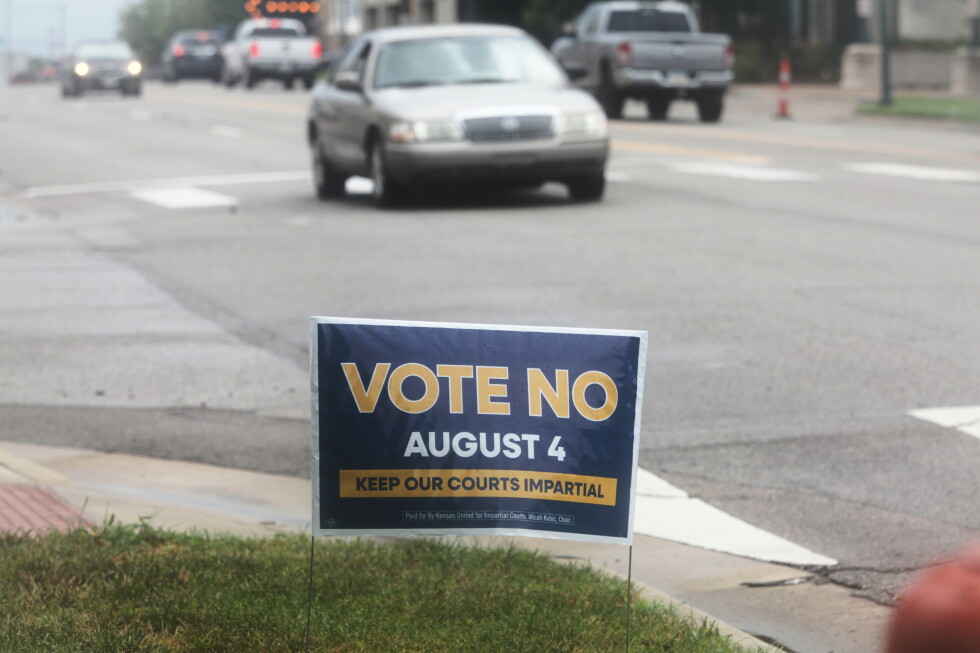
TOPEKA, Kan. — Kansas voters are poised to make a significant decision on Tuesday regarding the method of selecting state Supreme Court justices. The proposed constitutional amendment seeks to shift the power of appointment from the governor to a direct election by the public. This change is largely driven by conservative dissatisfaction with past court rulings on critical issues such as abortion, school funding, and the death penalty.
The amendment’s approval could lead to the election of at least four conservative justices to the seven-member court by 2033, with a preference for those opposed to abortion. However, this move comes amid concerns about the increasingly partisan and costly nature of judicial elections, as evidenced by last year’s Wisconsin Supreme Court race, which saw spending exceed $100 million.
Governor Laura Kelly, a Democrat opposed to the amendment, criticized the measure, citing concerns about gerrymandering and the influence of undisclosed campaign financing. She remarked on the potential risks of integrating the judicial branch into what she perceives as a “dysfunctional system” of governance.
Criticism from Republican Lawmakers
Republican legislators have voiced long-standing criticisms of various court decisions, using them as justification for the proposed amendment. Among the contested rulings is a recent district court decision that reinstated a grace period for mail-in ballots, which was previously eliminated by GOP lawmakers. Kansas Senate President Ty Masterson labeled the ruling “outrageous” and encouraged voters to support the amendment.
Further, the same district judge, considered for a Supreme Court vacancy, recently halted a law banning gender-affirming care for transgender minors. Masterson described the judge’s actions as “radical.” Additionally, Republicans have opposed educational funding decisions dating back to 2004 that required increased spending to meet constitutional standards.
Abortion at the Forefront
The push for electing justices has gained momentum among Republicans following a 2022 public vote that upheld a Supreme Court decision affirming the right to bodily autonomy and access to abortion under the Kansas Bill of Rights. This has intensified efforts to appoint anti-abortion justices quietly and gradually.
Significant financial contributions have been a hallmark of the campaign, with the vote-yes side receiving $1.7 million from a Nashville-based nonprofit supporting Republican interests. In contrast, Planned Parenthood affiliates have contributed over $1.6 million to the vote-no campaign, highlighting the divisive nature of the issue.
Debate Over Judicial Appointments
Proponents of the amendment argue that electing justices will enhance democratic representation, dismissing concerns about wealthy donors’ influence. Elizabeth Patton, state director of Americans for Prosperity, stated, “Globally and over history, even in its imperfection, the best system is democracy.”
Historically, Kansas elected Supreme Court justices until 1958, when the current system was implemented. The governor selects one of three finalists from a list provided by a commission largely controlled by attorneys. The proposed amendment seeks to return to the earlier method of direct elections.
Opponents argue that the current system offers stability and independence, stressing that voters already have a say in retaining justices through regular yes-or-no retention votes. However, conservatives contend that these votes lack real accountability, as no sitting justice has ever been removed through this process.