Alabama’s Legal Battle Over Nitrogen Gas Execution Method
MONTGOMERY, Ala. — Alabama is engaged in a critical legal confrontation over the impending execution of Jeffery Lee, 49, with nitrogen gas. The state has petitioned the U.S. Supreme Court to overturn a federal judge’s decision that deemed the method unconstitutional, alleging it violates the Eighth Amendment’s prohibition on cruel and unusual punishment.
On Tuesday, U.S. District Judge Emily Marks ruled against Alabama’s nitrogen protocol, prompting an appeal from the state’s attorney general’s office. The decision could determine whether Lee’s execution proceeds as planned and influence the future use of nitrogen gas in executions in Alabama, a practice that commenced in 2024.
Mike Lewis, spokesperson for Governor Kay Ivey, stated in an email, “As Alabama continues to defend its execution protocol in the courts, the governor remains prepared to move forward with the planned execution.”
The nitrogen execution process involves fitting a respirator to the condemned individual’s face, replacing breathable air with pure nitrogen gas, leading to death by oxygen deprivation. This method has been used in eight executions across the United States, seven in Alabama and one in Louisiana, with Lee potentially becoming the ninth.
Judge Marks’ ruling followed a reversal by an appeals court of her initial approval of the method. The 11th U.S. Circuit Court of Appeals, in a 2-1 decision, denied Alabama’s request to stay the ruling, citing the three minutes it might take for an inmate to lose consciousness as an “intolerable” period, considering the potential suffering under the nitrogen hypoxia protocol.
Alabama’s attorney general’s office confirmed its appeal to the Supreme Court, which has yet to declare any execution method unconstitutional. The case has reignited debate over the use of nitrogen gas in executions.
Previous nitrogen executions in Alabama have witnessed inmates exhibiting distress, including shaking and labored breathing. During the state’s last nitrogen gas execution, a 30-minute interval occurred between visible signs of the gas’s effect and the closing of the execution chamber curtain, signaling completion.
Alabama maintains that nitrogen gas is no more inhumane than other execution methods. “If nitrogen hypoxia violates the Eighth Amendment because of a risk of anxiety and emotional discomfort, then so too must every other method of execution, many of which carry inherent risks of real physical pain,” state lawyers argued in a court document.
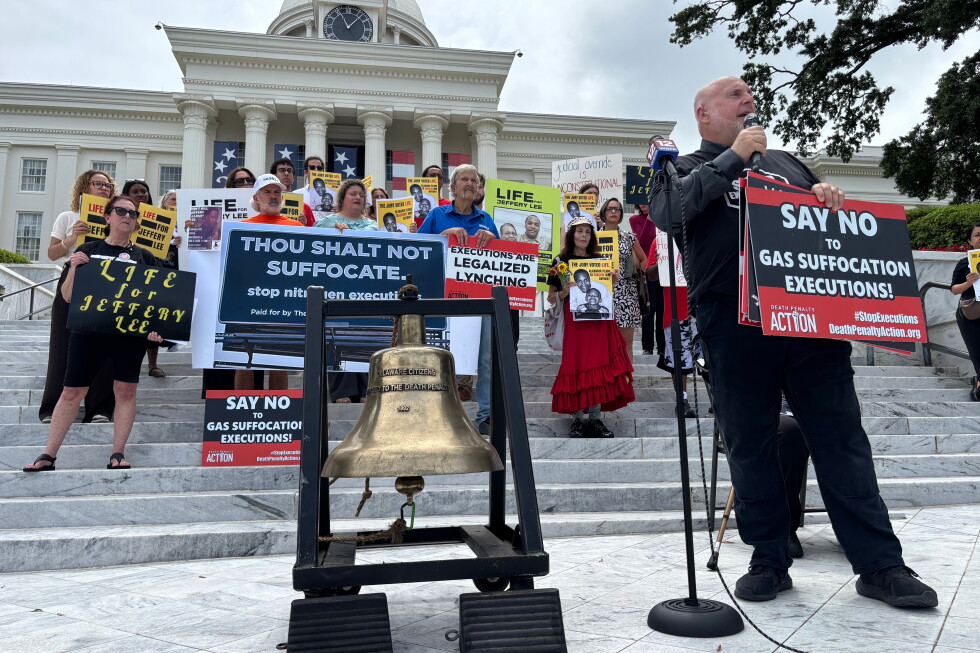
Lee’s defense argues against proceeding with an execution method deemed unconstitutional by courts. His advocates have pleaded with Governor Ivey to commute his sentence to life imprisonment, aligning with the jury’s original recommendation.
Lee was convicted of double capital murder for the 1998 killings of Jimmy Ellis and Elaine Thompson during a pawnshop robbery. Despite a jury’s 7-5 recommendation for life imprisonment, a judge imposed a death sentence, a practice known as judicial override, abolished in Alabama in 2017 but not retroactively.