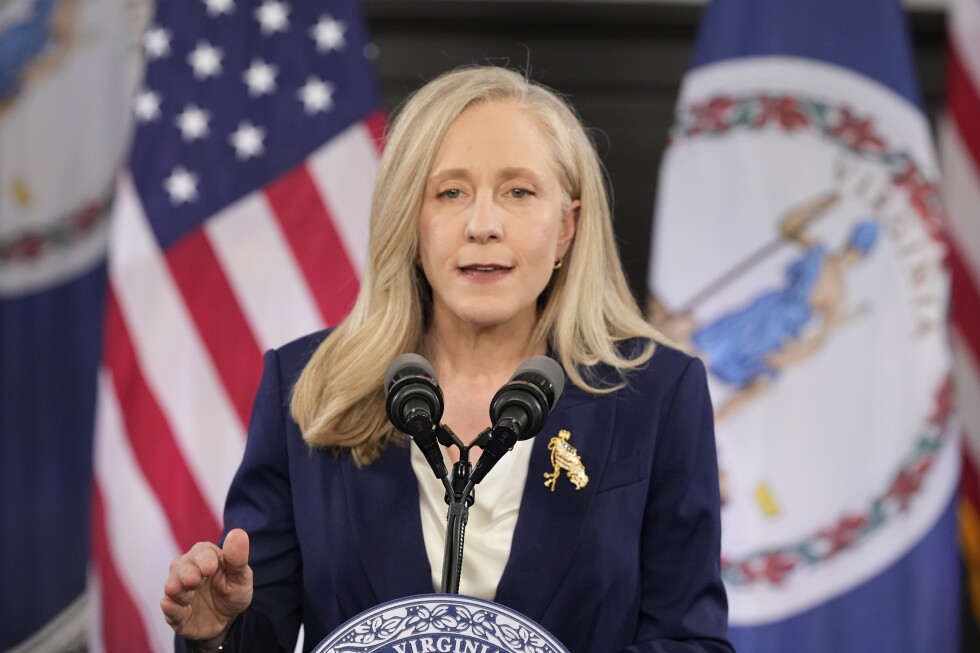
In a significant shift in Virginia’s gun policy, Governor Abigail Spanberger has enacted a law that restricts the sale and manufacture of certain semi-automatic firearms. This legislative move has spurred immediate legal challenges from gun-rights advocates.
These new regulations on ” assault firearms,” as the law defines them, are part of over two dozen gun control measures introduced by the Democratic governor. This is a stark contrast to the policies of her Republican predecessor, who repeatedly vetoed similar proposals.
Governor Spanberger emphasized the intent behind the legislation in a statement: “Firearms designed to inflict maximum casualties do not belong on our streets. We are taking this step to protect families and support the law enforcement officers who work every day to keep our communities safe.”
Virginia’s new regulations align it more closely with states like California, Illinois, and New York, all of which have enacted similar measures under Democratic leadership. This highlights the ongoing national debate over gun control, with many Republican-led states moving in the opposite direction by loosening firearm restrictions.
Legislation Targets Semi-Automatic Firearms
Effective July 1, the Virginia law classifies it as a misdemeanor, punishable by up to one year in jail and a $2,500 fine, to buy, sell, transfer, import, or manufacture an “assault firearm.”
The law defines such firearms as semi-automatic rifles or pistols with a magazine capacity exceeding 15 rounds and includes rifles with detachable magazines that feature an additional handgrip or collapsible stock. The ban also extends to magazines holding more than 15 rounds, although possessing these weapons does not incur penalties for most individuals.
Virginia joins 11 other states and Washington, D.C., in enacting laws against certain semi-automatic firearms, although the specifics of these laws vary. For instance, Hawaii’s regulations focus on semi-automatic pistols and high-capacity magazines, but not rifles.
Challenges From Gun-Rights Groups
Following the signing of the legislation, legal challenges were promptly filed. The National Rifle Association (NRA), in collaboration with other organizations, has initiated lawsuits both federally and at the state level, arguing that the law infringes on Second Amendment rights.
Adam Kraut, executive director of the Second Amendment Foundation, which is part of the federal lawsuit alongside the NRA, stated, “The firearms and magazines banned in this law aren’t bizarre and unusual outliers, they’re among the most commonly owned guns and magazines in the country.” He highlighted their widespread lawful use by Americans.
The U.S. Department of Justice has also committed to challenging the Virginia law’s enforcement, with Harmeet Dhillon, assistant attorney general for the civil rights division, asserting that the measure infringes on citizens’ rights to use AR-15 rifles lawfully.
Judicial Support for Existing Bans
Historically, courts have upheld similar restrictions on semi-automatic firearms. The 4th Circuit Court of Appeals, which has jurisdiction over Virginia and several other states, has twice upheld Maryland’s law banning numerous semi-automatic weapons. The court characterized them as “military-style weapons” unsuitable for self-defense.
Despite the U.S. Supreme Court’s decision last year not to review the Maryland case, gun-rights supporters remain optimistic about future challenges, noting dissent among some conservative justices regarding the constitutionality of such bans.
Political Shift Drives New Legislation
The change in Virginia’s governorship from Republican Glenn Youngkin, who had vetoed similar gun control measures, to Democrat Abigail Spanberger paved the way for the new legislation. Spanberger, previously involved with Moms Demand Action, a gun control advocacy group, leveraged her position and Democratic support in the legislature to advance these measures.
John Feinblatt, president of Everytown for Gun Safety, remarked, “The fact that a former Moms Demand Action volunteer just signed an assault weapons ban in the home state of the NRA speaks volumes about how dramatically the political calculus around gun safety has shifted.”
Divergent State Approaches to Gun Legislation
While Virginia imposes stricter gun laws, states with Republican leadership are moving to expand gun rights. Coinciding with Virginia’s new law, Missouri’s legislature approved a school ranger program allowing armed volunteers in schools. In contrast to Virginia’s recent increase in the legal age to purchase handguns, West Virginia has lowered the age for concealed carry without a permit.
Additionally, Virginia has opened new legal avenues for lawsuits against the firearms industry, contrasting with Utah’s recent legislation limiting such liability suits.