MONTGOMERY, Ala. (AP) — In a recent ruling by the Alabama Supreme Court, it has been determined that police officers have the authority to request physical identification if they find a person’s verbal answers unsatisfactory during a stop. This decision arose from the case involving a Black pastor who was arrested while he was watering his neighbor’s flowers.
The court’s 6-3 decision, issued last week, was in response to a federal judge’s inquiry related to a lawsuit concerning the arrest of Michael Jennings in 2022. The question posed was whether Alabama’s “stop-and-identify” law allows officers to demand identification if they are not satisfied with the answers provided by the individual.
Justice Will Sellers elaborated on the ruling, stating that the law “does not exclude from its purview a request for physical identification when a suspect provides an incomplete or unsatisfactory response to an officer’s demand to provide his or her name and address and an explanation of his or her action.”
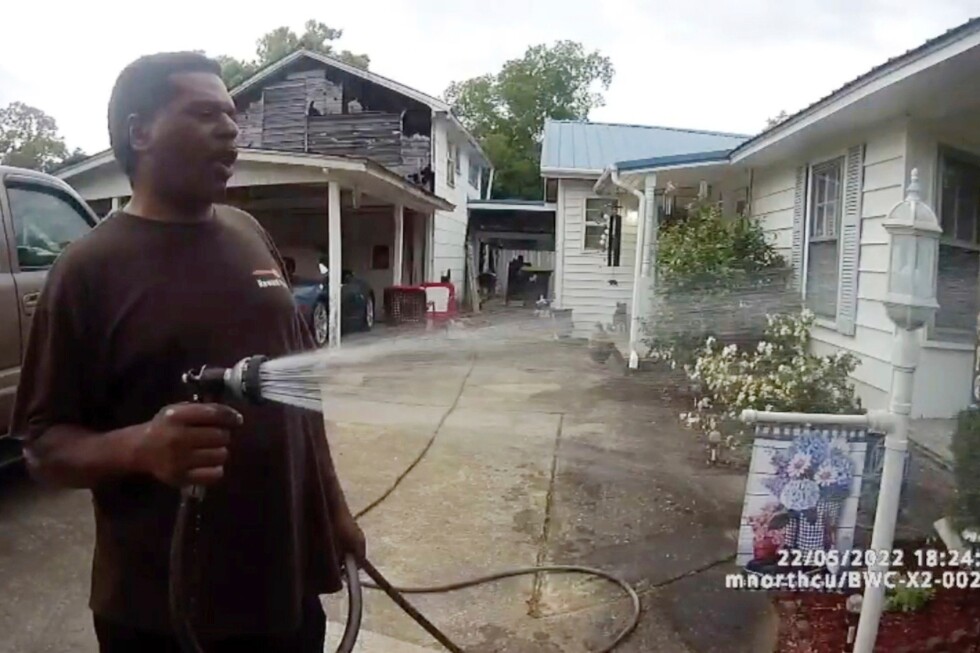
The incident, which took place in May 2022, involved officers approaching Jennings in his neighbor’s yard after a 911 call reported an unfamiliar vehicle and a “young Black male” in the area. Jennings, who was watering flowers, identified himself as “Pastor Jennings” and explained that he lived nearby and was looking after the property while his neighbors were away.
Despite his explanation, officers requested Jennings’ identification. Jennings refused, asserting that he had done nothing wrong. The initial caller later confirmed Jennings’ identity, recognizing him as another neighbor. Nonetheless, Jennings was charged with obstructing a government operation, although the charge was subsequently dropped.
Jennings pursued legal action against the city and the officers, claiming false arrest. Although a federal judge initially dismissed the lawsuit, the 11th U.S. Circuit Court of Appeals overturned this decision. U.S. District Judge R. David Proctor then sought clarification from the Alabama Supreme Court regarding the legal bounds of demanding identification under state law.
Matthew Cavedon from the Cato Institute’s Project on Criminal Justice commented on the ruling, describing it as a “significant expansion of government power over people.” The Cato Institute, alongside the American Civil Liberties Union, had submitted an amicus brief arguing that the statute does not permit demands for physical identification. Cavedon emphasized the case’s focus on situations where an officer deems a person’s response unsatisfactory, stating, “The significance now for Alabamians is if an officer’s not satisfied with whatever answer you give, I sure hope you’ve got your driver’s license or passport on you.”