Beijing and Washington Enter Economic Discussions in Paris
On Sunday, key representatives from China and the United States commenced critical economic and trade discussions in Paris. These talks are precursors to the upcoming state visit of U.S. President Donald Trump to Beijing, where he will engage with Chinese leader Xi Jinping. This visit is anticipated to occur in approximately two weeks.
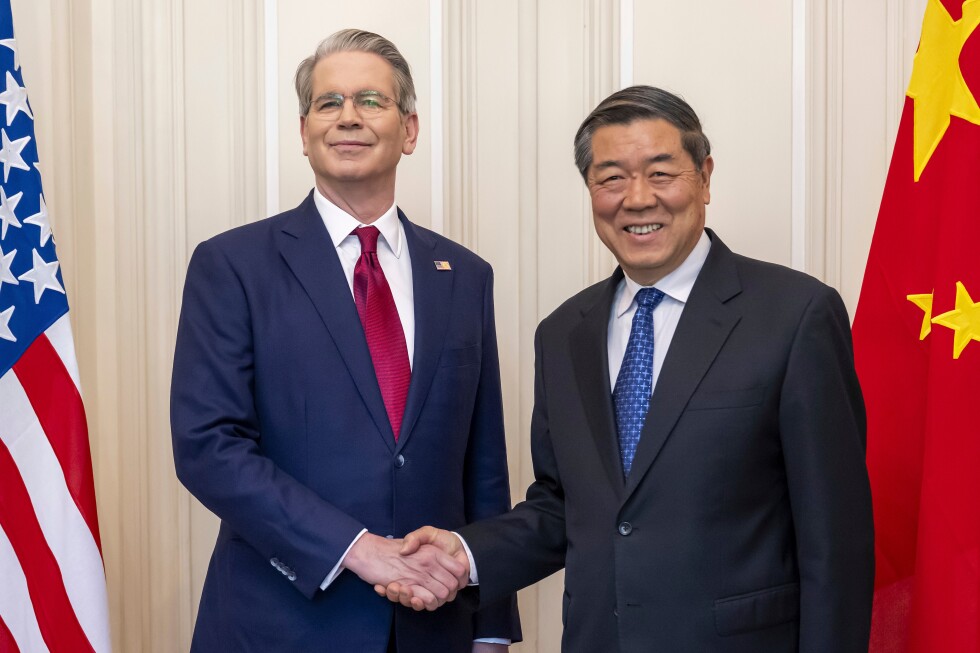
The negotiations were spearheaded by U.S. Treasury Secretary Scott Bessent and Chinese Vice Premier He Lifeng. These diplomatic exchanges took place in the French capital during morning sessions, as reported by China’s state-run news agency, Xinhua. The White House has indicated that President Trump will journey to China from March 31 to April 2, although Chinese authorities have yet to confirm these dates officially.
In remarks last Thursday, Bessent emphasized the commitment of his team to prioritize the interests of American farmers, workers, and businesses during these negotiations. The U.S. Treasury Department noted that Bessent will hold discussions with He Lifeng over Sunday and Monday. According to China’s commerce ministry, the dialogue will center on “trade and economic issues of mutual concern.”
This upcoming visit marks President Trump’s first trip to China since his initial term in 2017. It follows a meeting between the two leaders in Busan, South Korea, five months ago, where they agreed upon a one-year truce in their escalating trade war. This conflict had previously resulted in reciprocal tariffs reaching triple-digit percentages before both parties de-escalated.
Despite efforts to ease trade tensions, disagreements persist. The Trump administration’s recent trade investigation, which includes China among 16 trading partners, has drawn criticism from Beijing. This investigation follows a Supreme Court ruling that invalidated Trump’s extensive global tariffs imposed last year, potentially setting the stage for new tariffs.
Additionally, the U.S. has launched a separate inquiry into the importation of goods produced with forced labor, targeting several countries, including China. In response, China’s Ministry of Commerce expressed concerns on Monday, describing the investigation as a “mistake on top of a mistake” that could jeopardize the security and stability of the global supply chain.
The ongoing conflict in Iran could also feature in these discussions, particularly given the global concerns surrounding oil prices and supply. President Trump recently expressed hope that China, along with France, Japan, South Korea, the United Kingdom, and others, would contribute to maintaining the Strait of Hormuz as “open and safe.”
According to Gary Ng, a senior economist at French bank Natixis and a research fellow at the Central European Institute of Asian Studies, the Paris meeting is likely the most significant bilateral engagement before the forthcoming Xi-Trump summit. Ng noted the importance of finding common ground and managing disagreements, with Iran adding a new dimension to the talks.
Chinese Foreign Minister Wang Yi recently described the upcoming year as a “big year” for China-U.S. relations, hinting at the significance of high-level exchanges. Although he did not confirm President Trump’s state visit, Wang mentioned that the agenda for these exchanges is already under consideration.
Bessent and He have been leading trade discussions between the two nations since the previous year, having met in various international locations, including Geneva, London, Stockholm, Madrid, and Kuala Lumpur.