United States to Participate in UN Court Case Against Israel
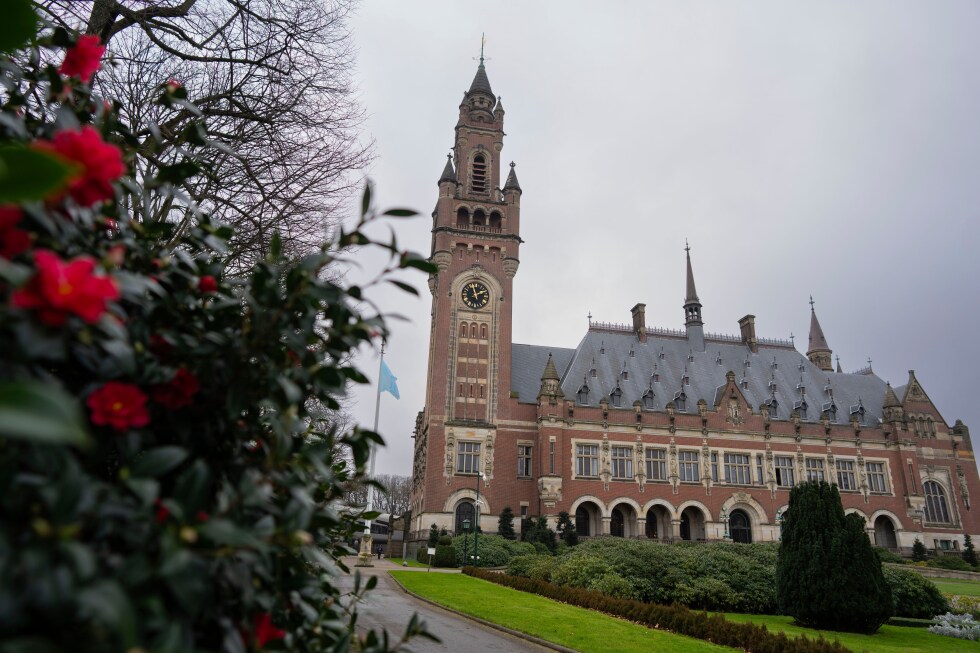
The Hague, Netherlands — In a significant development at the United Nations’ highest court, the United States has announced its intention to intervene in a genocide case filed by South Africa against Israel. The U.S. government is set to argue against the allegations, asserting that they are unfounded and warning that any adverse ruling could disrupt international legal standards.
The International Court of Justice (ICJ) is currently evaluating claims that Israel’s military operations in Gaza constitute genocide as defined by a treaty established after World War II. Israel, established in the wake of the Holocaust, has categorically denied these accusations.
In documents reviewed by The Associated Press, the U.S. contends that these charges are part of a “broader campaign” aimed at Israel and the Jewish community, intended to “justify or encourage terrorism against them.”
Under the 1948 Convention on the Prevention and Punishment of the Crime of Genocide, any member country can offer insights on legal matters in such cases. In a similar instance in 2023, more than 30 nations supported Ukraine in its legal proceedings against Russia.
Diverse International Responses
The case against Israel has drawn interventions from over a dozen nations, including Spain, the Netherlands, and Ireland. Notably, many of these countries hold views contrary to those of the United States.
The U.S. argues that proving genocide requires demonstrating “specific intent” and advises the ICJ, based in The Hague, against “lowering the standard.” The U.S. submission emphasizes, “Civilian casualties, even widespread civilian casualties, are not necessarily probative of genocidal intent, particularly when they occur in the context of an armed conflict involving urban combat.”
Reed Rubenstein, a legal adviser for the U.S. State Department, remarked that a ruling against Israel would represent a “radical repudiation” of the ICJ’s precedents. He further commented to the AP, stating that such a decision could “feed the perception that the court is simply just one more tool in the ongoing pro-Hamas lawfare campaign” against Israel.
Ongoing Conflict and Humanitarian Efforts
Although a U.S.-brokered ceasefire has lessened intense fighting in Gaza since last year, sporadic Israeli fire remains. The ceasefire has allowed increased humanitarian aid to flow into Gaza, though restrictions have been re-imposed amid U.S. and Israeli military actions against Iran.
The ICJ has issued multiple orders concerning Israel’s actions in Gaza since South Africa initiated the case in 2023. These orders include mandates for Israel to prevent deaths and destruction and to halt any genocidal acts. Additionally, the court has instructed Israel to allow the U.N.’s aid agency, UNRWA, to deliver humanitarian assistance to Gaza.
In related proceedings, the International Criminal Court (ICC) issued arrest warrants for Israeli Prime Minister Benjamin Netanyahu and a former defense minister in 2024. The ICC alleges they employed “starvation as a method of warfare” by limiting humanitarian aid and deliberately targeting civilians.
In response, the Trump administration imposed sanctions on ICC officials, including nine judges and senior prosecutors.