South Korean Parliament Approves U.S. Investment Law Amid Trade Tensions
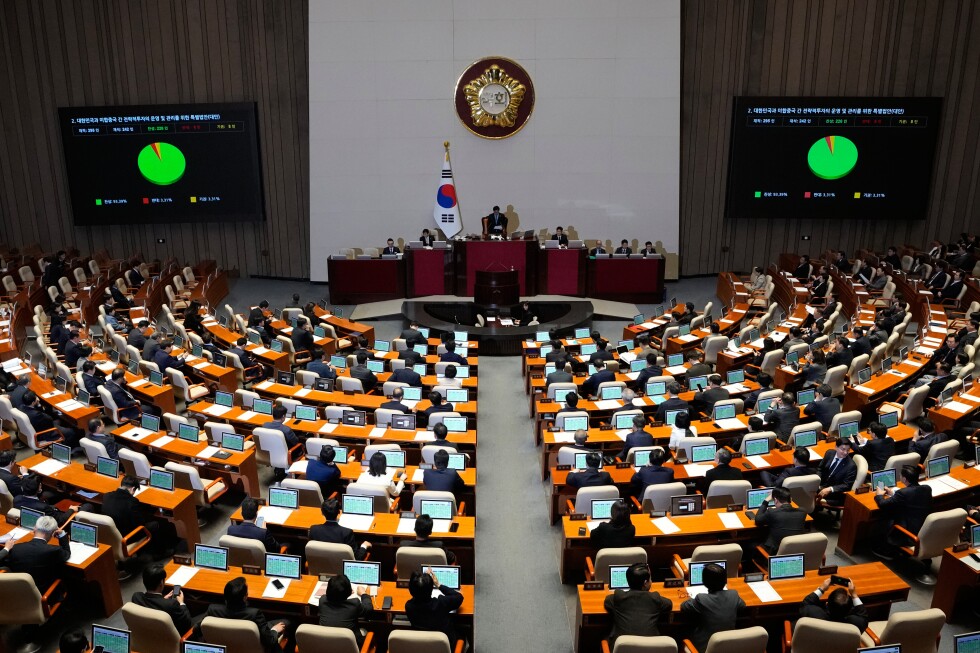
SEOUL, South Korea — In a significant legislative move, South Korean lawmakers have approved a law aimed at fulfilling a $350 billion U.S. investment commitment. This initiative was part of efforts to mitigate the impact of the highest tariffs imposed by the Trump administration.
The bill, which had been a subject of contention since its introduction in November, was pushed forward by government officials amid rising concerns over the nation’s trade-reliant economy. The economy has been under pressure due to President Donald Trump’s protectionist policies and the potential repercussions of tensions in the Middle East.
Coinciding with the legislative approval, the Trump administration intensified its scrutiny over international trade practices by initiating a new investigation into manufacturing practices in countries like China, South Korea, and Japan. This investigation could potentially lead to new import taxes should the practices be deemed unfair.
President Trump is looking to leverage these tariffs to recover revenue after a significant court decision. The U.S. Supreme Court recently nullified his extensive tariff measures that were enacted under emergency powers.
China openly opposed this move, advocating for negotiation rather than unilateral tariff actions. “China opposes any form of unilateral tariff measures,” stated Guo Jiakun, a spokesperson for the Foreign Ministry in Beijing, emphasizing that such conflicts benefit no one.
The newly passed South Korean law, which saw a vote tally of 226 in favor to 8 against, seeks to create a public corporation responsible for managing the U.S. investments. The corporation will also be tasked with project selection, guided by inputs from both South Korean and U.S. trade bodies.
Despite the passage, some lawmakers expressed dissatisfaction with the bill, citing concerns over Trump’s trade investigations and the vulnerabilities exposed by the Middle Eastern conflict on South Korea’s economy. “We cannot be the money machine Trump wants us to be,” commented Son Sol from the minor opposition Progressive Party, criticizing the bill for insufficient legislative oversight.
After prolonged negotiations, South Korea agreed last November to invest $200 billion in U.S. semiconductor and high-tech industries and $150 billion in shipbuilding. This agreement was part of a deal to reduce reciprocal tariffs from 25% to 15% between the two nations.
This agreement was reached following an October summit between Trump and South Korean President Lee Jae Myung. As part of the deal, South Korea’s annual investments are capped at $20 billion to safeguard its foreign currency reserves.
The legislation, introduced by Lee’s Democratic Party, faced resistance from opposition members concerned about economic impacts. The delay in passing the bill drew President Trump’s ire, leading him to threaten a tariff increase on South Korean products like autos and pharmaceuticals back to 25% unless the bill progressed.