Alexander Butterfield, Key Figure in Watergate Scandal, Dies at 99
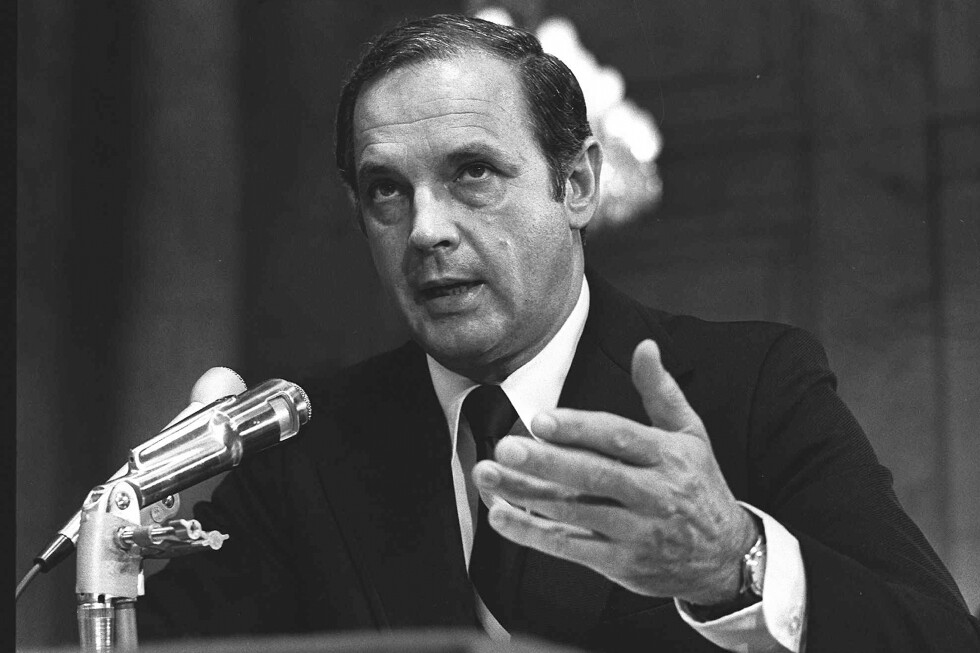
Alexander Butterfield, known for his pivotal role in the Watergate scandal that led to President Richard Nixon’s resignation, has passed away at the age of 99. His demise was confirmed by his wife, Kim, along with John Dean, Nixon’s White House counsel during the Watergate era.
Butterfield played a critical role in unveiling the existence of a taping system that recorded conversations in the Oval Office and other key locations, a discovery that significantly impacted Nixon’s presidency. Dean acknowledged Butterfield’s courage, stating, “He had the heavy responsibility of revealing something he was sworn to secrecy on, which is the installation of the Nixon taping system. He stood up and told the truth.”
As a deputy assistant to President Nixon, Butterfield managed the voice-activated recording devices situated in four key areas, including the Oval Office, revealing that only a select few, including himself, Nixon, and White House chief of staff H.R. Haldeman, were aware of these devices.
During a preliminary interview with Watergate investigators, Butterfield disclosed, “Everything was taped … as long as the president was in attendance.” This revelation eventually exposed Nixon’s involvement in the Watergate cover-up, leading to his resignation on August 9, 1974, after the Supreme Court ordered the release of the tapes.
Reflecting on his role, Butterfield mentioned in a 2008 interview for the Nixon Presidential Library and Museum, “I didn’t like to be the cause of that, but I felt that I was, in a lot of ways.” His connection with the Nixon administration began through his college friendship with Haldeman at UCLA, which led to his position as a deputy assistant from 1969 to 1973.
Butterfield’s testimony to Senate committee staffers on July 13, 1973, confirmed the existence of the taping system, following John Dean’s suggestion that conversations with Nixon might have been recorded. This confirmation led to a public hearing, shocking both Nixon’s allies and adversaries, as the tapes promised to provide crucial evidence about the Watergate break-in.
The ensuing legal battle over the tapes concluded in July 1974, with the Supreme Court ruling that Nixon must surrender them. The tapes, now held by the National Archives, revealed an unflattering portrayal of Nixon, exposing his volatile temper and controversial viewpoints.
Butterfield recalled, “I just thought, ‘When they hear those tapes …’ I mean, I knew what was on these tapes … they’re dynamite.” He didn’t initially foresee Nixon’s potential impeachment but anticipated significant challenges for the president.
After the scandal, Butterfield believed his dismissal from the Federal Aviation Administration by President Gerald Ford in 1975 was related to his testimony. He later transitioned to a career in business in California and achieved a master’s degree from the University of California, San Diego, in 1994.
Born in Pensacola, Florida, on April 6, 1926, Butterfield served in the Air Force and held various military roles before his political career. He criticized Nixon in later years, acknowledging his foreign policy achievements but labeling him “not an honest man” and “a crook.”
Butterfield expressed satisfaction when Nixon resigned, believing “justice had prevailed” and describing Nixon as “the ringleader” of the Watergate cover-up.