Supreme Court Decision on U.S. Tariffs Sparks Global Reactions
The recent Supreme Court decision that overturned the tariffs imposed by U.S. President Donald Trump has prompted close scrutiny from international economic players such as China and South Korea. Despite the ruling, financial markets showed resilience, reacting with minimal volatility.
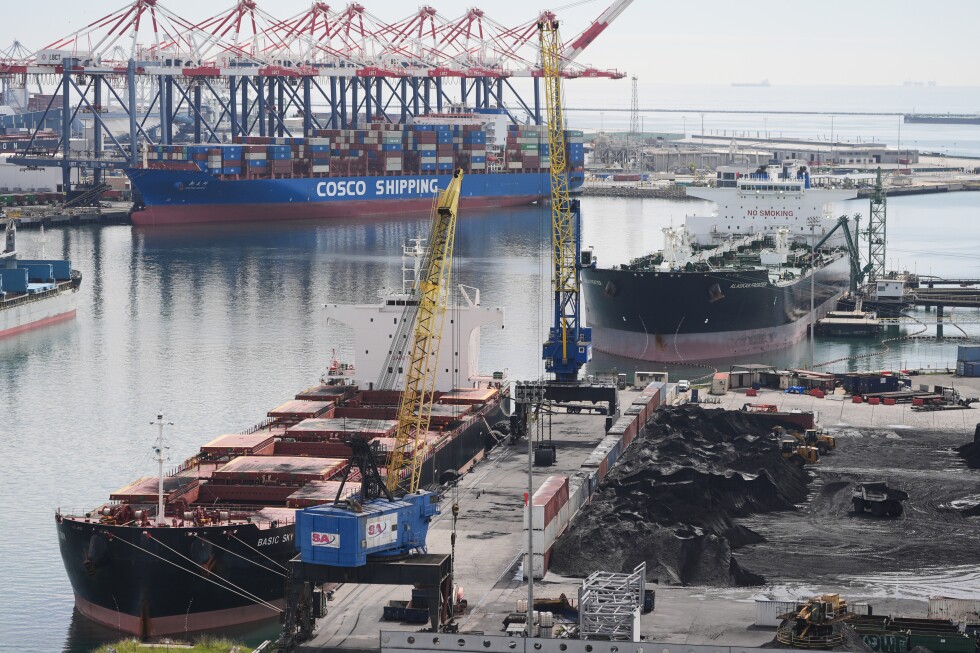
The court’s verdict, made public on Friday, threatens to unsettle trade agreements established since the imposition of these tariffs in April 2025. In response, China’s Commerce Ministry expressed its intention to conduct a “comprehensive assessment” of the judgment. A spokesperson for the ministry urged the United States to revoke the “unilateral tariffs” placed on its trading partners.
Beijing’s position remains firm, asserting that the tariffs breach both international and U.S. domestic trade laws. The official Xinhua News Agency quoted the spokesperson emphasizing that a trade war benefits no one and that the measures are counterproductive.
In reaction to the court’s decision, Trump has proposed a new global tariff of 10%, later increased to 15%, under Section 122 of the 1974 Trade Act. This move could alleviate some pressure on countries like China and others in Asia previously affected by higher import duties, while potentially increasing tariffs for allies such as Japan and the United Kingdom.
U.S. Trade Representative Jamieson Greer indicated that the existing trade deals would remain intact. In an interview with CBS News, he stated, “The deals were not premised on whether or not the emergency tariff litigation would rise or fall.” Greer noted that no trade partners have withdrawn from agreements, preferring to observe how the situation unfolds.
South Korean Trade Minister Kim Jung-kwan expressed concerns about the uncertainty stemming from potential new tariffs. He confirmed that South Korea is engaging in “amicable” discussions with U.S. officials to mitigate the impact on South Korean industries, notably autos and steel, which face tariffs under other trade laws.
“Given the uncertainty over future U.S. tariff measures, the public and private sectors must work together to strengthen our companies’ export competitiveness and diversify their markets,” Kim stated.
U.S. Treasury Secretary Scott Bessent reassured that trading partners are expected to adhere to current agreements, and that tariff revenues will remain stable. “Tariff revenues will be unchanged this year and will be unchanged in the future,” he mentioned in a Fox News interview, referencing the newly proposed 15% global tariffs.
Bessent also conveyed that the administration would comply with court directives regarding refunds for previously collected tariffs now deemed unlawful. “It’s out of our hands and we will follow the court’s orders,” he added.
In financial markets, U.S. futures experienced a decline early Monday, with S&P 500 and Dow Jones Industrial Average contracts dropping by 0.6% and 0.5%, respectively. The value of oil also decreased, and the U.S. dollar weakened against the Japanese yen and the euro. In contrast, Asian markets saw gains, with Hong Kong’s Hang Seng index rising by 2.4%.