Market Fluctuations Following Supreme Court Tariff Ruling
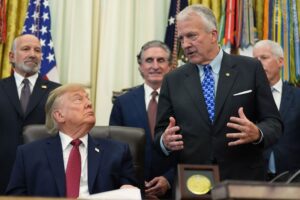
U.S. stock futures saw a decline while most Asian markets experienced gains on Monday, following a significant decision by the Supreme Court to overturn the majority of President Donald Trump’s extensive tariff measures. Tokyo’s markets were not trading due to a public holiday.
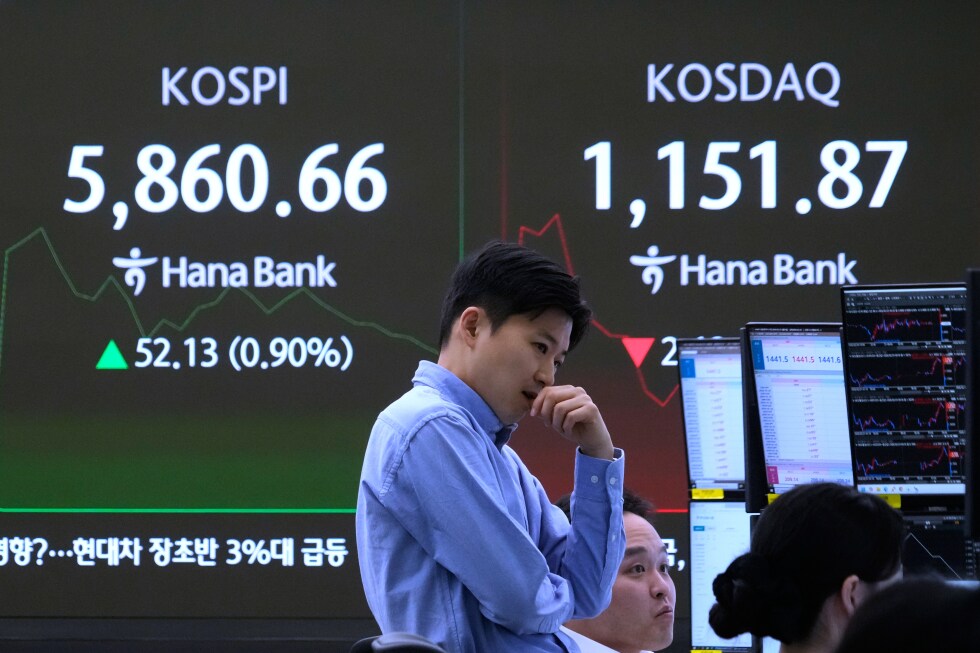
Hong Kong’s Hang Seng index led the regional gains, climbing 2.2% to reach 27,003.47. Conversely, China’s Shanghai Composite index decreased by 1.3% to 4,082.07. South Korea’s Kospi index rose by 1.1% to 5,873.07, and Taiwan’s Taiex index increased by 1.4%. However, the Australian S&P/ASX 200 index fell by 0.4% to 9,041.00.
According to Benjamin Picton of Rabobank, the mixed market reactions underscore the “winners-and-losers effect of shifts in tariff policy that has just delivered a boost to countries who previously had a comparatively bad deal.” He also noted, “U.S. tariff policy will continue to be a source of uncertainty for markets as traders attempt to price in the implications of what is still a movable feast.”
On the U.S. front, futures for the S&P 500 dropped by 0.7%, the Dow Jones Industrial Average futures fell by 0.6%, and Nasdaq composite index futures were down by 0.8%. Wall Street maintained stability after the Supreme Court’s ruling, a stark contrast to the initial panic triggered in financial markets when the tariffs were first announced last year.
On Friday, the S&P 500 gained 0.7% to close at 6,909.51, while the Dow Jones Industrial Average increased by 0.5% to 49,625.97, and the Nasdaq composite rose by 0.9% to 22,886.07. The initial volatility in the market was tied to discouraging economic reports indicating slowing growth and accelerating inflation in the U.S. economy.
Despite the Supreme Court’s ruling, tariffs are not completely eliminated. President Trump remarked, “Just so you understand, we have tariffs, we just have them in a different way,” indicating plans to sign an executive order to impose a 10% global tariff, which he later raised to 15%. He also mentioned considering other tariffs via avenues that require an investigation by the Commerce Department.
In other developments, Akamai Technologies experienced a significant decline of 14.1%, attributed to a profit forecast that fell short of expectations despite stronger-than-anticipated results for the end of 2025. This comes amid a broader context of economic challenges, including computer memory shortages due to the AI boom.
Economic reports detailing sluggish growth and rising inflation added to the complexity faced by the Federal Reserve in determining interest rates. Despite these reports, traders still anticipate at least two rate cuts by the Fed this year, as per CME Group data. Lower interest rates could stimulate economic growth and investment prices, though they may exacerbate inflation concerns. Fed officials have emphasized the need for further reductions in inflation before supporting additional rate cuts.
On the commodities front, U.S. benchmark crude oil prices fell by 53 cents to $65.95 per barrel, while Brent crude, the international benchmark, decreased by 51 cents to $70.79 per barrel. Currency fluctuations saw the U.S. dollar dip to 154.11 Japanese yen from 154.99 yen, and the euro rose to $1.1828 from $1.1780. Precious metals saw gains, with gold prices increasing by 1.9% and silver rising by 5.5%.