Federal Detention Center Plans Unveil Community Concerns in Texas and Beyond
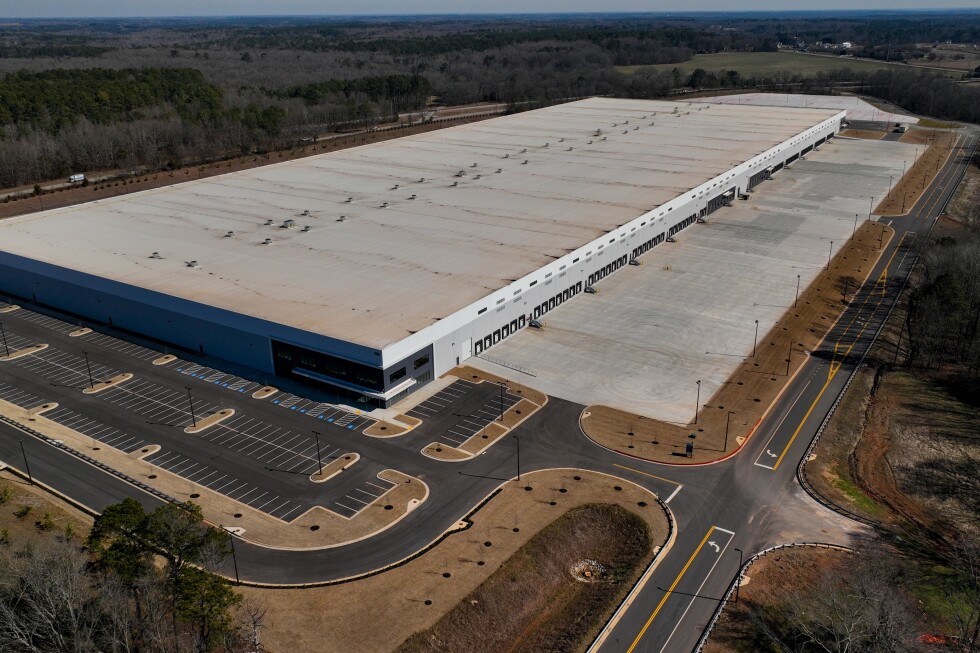
In Socorro, Texas, a town situated near the Rio Grande and a towering border wall, speculation circulated about the federal government’s intentions to acquire three massive warehouses for conversion into a detention center. The Department of Homeland Security (DHS) has already completed a $122.8 million purchase for the 826,000-square-foot facilities, leaving local officials in a state of urgency to comprehend the implications.
Socorro Mayor Rudy Cruz Jr. expressed frustration over the lack of communication from federal authorities regarding the project in this largely Hispanic community. “Nobody from the federal government bothered to pick up the phone or even send us any type of correspondence letting us know what’s about to take place,” Cruz remarked.
This Texas town is among at least 20 U.S. communities targeted by Immigration and Customs Enforcement (ICE) as part of a $45 billion expansion plan for detention facilities. The secretive nature of these acquisitions has stirred concern among locals and officials, even in areas that previously supported such federal measures.
Widespread Community Reactions and Concerns
ICE, a division of DHS, has completed transactions for at least seven warehouse properties across several states, including Arizona, Georgia, Maryland, Pennsylvania, and Texas. Additional deals are in progress, with some halted by buyers. Despite these developments, DHS has refrained from labeling the sites as warehouses, insisting they will be “very well structured detention facilities meeting our regular detention standards.”
The expansion strategy has often caught communities off guard, leading to unease about the potential strain on local resources, such as water supplies and public services. In some cases, local leaders only learned about these plans through media reports or leaked information.
On February 13, the scope of ICE’s warehouse project became clearer when New Hampshire’s governor’s office released an ICE document outlining a $38.3 billion initiative to increase detention capacity to 92,000 beds nationwide. The document mentions plans for eight large-scale centers and 16 smaller processing facilities.
Facility Plans Raise Infrastructure and Economic Concerns
In Socorro, the newly acquired ICE warehouses could accommodate four and a half Walmart Supercenters. At a recent city council meeting, residents voiced their apprehensions, some citing recent deaths at a nearby ICE facility. Concerns over the impact on local infrastructure and tax revenue have also emerged.
In Berks County, Pennsylvania, officials were blindsided by news of a $87.4 million warehouse purchase by ICE, which was marketed as a “state-of-the-art logistics center.” Commissioner Christian Leinbach expressed alarm over the potential loss of significant local tax revenue.
Similarly, in Social Circle, Georgia, the city was taken by surprise by ICE’s plan for a facility that could house twice the city’s population. The $128.6 million acquisition raised questions about whether local utilities could support the proposed center.
In Arizona, the Phoenix suburb of Surprise also reacted strongly when ICE acquired a warehouse near a residential area. State Attorney General Kris Mayes suggested possible legal action to declare the site a public nuisance.
Socorro Residents Mobilize Against Detention Center Plans
Back in Socorro, public opposition to the ICE facility was evident as residents crowded the city council meeting. Eduardo Castillo, a former U.S. Department of Justice attorney, encouraged officials to challenge the federal plans: “If you don’t at least try, you will end up with another inhumane detention facility built in your jurisdiction and under your watch.”