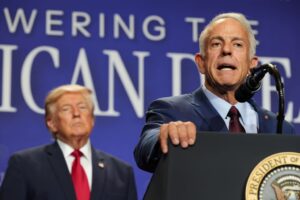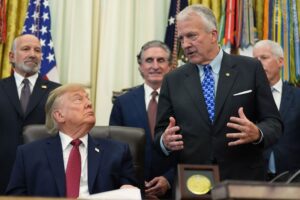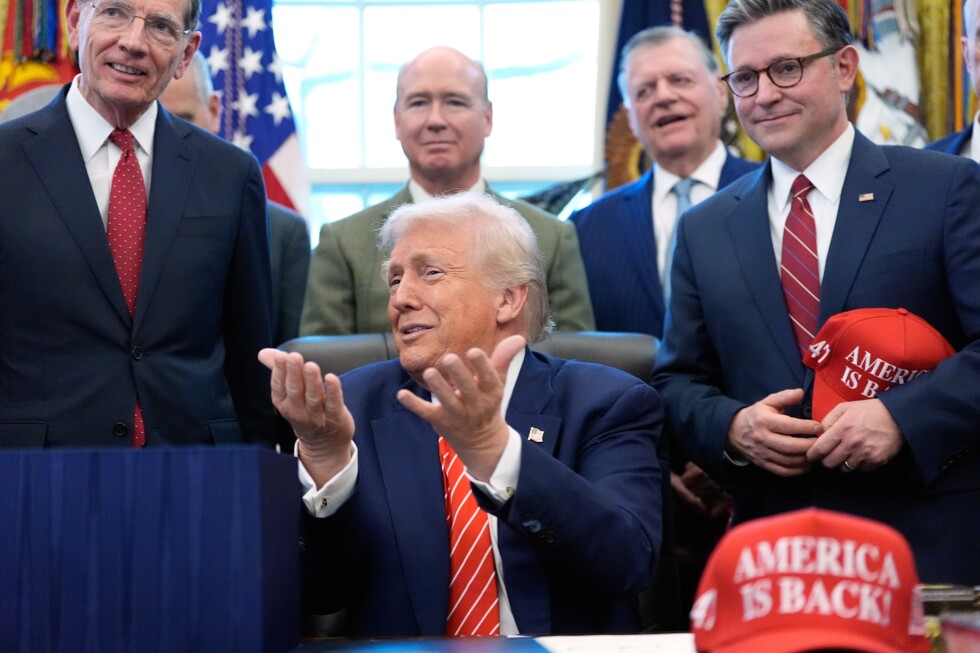
WASHINGTON (AP) — On Tuesday, President Donald Trump approved a government funding measure, valued at approximately $1.2 trillion, effectively concluding the brief federal shutdown that commenced over the weekend. This legislative action paves the way for upcoming rigorous discussions in Congress concerning Homeland Security funding.
The bill swiftly received Trump’s signature following a narrow approval by the House, with a vote tally of 217-214.
“This bill is a great victory for the American people,” Trump remarked regarding the legislation.
This vote finalized congressional efforts on 11 annual appropriations bills, ensuring funding for various government agencies and programs until September 30. Nonetheless, this resolution marks the onset of another fiscal debate, as the Department of Homeland Security is only funded for an additional two weeks, until February 13. This limitation was pushed by Democrats who are advocating for enhanced restrictions on immigration enforcement, following the fatal shootings of Alex Pretti and Renee Good by federal officers in Minneapolis.
Leaders are digging in for a fight
Tensions are expected to rise in upcoming negotiations, particularly impacting U.S. Immigration and Customs Enforcement (ICE), which is responsible for enforcing the nation’s immigration laws.
House Democratic Leader Hakeem Jeffries issued a warning that Democrats would not endorse any further provisional funding for Homeland Security unless substantial reforms to its immigration operations are implemented, hinting at a potential repeat shutdown for the department and its affiliates.
“We need dramatic change in order to make sure that ICE and other agencies within the department of Homeland Security are conducting themselves like every other law enforcement organization in the country,” Jeffries stated.
Meanwhile, Speaker Mike Johnson expressed optimism about a bipartisan agreement being reached before the deadline. “This is no time to play games with that funding. We hope that they will operate in good faith over the next 10 days as we negotiate this,” Johnson commented. “The president, again, has reached out.”
Conversely, Senate Majority Leader John Thune, R-S.D., conveyed skepticism regarding the likelihood of a deal, saying, “There’s always miracles, right?”
Voting with no margin for error
The recently passed funding bill contained elements appealing to both political parties. Republicans successfully avoided an omnibus funding bill, which is typically large and all-encompassing, often leading to increased federal spending, according to their claims.
Democrats, on the other hand, managed to prevent some of Trump’s proposed harsh budget cuts and included provisions to ensure that funds are utilized as directed by Congress.
However, Johnson needed nearly unanimous support from his Republican colleagues to advance the bill to a final vote. This was achieved after an hour-long roll call, during which leaders worked to gain backing from a few GOP members with divergent priorities.
The final vote proved challenging for GOP leaders, with 21 Republicans joining the majority of Democrats in opposing the bill, while an equal number of Democrats supported it alongside most Republicans.
Trump had previously urged Republicans to maintain unity, stating in a social media post, “There can be NO CHANGES at this time.”
Key differences from the last shutdown
The current shutdown, now concluding, was markedly different from the previous year’s lengthy impasse, which affected more agencies and lasted a record 43 days.
Previously, the debate centered around extending temporary subsidies introduced during the coronavirus pandemic for individuals obtaining health coverage via the Affordable Care Act. Democrats were unsuccessful in incorporating those subsidies into the package to end the shutdown.
Significant strides have been made since then. Some of the six appropriations bills passed prior to Tuesday ensured the current shutdown’s impact was minimized. For instance, funding was secured for essential programs like nutrition assistance and for keeping national parks and historic sites operational through September 30.
The additional bills passed on Tuesday mean that a vast majority of the federal government is now funded.
“You might say that now that 96% of the government is funded, it’s just 4% what’s out there?” Johnson remarked. “But it’s a very important 4%.”