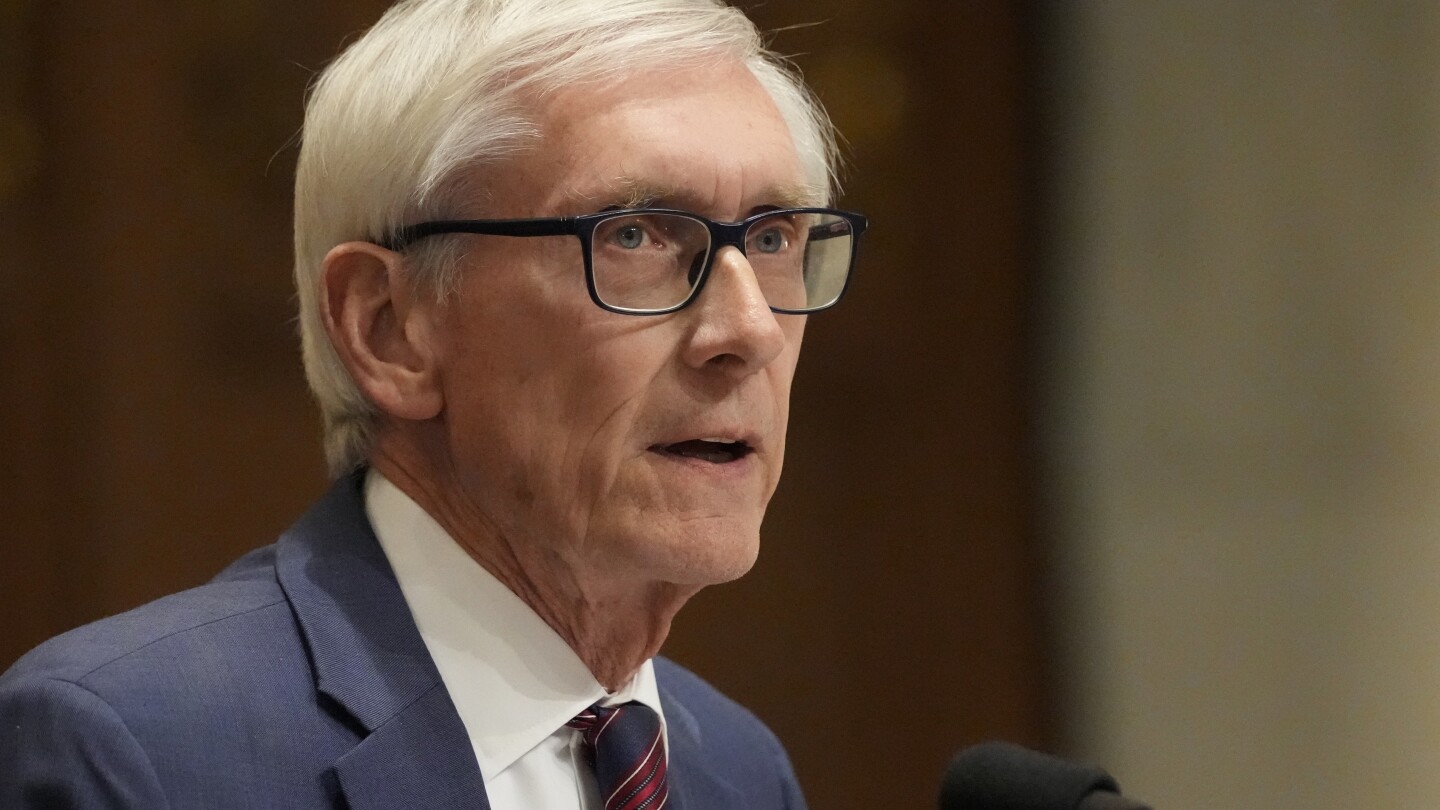
The Wisconsin Supreme Court has ruled in favor of Governor Tony Evers’ bold use of his partial veto power to extend a school funding increase for an unprecedented 400 years. The decision, delivered in a close 4-3 ruling, confirms the constitutional backing of the governor’s action, further cementing Wisconsin’s unique stance on the governor’s partial veto authority.
The Unique Veto Power
Wisconsin stands out as the only state where governors can modify spending bills by altering words, numbers, and punctuation to reshape the intended meaning or funding amounts. This expansive power contrasts with the more limited authority of governors in other states, who typically can only reduce or eliminate funding.
Governor Evers employed this power in 2023 to transform a proposed increase in K-12 school funding, initially set for the 2023-24 and 2024-25 school years, into a 400-year commitment by altering the date to 2425. Evers asserted this move was designed to ensure ongoing financial support for schools “in perpetuity.”
Legal Challenges and Court Ruling
The veto faced opposition from the Legislature and Wisconsin Manufacturers & Commerce, arguing it violated a 1990 constitutional amendment that restricted forming new words by striking individual letters, known as the “Vanna White” veto. However, Evers defended his action, emphasizing the distinction between creating new words and altering numbers, which the Supreme Court upheld.
Justice Jill Karofsky, writing for the majority, acknowledged the significant and unconventional nature of the modification, stating, “We are acutely aware that a 400-year modification is both significant and attention-grabbing.” Yet, the ruling emphasized that the state constitution does not constrain the extent of policy change through partial vetoes.
Reactions and Implications
The decision was met with criticism from Republican leaders and the court’s conservative justices. Justice Brian Hagedorn expressed concern over what he described as a “fantastical state of affairs,” suggesting the ruling effectively grants the governor legislative powers through the partial veto.
Despite the controversy, Governor Evers hailed the decision as beneficial for Wisconsin’s public education system. Meanwhile, Republican figures, including Assembly Speaker Robin Vos, criticized the ruling as partisan and warned it could lead to increased property taxes to compensate for the expanded funding authority.
Historical Context and Future Considerations
Wisconsin’s partial veto power, established through a 1930 amendment, has been a tool for governors to reshape budgets, often resulting in strategic maneuvers between the governor’s office and the Legislature. The latest ruling is expected to influence forthcoming legislative sessions, particularly regarding the state’s budgetary process.
While the ruling provides a path for legislative alterations, including potential amendments to limit the governor’s veto powers, the court refrained from endorsing these measures, merely presenting them as possible legislative responses.
As the debate over executive authority and legislative oversight continues, the ruling underscores the dynamic interplay of power in Wisconsin’s state government.