Wisconsin’s spring election is set to make waves as voters head to the polls to elect a new state Supreme Court justice and decide the first open-seat mayoral race in Waukesha in two decades. The outcomes of these races may influence the state’s judicial and political landscape for years to come.
The competition for the high court spot features state Appeals Court judges Chris Taylor and Maria Lazar, both aiming to succeed retiring conservative Justice Rebecca Bradley. Taylor, a former Democratic state representative, has the backing of the court’s sitting liberal justices. On the other hand, Lazar, who served under former Republican Governor Scott Walker, has received an endorsement from conservative Justice Annette Ziegler.
While the election hasn’t garnered the high profile of previous Supreme Court contests, the new justice will play a pivotal role in potential political disputes, including the 2028 presidential election and future congressional redistricting battles. Justices serve a decade-long term, providing a long window of influence.
Liberal justices are on a winning streak, having secured a 4-3 majority on the court in 2023 with Justice Janet Protasiewicz’s election. Justice Susan Crawford preserved this majority in 2025 despite significant financial backing for her conservative opponent from groups linked to Elon Musk.
Election dynamics in Wisconsin often see Democrats dominating in the populous Milwaukee and Dane counties, while Republicans perform well in rural areas and rely on strong results in the “WOW” counties—Waukesha, Ozaukee, and Washington—to balance the scales. The outcomes hinge on the margins in these strongholds and the sway over swing regions.
In past elections, Milwaukee and Dane counties have shown strong Democratic support. For instance, in the 2024 presidential race, then-Vice President Kamala Harris captured 68% and 75% of the vote in these counties, respectively. Protasiewicz and Crawford, meanwhile, achieved even higher percentages in their races, leading to their statewide victories.
Meanwhile, the Waukesha mayoral race features Alicia Halvensleben, endorsed by Mayor Shawn Reilly and the Waukesha County Democratic Party, against state Rep. Scott Allen, a conservative Republican. Reilly, an independent who left the Republican Party post-January 6, has thrown his support behind Halvensleben.
As votes are cast, the Associated Press will refrain from making early projections, declaring winners only when the outcome is clear. Recounts in Wisconsin are not automatically triggered and occur only upon request if the margin is under one percentage point.
Key Election Details
When do polls close?
Polling stations will close at 8 p.m. local time, equivalent to 9 p.m. ET.
What’s on the ballot?
Voters will decide on the state Supreme Court justice and Waukesha mayor.
Who can vote?
All registered voters in Wisconsin are eligible to participate in this election.
Turnout and Advance Voting
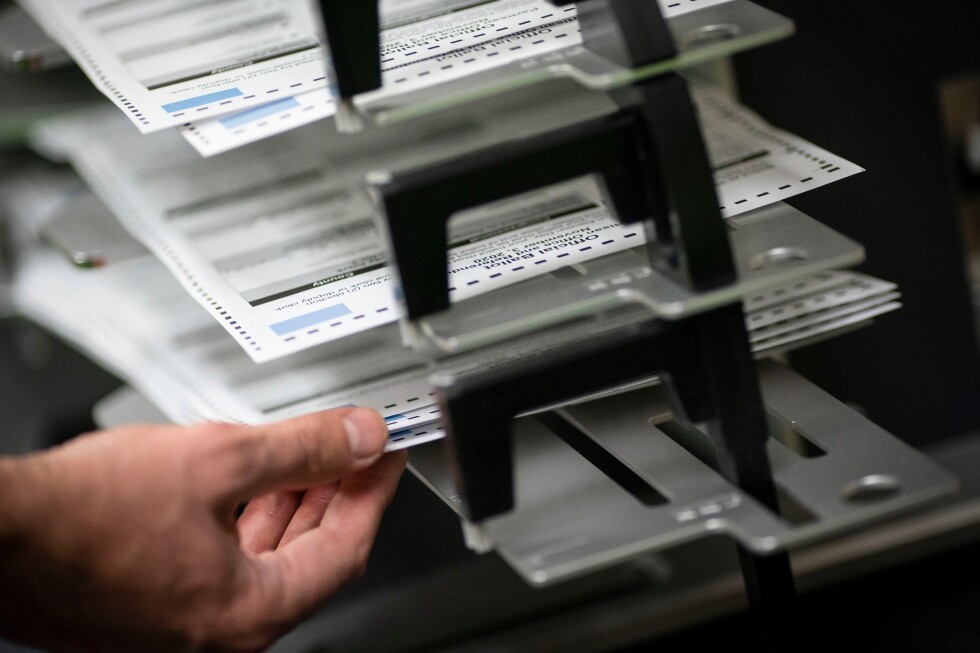
Wisconsin has approximately 3.6 million active registered voters. In 2025, nearly 2.4 million votes were cast, accounting for about 62% of registered voters, with 29% voting early. As of the latest update, 281,000 ballots have been submitted.
Vote Counting Timeline
In the 2025 election, initial results for the Supreme Court were reported at 9:09 p.m. ET, with the final update at 2:12 a.m. ET. The race was called by 10:16 p.m. ET.
Early and Absentee Vote Release
Results from early and absentee voting are released at varying times by counties, with some providing them in early updates and others throughout the evening.
Countdown to Midterm Elections
With the current election, there are 210 days remaining until the 2026 midterm elections.
For ongoing coverage of the 2026 elections, visit the Associated Press at https://apnews.com/projects/elections-2026/.