Utah Legislative Push to Expand Supreme Court Faces Scrutiny
In Salt Lake City, discussions are heating up as Utah’s legislative body considers expanding the state Supreme Court from five to seven justices. Utah Supreme Court Chief Justice Matthew Durrant has expressed concern over potential political motivations behind the move, suggesting it could disrupt the balance between the legislative and judicial branches.
Governor Spencer Cox and Republican leaders argue that increasing the number of justices will enhance the court’s efficiency. However, legal experts caution that this change might slow down decision-making and set a concerning precedent, especially considering recent judicial decisions that haven’t favored the Legislature on contentious issues like abortion laws, transgender athlete participation, and voter initiative alterations.
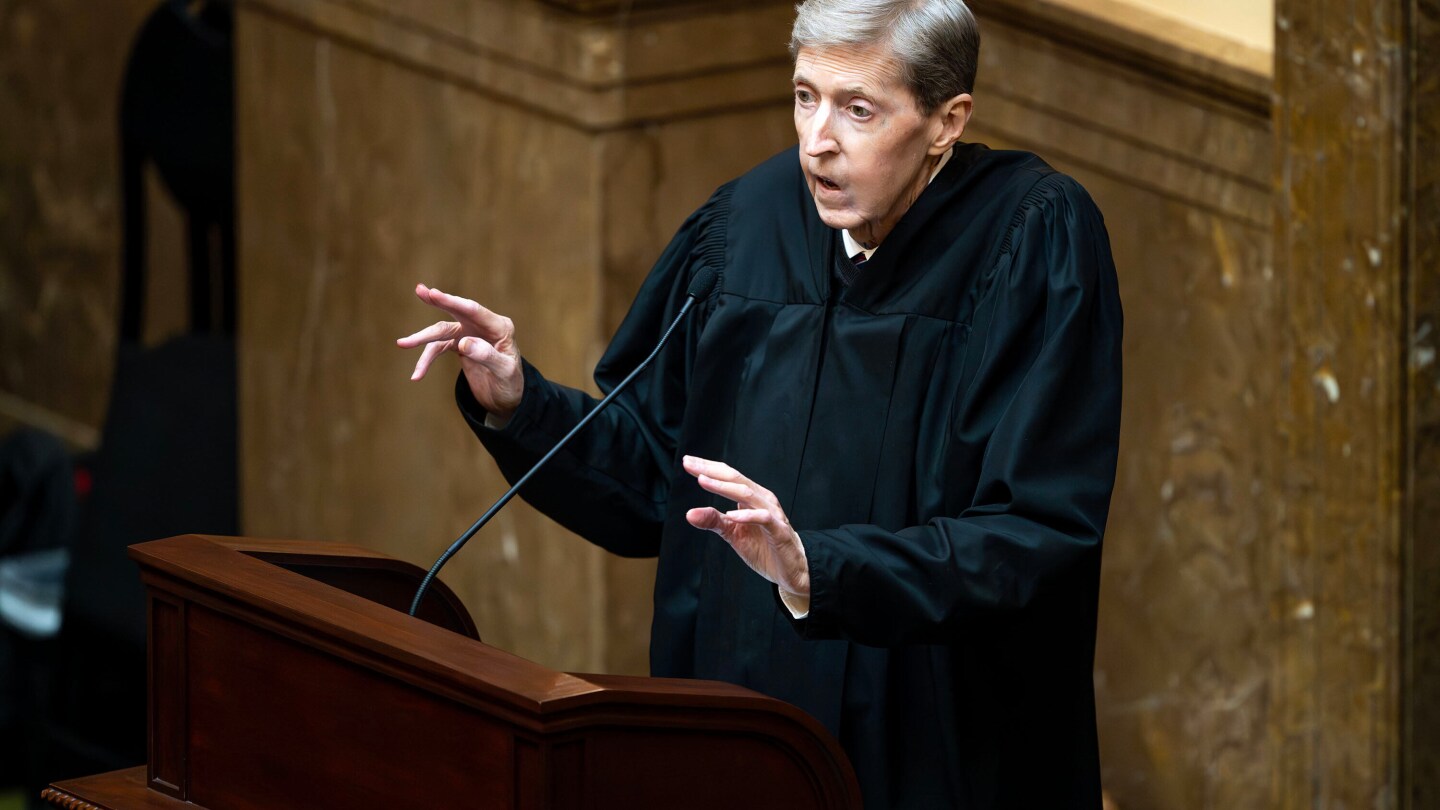
“I ask that your disappointment with a few results not lead to penalties for an entire branch of government and, by extension, penalties for your constituents,” stated Chief Justice Durrant in his annual address, urging lawmakers to consider the implications of their actions.
While the proposal for expansion is within the legislative purview, Durrant suggested a greater need for additional judges in lower courts. Governor Cox’s budget proposal includes $2.8 million earmarked for the potential new Supreme Court positions, yet former Associate Chief Justice John Pearce argues these funds could significantly benefit district and trial courts.
“If we’re really concerned about the efficiency of the judiciary, there are places where money would be much better spent than at the Supreme Court,” Pearce commented, indicating that adding justices might delay rather than expedite judicial opinions.
Utah would align more closely with states of similar size, as most have five to seven justices, with some states like Arizona and Georgia having expanded their courts for similar reasons. However, past experiences, like Arizona’s 2016 expansion, have shown that more justices don’t necessarily lead to increased efficiency.
Chris Peterson, a University of Utah law professor, suggested an alternative solution: adding a judicial clerk for each justice to aid in faster processing of cases. Peterson warned of the risks associated with expanding the court, noting, “The fear is that if powerful political interests don’t get their way, they can simply add new justices… It can escalate and undermine trust in our government.”
As discussions continue, another legislative proposition seeks to increase judgeships in district, juvenile, and appellate courts. The debate over court expansion is happening in the aftermath of a December special session where Republican lawmakers moved to shift the authority of appointing the chief justice from the Supreme Court to the governor, further stirring concerns about political interference.
Governor Cox has dismissed claims that the proposal to add justices is politically charged, highlighting that recent appointments have been made by Republican leaders. Nevertheless, the proposal has raised worries about the potential for political manipulation within the state’s judicial system.