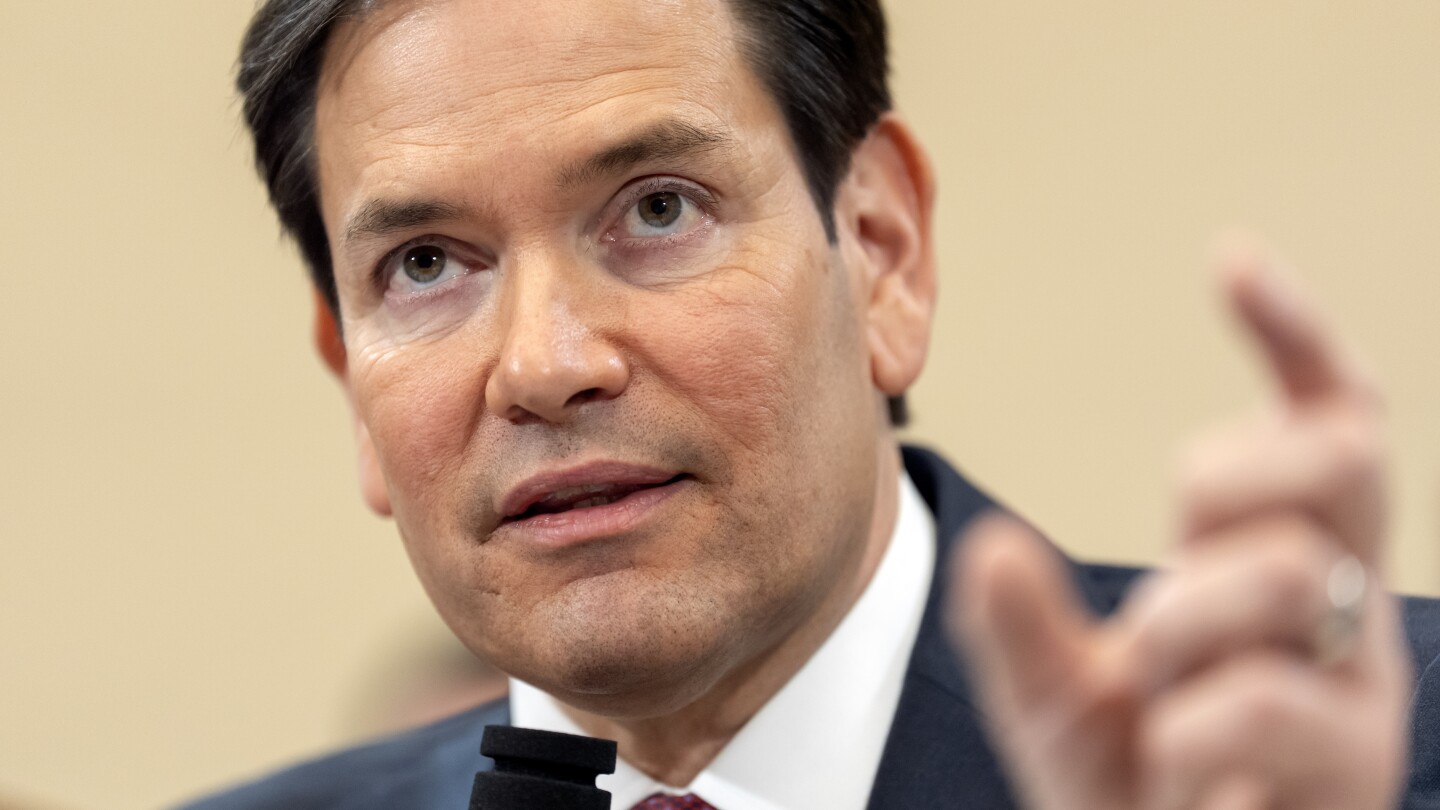
WASHINGTON (AP) — The United States has announced a significant policy shift regarding Chinese students studying in the country. Secretary of State Marco Rubio revealed on Wednesday that the U.S. plans to begin revoking visas for certain Chinese students, particularly those studying in sensitive areas or linked to the Chinese Communist Party.
China ranks as the second-largest source of international students in the U.S., following India. During the 2023-2024 academic year, over 270,000 students from China were enrolled in U.S. institutions, accounting for about 25% of all international students.
In a statement, Rubio said, “Under President Trump’s leadership, the U.S. State Department will work with the Department of Homeland Security to aggressively revoke visas for Chinese students, including those with connections to the Chinese Communist Party or studying in critical fields.”
The Chinese Embassy in Washington has yet to provide a comment on this development.
Increased Scrutiny of U.S.-China Academic Ties
This move comes amid heightened scrutiny of the relationship between U.S. higher education institutions and China. Earlier this month, House Republicans urged Duke University to sever its connections with a Chinese university, citing concerns over access to federally funded research.
A report from House Republicans last year pointed to substantial defense funding being channeled into research partnerships with entities linked to the Chinese government, potentially providing “back-door access” to a foreign adversary.
Similar concerns were raised by the Department of Homeland Security in a letter to Harvard University, accusing it of “coordinating with the Chinese Communist Party” through its research collaborations.
The visa policy change was introduced shortly after Rubio suspended new visa interview schedules for international students to implement more stringent social media activity vetting.
Impact on International Students
The announcements have compounded uncertainty for international students in the U.S., who have already faced intensified scrutiny under the Trump administration.
Earlier in the year, Immigration and Customs Enforcement attempted to deport students involved in campus protests, and the administration has previously terminated thousands of international students’ legal status before reversing the decision.
Vladyslav Plyaka, a University of Wisconsin student from Ukraine, expressed his concerns about traveling to renew his visa due to the suspension of visa appointments. “I don’t think I have enough trust in the system at this point,” said Plyaka. “I understand it probably is done for security measures, but I would probably just finish my education for the next two or three years and then come back to Ukraine.”
The administration also moved to block Harvard University from enrolling any international students, a decision currently on hold due to a lawsuit. President Trump has suggested that Harvard should limit its international student population to 15%.
“I want to make sure the foreign students are people that can love our country,” Trump stated in the Oval Office.
National Security Concerns
The action on Chinese students reinforces a priority to curb U.S.-China academic ties, which Republicans have labeled a national security risk. The Education Department has intensified enforcement of a rule requiring colleges to disclose foreign funding sources.
In recent investigations, it was found that U.S. universities underreported financial contributions from countries like China and Russia. Amid these developments, Eastern Michigan University has announced it will end engineering partnerships with two Chinese universities under political pressure.
Northeastern University, with a significant international student body, has developed “contingency plans” for potential visa delays, according to spokesperson Renata Nyul.
Revised Visa Application Reviews
Rubio also announced plans to revise visa criteria, enhancing scrutiny on visa applications from China and Hong Kong. Since 2019, visa applicants have had to provide social media details to the State Department. The new guidelines suggest these reviews may become more intensive.
Jonathan Friedman from PEN America voiced concerns about the potential impact on the U.S.’s role in global intellectual exchange. “The details remain vague, but this policy risks upending the long-standing place of the U.S. as a beacon for intellectual and cultural exchange with the world,” Friedman said.
The Trump administration’s decision to cut over $2.6 billion in federal grants to Harvard, demanding policy changes, has led to a lawsuit by the university. Trump has criticized Harvard as a “hotbed of liberalism and antisemitism.”