U.S. Lifts Sanctions on Brazilian Justice and Family Following Diplomatic Talks
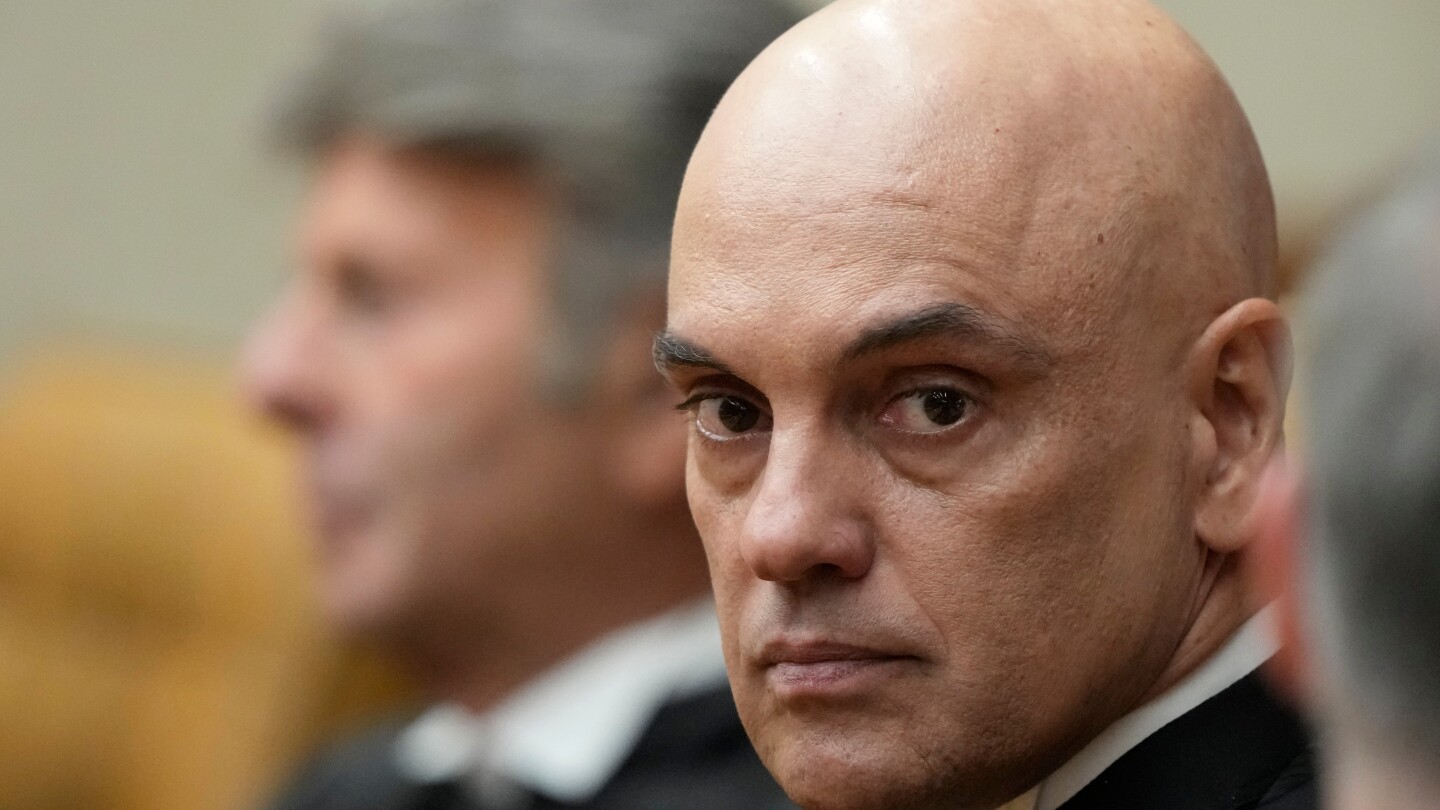
The United States has decided to remove Brazilian Supreme Court Justice Alexandre de Moraes from its sanctions list. This decision follows an initial sanction placed on him due to his role in the trial of former Brazilian President Jair Bolsonaro.
Documents from the Treasury’s Office of Foreign Assets Control also show that de Moraes’ wife and the organization she leads, the Lex Institute, were removed from the list. This development occurred after a phone call between U.S. President Donald Trump and Brazil’s President Luiz Inácio Lula da Silva.
Gleisi Hoffmann, Brazil’s minister for institutional relations, commented, “It was Lula who put this repeal (of the sanctions) on Donald Trump’s desk, in a dignifying and sovereign dialogue,” adding that it was a significant setback for Jair Bolsonaro’s family.
A senior official from the Trump administration, speaking anonymously, explained that the sanctions were lifted as a result of Brazil’s lower house passing an important amnesty bill, signaling an improvement in the legal environment in Brazil.
Initially, the Trump administration sanctioned de Moraes in July, accusing him of misusing his position to authorize arbitrary detentions and curb free expression in Brazil.
Lula’s administration has accused Eduardo Bolsonaro, a lawmaker and son of the former president, of misleading Trump about de Moraes. Eduardo Bolsonaro expressed his displeasure on receiving the news about the lifting of sanctions.
The Brazilian Supreme Court has not commented on this decision by the U.S. government. Meanwhile, former President Bolsonaro was sentenced to over 27 years in prison for alleged efforts to remain in power despite his election loss to Lula. Unlike anticipated upheavals, his arrest did not trigger significant unrest, although he remains a political force in Brazil.
Eduardo Bolsonaro, who is now residing in the U.S. to lobby against his father’s imprisonment, vowed to continue his efforts, expressing concerns about internal and international support.
The Treasury Department had initially used the Global Magnitsky Human Rights Accountability Act to justify the sanctions against de Moraes, which the judge described as “illegal and regrettable.”
Alongside the sanctions, the Trump administration had imposed a 40% tariff on Brazilian products, citing economic emergencies related to Brazil’s policies and Bolsonaro’s prosecution. Political consultant Thomas Traumann noted that the U.S. seeks a normalized relationship with Brazil despite political differences.
Traumann highlighted that the U.S. has removed most of the increased tariffs and shifted its focus to security and trade, making Brazil somewhat neutral in regional affairs. Diplomatic relations improved after talks at the United Nations General Assembly in September and continued with private meetings and calls.
President Lula has also advocated for Latin American cooperation to avoid conflict in Venezuela, amidst military actions ordered by the Trump administration against certain vessels. Recently, Trump signed an order to reduce tariffs on some Brazilian agribusiness products, as the U.S. registered a $6.8 billion trade surplus with Brazil last year.