U.S. Lifts Sanctions on Venezuela’s Acting President Delcy Rodríguez
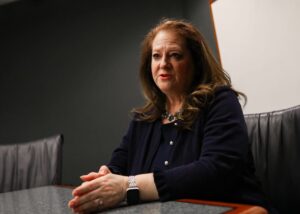
The United States has lifted sanctions on Delcy Rodríguez, who is recognized as Venezuela’s acting president, as per an update from the Office of Foreign Assets Control on the Treasury Department’s website. This development is part of a broader U.S. acknowledgment of Rodríguez’s authority following the capture of her predecessor, Nicolás Maduro, and his wife in Caracas on January 3.
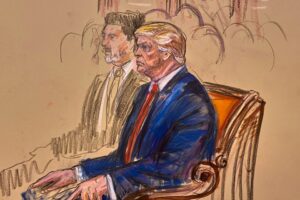
Maduro and his wife have been transferred to New York to face charges related to drug trafficking, with both maintaining their innocence during court proceedings. The removal of sanctions permits Rodríguez to engage more freely with American businesses and investors. In a statement, Rodríguez conveyed optimism about the future of U.S.-Venezuela relations without directly addressing the sanctions.
“We value President Donald Trump’s decision as a step toward normalizing and strengthening relations between our countries,” Rodríguez stated on her Telegram channel. “We trust that this progress will allow for the lifting of current sanctions against our country, enabling us to build and guarantee an effective bilateral cooperation agenda for the benefit of our people.”
In the past, Rodríguez and her brother, Jorge Rodríguez, faced U.S. sanctions during Trump’s first term due to allegations of undermining democracy in Venezuela. These sanctions were imposed following Maduro’s re-election in 2018, which was criticized for excluding opposition candidates.
The Treasury Department had noted, “Maduro has given Delcy Eloina Rodríguez Gomez and Jorge Jesus Rodríguez Gomez senior positions within the Venezuelan government to help him maintain power and solidify his authoritarian rule.” Despite this, the current administration has opted to collaborate with Rodríguez after Maduro’s removal, entrusting her with leading Venezuela’s engagement with international investors and opening the nation to private capital and arbitration.
Recently, Rodríguez was acknowledged as the “sole Head of State” by the U.S. in a civil case. Moreover, the U.S. government has eased restrictions on key Venezuelan sectors, allowing the state-owned Petróleos de Venezuela S.A. (PDVSA) to sell oil directly to American companies and in global markets, marking a substantial policy shift.
Despite these developments, Maduro retains his presidential title in Venezuela. Following the January 3 operation, the Venezuelan high court, which aligns with the ruling party, deemed his absence “temporary,” thus delaying the need for an election and maintaining the legal protections of his office. Rodríguez was appointed to serve as acting president for up to 90 days, with the potential for extension if approved by the National Assembly, led by her brother. This 90-day period concludes on Friday.