The Debate on Presidential War Powers and Recent U.S. Actions in Iran
In 1916, President Woodrow Wilson campaigned for reelection with the promise, “He kept us out of war,” only to lead the United States into World War I soon after. This historical comparison resonates today with the recent actions of President Donald Trump. Despite previously advocating for an end to “forever wars,” Trump has authorized military action in Iran, highlighting a significant shift in his foreign policy stance.
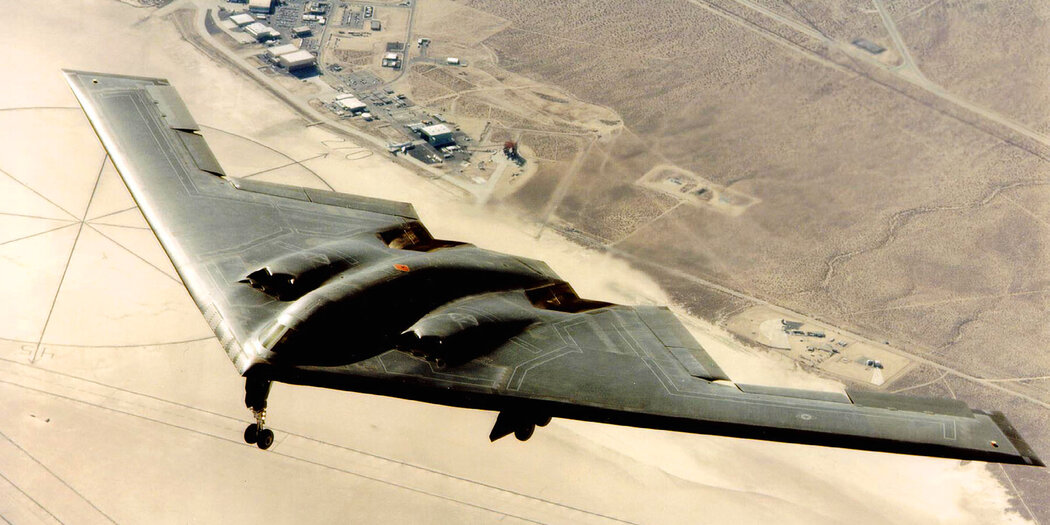
The issue of Iran’s nuclear aspirations has long been a subject of international concern. However, recent U.S. military strikes in Iran call into question the proper authorization for such actions. According to the Brennan Center, these military interventions must receive Congress’s approval.
The War Powers Resolution of 1973 was enacted by Congress to prevent unchecked presidential military authority after the Vietnam War. This resolution allows the president to engage in military actions only under three circumstances: when Congress declares war, when Congress authorizes military force, or in response to a “national emergency created by attack” on the United States. The resolution further mandates that the president consult Congress “in every possible instance” and notify them within 48 hours of military action. If Congress does not authorize the military action within 60 days, operations must cease.
Presidents historically have respected these guidelines for significant military actions. For instance, George H. W. Bush secured congressional support for the Gulf War in 1991, and George W. Bush received approval for the Iraq War. The military response to the September 11 attacks also received congressional endorsement.
However, many presidents have bypassed congressional approval for limited military actions. The recent strike on Iran, targeting its military infrastructure, was not a minor operation. Iran, a nation with a population of 93 million, has been accused of sponsoring terrorism and exerting influence over regions such as Lebanon, Syria, and Yemen. As former Defense Secretary James Mattis noted, “The enemy gets a vote,” underscoring the unpredictable nature of military conflicts.
Critics highlight that there was no “national emergency created by attack” justifying the strike on Iran. The Director of National Intelligence recently testified that Iran is not actively pursuing nuclear weapons, a claim that contradicts the emergency narrative. Vice President JD Vance acknowledged the intelligence community’s assessment but emphasized, “we also trust our instincts.”
Supporters of the strike cite the president’s role as commander in chief as justification. A recent letter to Congress described the action as necessary “to advance vital United States interests, and in collective self-defense of our ally, Israel.” However, critics argue this rationale is insufficient.
Concerns about expanding presidential powers are not new. Trump’s administration has previously declared emergencies to impose tariffs and employed the Alien Enemies Act against migrants. David Frum commented on this trend, noting that while Trump has not sent troops to Iran, he has controversially stationed them in California.
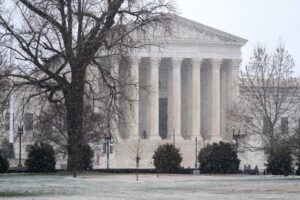
The judiciary is unlikely to intervene in presidential military decisions, leaving Congress as the primary check on executive power. A bipartisan resolution led by Rep. Thomas Massie (R-KY) and Sen. Tim Kaine (D-VA) seeks to assert congressional authority over military decisions in Iran. Despite House Speaker Mike Johnson’s dismissal of the measure as “all politics,” it underscores the ongoing debate over war powers.
Historically, Congress has often relinquished its war-making authority, avoiding responsibility and allowing for an “imperial presidency.” As James Madison wrote to Thomas Jefferson in 1798, “The Constitution supposes, what the History of all Governments demonstrates, that the Executive is the branch of power most interested in war, and most prone to it. It has accordingly with studied care, vested the question of war in the Legislature.”