Trump to Attend Supreme Court Hearing on Birthright Citizenship
WASHINGTON (AP) — President Donald Trump is set to attend the Supreme Court’s oral arguments on birthright citizenship this Wednesday, marking a historic moment as no sitting president has previously participated in such proceedings at the nation’s highest court.
According to a schedule released by the White House, the Republican president will be present at the Supreme Court to witness justices hear his appeal against a lower court’s decision. This decision had invalidated his executive order aimed at restricting birthright citizenship.
The executive order, signed by Trump at the onset of his second term, stipulates that children born in the United States to parents who are either illegally present or temporarily residing are not considered American citizens. This stance contrasts with the traditional interpretation of the 14th Amendment of the Constitution and federal law, which have long granted citizenship to individuals born on U.S. soil, with limited exceptions, since 1940.
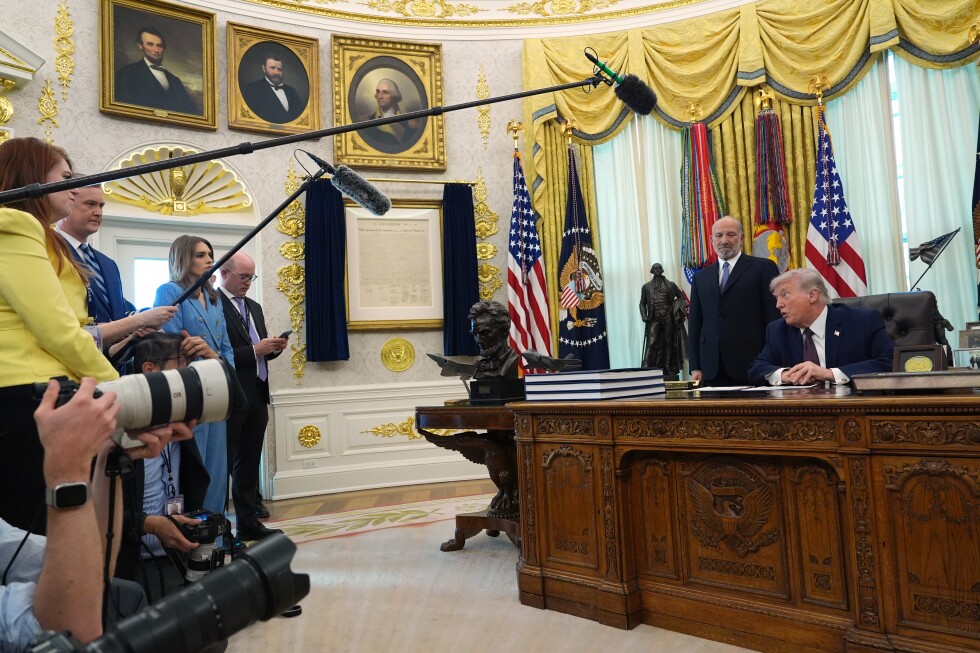
While Trump previously considered attending a Supreme Court hearing regarding tariffs, he refrained, citing potential distractions. However, on Tuesday, Trump expressed certainty about attending Wednesday’s hearing when speaking with reporters in the Oval Office.
“I’m going,” Trump confirmed when questioned about the birthright citizenship case. When asked if he would attend in person, he added, “I think so, I do believe.”
During his first term, Trump visited the Supreme Court for the ceremonial swearing-in of Neil Gorsuch, the first justice he appointed. Brett Kavanaugh and Amy Coney Barrett, two other Trump appointees, also currently serve on the bench.
Though other presidents have interacted with the Supreme Court, none have done so while in office. Richard Nixon argued a case post-vice presidency and pre-presidency, and William Howard Taft served as chief justice following his presidency.
When asked about his focus during the hearing, Trump elaborated on his perception of a court divided along partisan lines, with justices appointed by both Republican and Democratic presidents. “I love a few of them,” he stated. “I don’t like some others.”
The proposed citizenship restrictions are an element of Trump’s extensive immigration policy reforms, yet they remain unenforced nationwide due to multiple court injunctions. A conclusive Supreme Court ruling is anticipated by early summer.