WASHINGTON (AP) — On Tuesday, President Donald Trump signed an executive order aimed at establishing a comprehensive list of verified eligible voters across the United States. This initiative is anticipated to face legal challenges, as it aligns with the president’s continued efforts to impose stricter voting regulations before the upcoming midterm elections.
The executive order instructs the Department of Homeland Security to collaborate with the Social Security Administration in compiling the list of eligible voters in each state, according to the White House. Additionally, it seeks to prevent the U.S. Postal Service from distributing absentee ballots to individuals not included on the approved lists, despite the president’s likely lack of authority over the Postal Service’s operations.
As outlined in the executive order, which was first reported by the Daily Caller, Trump is also advocating for the use of secure envelopes with unique barcodes for tracking ballots.
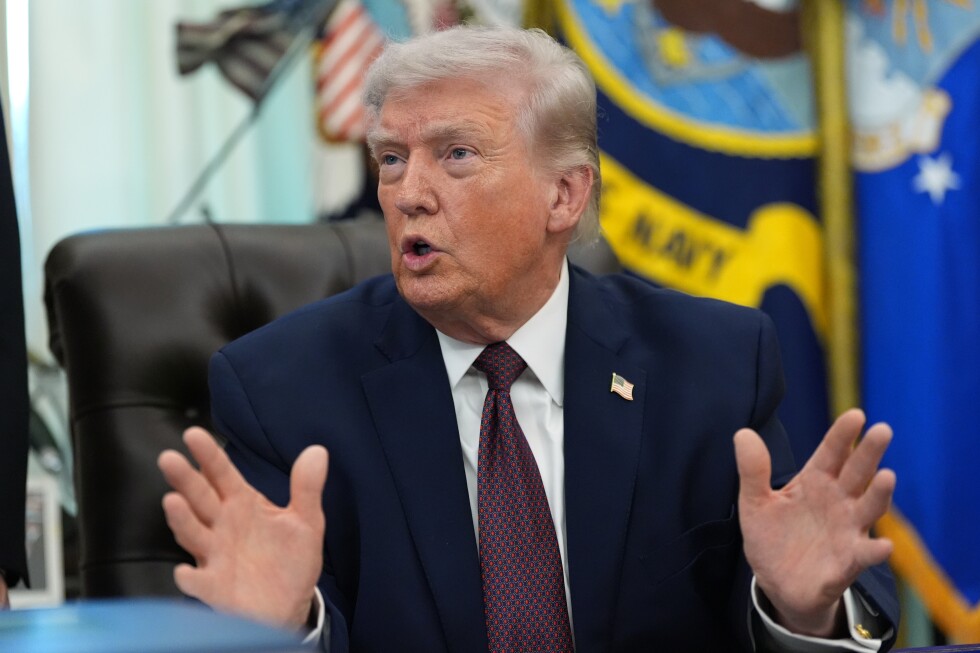
“The cheating on mail-in voting is legendary. It’s horrible what’s going on,” Trump stated, reiterating his unsubstantiated claims about mail-in voting fraud while signing the order. “I think this will help a lot with elections.”
The executive order is expected to lead to legal disputes as Trump continues his attempts to influence state-run elections.
In March 2025, Trump introduced his first election-related executive order, which proposed significant changes to election processes nationwide. These proposals included requiring documentary proof of citizenship for federal voter registration and mandating that mailed ballots be received by Election Day. Many of these proposals have been blocked through legal actions initiated by voting rights organizations and Democratic state attorneys general, who argue that the measures represent an unconstitutional overreach that could disenfranchise numerous voters.
During a February interview with a conservative podcaster, Trump expressed his desire to “take over” elections from areas governed by Democrats, despite fraud allegations having been debunked by various audits, investigations, and court rulings.
David Becker, a former Justice Department lawyer and leader of the Center for Election Innovation and Research, commented on the new executive order, stating, “The Constitution is very clear — the president has no power over elections in the states. This will be blocked as soon as lawyers can get to the courthouse.” Becker also noted that the U.S. Postal Service operates under a board of governors, and the president cannot dictate which mail it delivers.
Marc Elias, a voting rights litigator and founder of Democracy Docket, warned on social media, “If Trump signs an unconstitutional Executive Order to take over voting, we will sue. I don’t bluff and I usually win.”
The decentralized nature of U.S. elections is unique, as they are conducted by local election officials and volunteers across thousands of jurisdictions, from small townships to large urban counties. The Constitution’s “Elections Clause” grants Congress the power to “make or alter” election regulations for federal offices but does not provide any presidential authority over election administration.
The Trump administration has initiated an extensive campaign purportedly aimed at addressing voter fraud allegations, which have frequently been propagated by Trump and his supporters without evidence. The Justice Department has been requesting detailed voter registration data from states to purportedly ensure election security, and has resorted to legal action when states have refused to comply.
In January, the FBI confiscated ballots from a Georgia county election office, which has been central to right-wing conspiracy theories regarding Trump’s 2020 election loss. Attorney General Pam Bondi appointed Daniel Bishop, the leading federal prosecutor for North Carolina’s Middle District, as a “special attorney” with the authority to investigate and prosecute election integrity cases nationwide.
The Department of Homeland Security’s SAVE system, used for verifying citizenship and immigration status, has faced criticism from voting-rights groups for yielding inaccurate results and raising privacy concerns. The system allows for bulk searches with Social Security numbers, but many states do not collect full Social Security numbers during voter registration, according to the Brennan Center for Justice. Despite a recent overhaul by the Trump administration, the system still faces legal challenges over its reliability and impact on eligible voters.
President Trump has been a vocal opponent of mail-in voting, claiming widespread fraud and advocating for a legislative package to restrict the practice. However, his fraud accusations lack evidence; a 2025 Brookings Institution report found that mail voting fraud occurred in only 0.000043% of mail ballots, equating to approximately four cases per 10 million ballots. Despite his opposition to universal mail-in voting, Trump has utilized mail ballots himself, most recently in Florida’s local elections. The White House maintains that Trump’s opposition is directed at universal mail-in voting, not individual cases where alternative voting methods are necessary, such as for travel or military deployment.