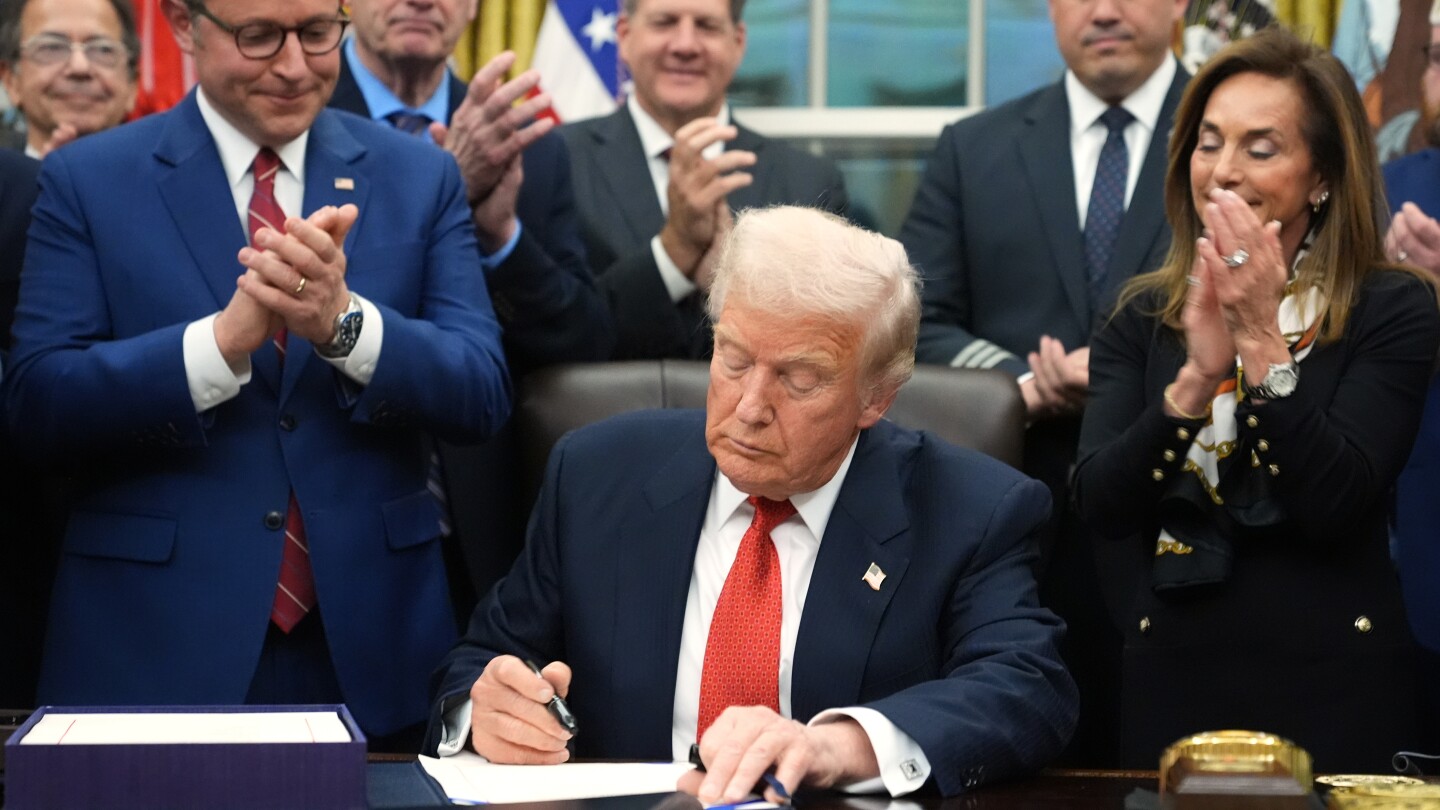
Government Shutdown Ends After 43 Days
WASHINGTON — A government shutdown lasting 43 days has ended with President Donald Trump signing a funding bill late Wednesday night. The shutdown, the longest in U.S. history, affected federal workers who missed paychecks, led to airport delays, and increased demand at food banks.
Throughout the shutdown, partisan tensions were heightened as President Trump took significant actions to pressure Democrats, including project cancellations and attempts to dismiss federal employees. Trump attributed the shutdown to Democratic actions, urging voters to consider this during the upcoming midterm elections. “So I just want to tell the American people, you should not forget this,” Trump stated. “When we come up to midterms and other things, don’t forget what they’ve done to our country.”
The funding measure passed the House with a 222-209 mostly party-line vote, following its approval by the Senate earlier in the week. Central to the disagreement was the Democratic push to extend a health coverage tax credit under the Affordable Care Act, set to expire at year-end, which Republicans deemed a separate issue.
Legislative Outcomes Amidst Shutdown
The debate on the House floor underscored the intense pressures and frustrations caused by the shutdown. House Speaker Mike Johnson accused Democrats of leveraging the shutdown to secure policy victories, stating, “They knew it would cause pain and they did it anyway.” Democrats countered by criticizing Republicans for prioritizing tax breaks benefiting the wealthy, while leaving health care tax credits unresolved.
Rep. Jim McGovern, D-Mass., expressed concern that the current bill “leaves families twisting in the wind with zero guarantee there will ever, ever be a vote to extend tax credits to help everyday people pay for their health care.” Democratic leader Hakeem Jeffries vowed to continue efforts to secure the subsidy extension, declaring, “This fight is not over. We’re just getting started.”
The House had not convened since mid-September, following a short-term funding measure to keep the government operational into the new fiscal year. With the recent agreement, three annual spending bills are funded, and overall government funding is extended through January 30. A commitment was made by Republicans to hold a vote on health care subsidies by mid-December, though the outcome remains uncertain.
Key Provisions in the New Funding Bill
This legislation results from a bipartisan agreement among eight senators, acknowledging that Republicans would not support using government funding to extend health care tax credits. The bill reverses the firing of federal workers initiated during the shutdown and prevents further layoffs, ensuring federal employees receive back pay. It also guarantees the continuation of important food assistance programs under the Agriculture Department.
Security funding is addressed in the bill, allocating $203.5 million for lawmakers’ security and $28 million for Supreme Court justices. Additionally, a provision allows senators to sue federal agencies for unauthorized searches of electronic records, potentially awarding up to $500,000 per violation. This aspect faced criticism from both parties, with Johnson expressing dissatisfaction and promising a future vote.
The debate over the expiring health care tax credits, which enable affordable insurance through ACA marketplaces, was particularly contentious. Rep. Nancy Pelosi, D-Calif., argued the credits were essential for expanding health care access, stating, “All they have done is try to eliminate access to health care in our country. The country is catching on to them.” The Congressional Budget Office warned that without the credits, premiums could more than double, and over 2 million people might lose coverage.
Future of Health Care Legislation
With a December Senate vote looming, the health care debate continues. Some Republicans are open to extending the pandemic-era tax credits but seek additional eligibility limits. Sen. Susan Collins, R-Maine, supports extending the credits with certain modifications, like income caps, and some Democrats may consider this compromise.
However, skepticism remains high among House Democrats about achieving a breakthrough in the Senate. Rep. Rosa DeLauro of Connecticut noted Republicans’ longstanding goal to repeal health care reforms, warning, “That’s where they’re trying to go.”
For ongoing updates on the federal government shutdown, visit AP’s government shutdown hub.