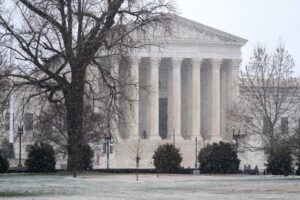
WASHINGTON (AP) — The Supreme Court’s recent decision to overturn President Donald Trump’s global tariffs has sparked a significant clash between Trump’s expectations and the court’s commitment to independence. Six justices, including two appointed by Trump, voted against the tariffs, which were enacted under an emergency powers law.
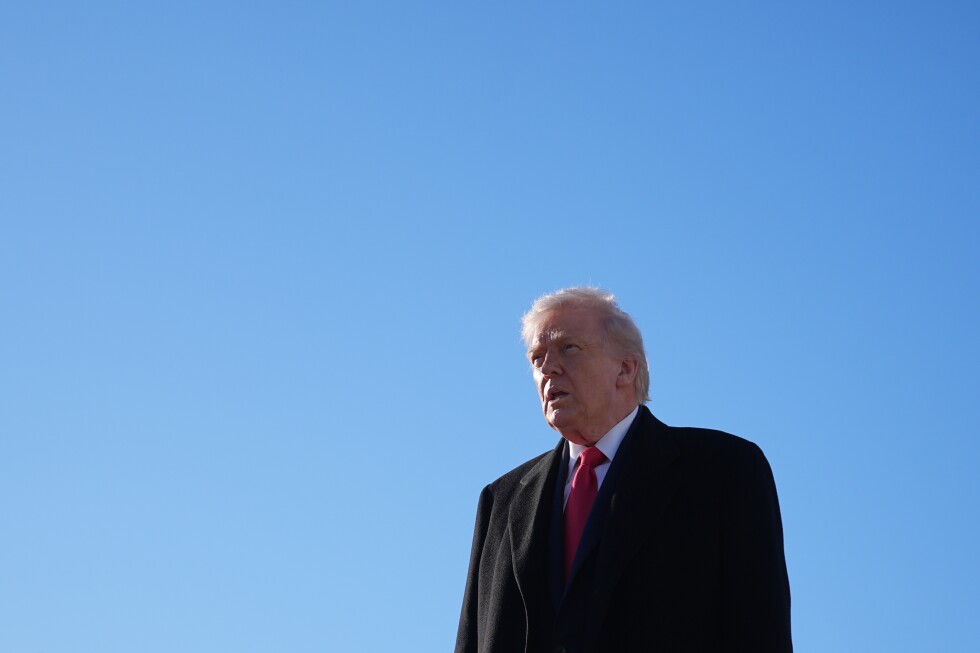
The decision prompted Trump to issue a fierce critique, particularly targeting the justices he had appointed. “The Supreme Court’s ruling on tariffs is deeply disappointing and I’m ashamed of certain members of the court, absolutely ashamed, for not having the courage to do what’s right for the country,” Trump stated during a White House briefing shortly after the ruling.
Trump expressed his discontent with Justices Neil Gorsuch and Amy Coney Barrett, who sided with the majority. “I think it’s an embarrassment to their families, if you want to know the truth, the two of them,” he remarked.
Vice President JD Vance also criticized the court’s decision, describing it as “lawlessness,” though he refrained from personal attacks. The legal opposition to the tariffs was diverse, spanning across political lines and supported by groups such as the libertarian-leaning Liberty Justice Center and the pro-business Chamber of Commerce.
Historically, the Supreme Court has played a role in checking presidential powers, and Trump has had a tumultuous relationship with the court since his first term in 2017. Despite previous victories, including a ruling in 2024 granting him presidential immunity, this recent decision marks a notable setback for Trump.
Presidential criticism of the Supreme Court is not unprecedented. President Thomas Jefferson opposed the Marbury v. Madison decision, and Franklin Roosevelt expressed frustration over the court’s impediments to the New Deal. In 2010, President Barack Obama criticized the Citizens United decision during a State of the Union address.
However, Trump’s public denouncement of the justices who opposed him has been deemed inappropriate by some, including Ed Whelan, a senior fellow at the Ethics and Public Policy Center. Whelan noted, “It’s entirely fine for a president to criticize a Supreme Court ruling that goes against him. But it’s demagogic for President Trump to contend that the justices who voted against him did so because of lack of courage.”
Presidents in the past have privately criticized justices they appointed, such as President Dwight D. Eisenhower’s regret over appointing Chief Justice Earl Warren after the Brown v. Board of Education decision. Yet, Trump’s public approach marks a departure from tradition.
Trump’s relationship with Chief Justice John Roberts has been particularly strained, with Roberts having previously rebuked Trump over his comments on federal judges. Although Trump did not name Roberts specifically, he insinuated that the justices’ decision was influenced by political correctness and pressure from groups in D.C.
As the State of the Union address approaches, the president and members of the Supreme Court are expected to be in attendance, evoking a scenario reminiscent of the aftermath of the Citizens United ruling. While Justice Ruth Bader Ginsburg once famously nodded off during a presidential speech, it is unlikely any justice will be caught napping this time.