In a surprising turn of events, Venezuelan leader Nicolás Maduro was removed from power and taken out of the country through a military operation led by the United States. The operation, announced by President Donald Trump, aims to temporarily manage Venezuela and utilize its oil resources. The move marks a significant shift in U.S. foreign policy in South America.
This operation concludes a lengthy campaign by the Trump administration to pressure Maduro’s regime, marking one of the most direct attempts at regime change since the Iraq invasion in 2003. Legal experts have raised concerns over the legality of this act, especially given that it occurred without congressional consent.
Following Maduro’s capture, Trump stated that the U.S. plans to control Venezuela’s oil industry to support global supplies. Maduro and his wife were taken from their residence on a military base and were transported on a U.S. warship to face charges related to a narco-terrorism conspiracy in the U.S.
Maduro’s arrival in the U.S. was marked by his transfer to New York and subsequent escort to a federal detention center in Brooklyn. The U.S. government has not officially confirmed his detention location, but reports indicate he was moved under heavy guard.
Move Lacks Congressional Approval
The legality of the U.S. operation in Venezuela remains unclear without congressional approval. Trump justified the move as necessary to curb drug trafficking and stabilize the region. However, critics argue that such an action requires legislative consent.
Despite the political upheaval, Venezuelan state media continued to air content supporting Maduro. Vice President Delcy Rodríguez demanded Maduro’s release and was ordered by the high court to assume the role of interim president. Yet, she hesitated to take power, asserting Maduro as the legitimate leader of Venezuela.
Military Action in Caracas
In the early hours of Saturday, U.S. forces executed the operation under the cover of darkness. Explosions and aircraft activity were reported in Caracas, leading to civilian and military casualties. Venezuelan officials condemned the U.S. actions as an imperialist attack.
General Dan Caine, chairman of the Joint Chiefs of Staff, detailed the extensive preparation for the operation, emphasizing the precision and rehearsals conducted by U.S. forces.
Videos from the scene showed the impact of the operation, with explosions lighting up the night sky and smoke rising from key locations in the capital. The aftermath included power outages and deserted streets in some Caracas neighborhoods.
Public Reaction and Legal Questions
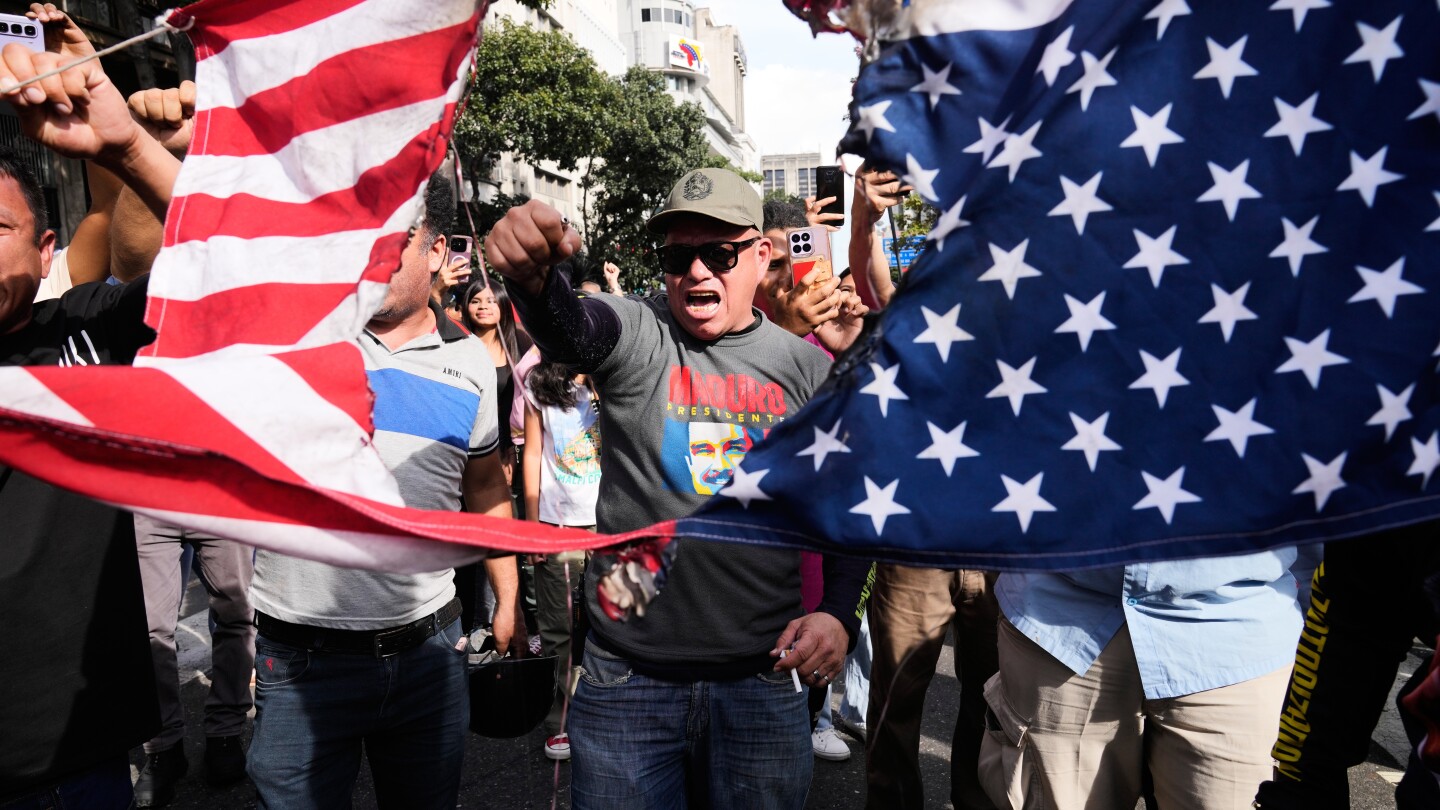
The operation has divided public opinion in Venezuela. Some citizens rallied in support of Maduro’s return, while others celebrated the potential for change. Demonstrations took place in Caracas, with citizens expressing varied emotions from fear to hope.
In the United States, the legal justification for the operation is under scrutiny. The U.N. Security Council is set to discuss the U.S. actions in an emergency meeting, highlighting international concerns over the intervention. U.S. lawmakers have also questioned the lack of congressional authorization for military actions in the region.
Representative Jim Himes, a leading Democrat, has requested a detailed briefing from the administration on the operation’s legality and its plan for regional stability.