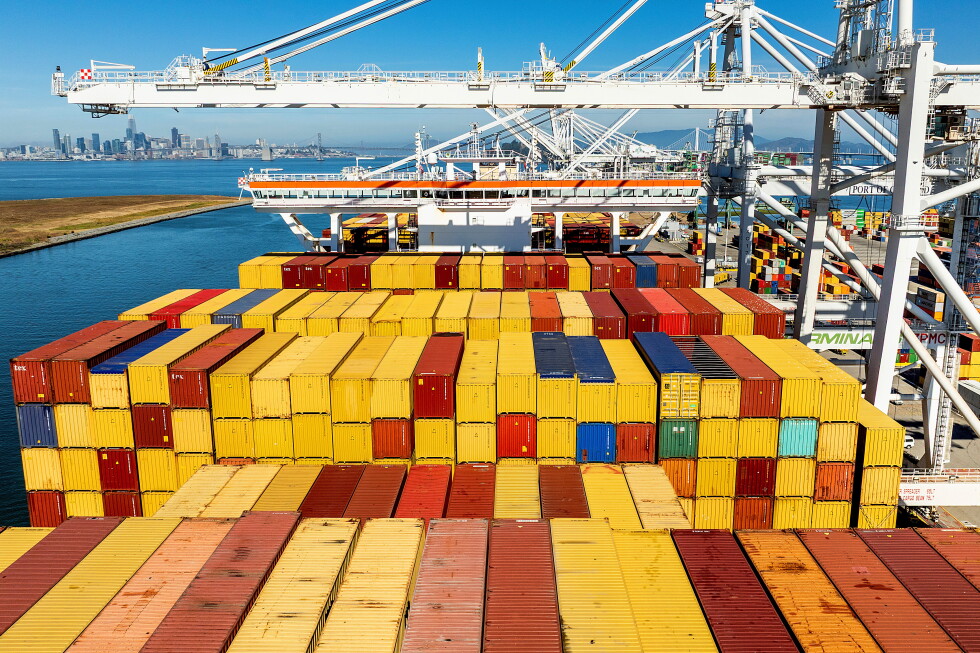
NEW YORK (AP) — The Trump administration has recently implemented significant tariffs against over 60 nations, invoking a legal basis that allows the president to impose import duties on countries engaged in what is deemed “unjustifiable,” “unreasonable,” or “discriminatory” trade activities.
These new tariffs coincide with the expiration of temporary 10% global tariffs, which critics argue were less about addressing forced labor and more about substituting the expired tariffs. The former tariffs had replaced worldwide duties that the Supreme Court annulled in February.
The tariffs target countries the U.S. claims lack or inadequately enforce bans on forced-labor imports. The affected nations, responsible for 99% of U.S. imports, have quickly objected, labeling the U.S. assertions as baseless and indiscriminate, particularly as countries with varying records on forced labor face identical tariff rates. The U.S. conducted a four-month investigation but disclosed few details on the calculation of the tariffs, set at either 10% or 12.5%.
Bypassing Legislative Oversight
The tariffs were applied under Section 301 of the Trade Act of 1974, targeting countries deemed to have failed in enforcing prohibitions on importing goods produced with forced labor.
During President Donald Trump’s tenure, Section 301 was previously used to impose tariffs on Chinese imports amid concerns over China’s aggressive trade practices threatening U.S. technological leadership. These powers are also being utilized to challenge alleged unfair practices in China’s shipbuilding industry.
“The 301s allow a permanent tariff without going to Congress to settle the dispute,” said Barry Appleton, a law professor at New York Law School. “That’s what all of this is about. The president doesn’t want to knock on the front door of Congress, so he’s trying every side door and every unlatched window to get in.”
Insufficient Proof of Non-Enforcement
The United States Trade Representative (USTR) claimed to have consulted with all 60 economies under scrutiny, holding two rounds of public hearings, receiving over 2,100 public comments, and engaging with trading partners about combating forced labor bans.
The specifics of these discussions remain undisclosed, as they are considered confidential. Experts note it is simple to verify the existence of a ban but challenging to ascertain the reasoning behind each country’s enforcement failures.
“There’s not a lot of hard evidence there,” commented Scott Lincicome, vice president at the Cato Institute. “It’s pretty laughable on its face to think that a country like the ones in Europe or in Norway or Switzerland aren’t doing enough to police forced labor.”
Lawyer Patrick Childress mentioned that even if countries enforce the U.S.-desired bans, they must still demonstrate their enforcement effectiveness to U.S. satisfaction for tariff removal. “This suggests that no short-term path for countrywide relief from the new Section 301 tariffs will be available,” he added.
Global Disapproval of Forced Labor Allegations
Numerous countries have contested the U.S. administration’s conclusions.
Brazil, facing a 12.5% tariff, described the U.S. actions as “arbitrary and unjustified.” In a statement, Brazil criticized the U.S. for manipulating a vital human rights issue to accuse multiple countries and the EU of unfair practices.
Australia also challenged its 12.5% tariff’s validity. “We believe that amongst all of the countries in the world, Australia does take the issue of slavery, modern slavery, seriously, and will continue to do that,” stated Trade Minister Don Farrell in Adelaide.
Some industries express dissatisfaction with exemptions. The National Council of Textile Organizations (NCTO) opposed a mechanism exempting certain countries’ textile and apparel imports from Section 301 tariffs based on their U.S. cotton and textiles imports.
Kim Glas, NCTO chief executive, stated, “No other industry has been more disadvantaged by forced labor than the U.S. textile industry, which employs 453,000 workers and has lost 41 plants over the past two-plus years.”
Effectiveness of U.S. Forced-Labor Bans
The U.S. enforces two major forced-labor import bans. The Tariff Act of 1930 allowed Customs and Border Protection to seize shipments suspected of using forced labor, with a loophole for “consumptive demand.” The 2016 Trade Facilitation and Trade Enforcement Act removed this loophole.
In 2021, the Uyghur Forced Labor Prevention Act was enacted, banning imports from China’s Xinjiang region unless proven free from forced labor.
However, goods produced with forced labor can still enter the U.S. A 2015 AP investigation revealed slave labor usage in Southeast Asia’s fishing industry, with seafood reaching U.S. supermarkets. A 2020 AP investigation into the palm oil industry uncovered labor abuses involving millions of workers in Asia, with products reaching major companies like Unilever and Nestle. Read more here.
Advocating for a Holistic Strategy Against Forced Labor
During recent tariff hearings, National Retail Federation vice president Jonathan Gold, representing the Joint Association Forced Labor Working Group, emphasized the need for more extensive import bans.
He advocated for “clear, measurable benchmarks” linked to tariffs for countries to meet, suggesting U.S. assistance in building enforcement programs.
Kenya Davis, a partner at Boies Schiller Flexner, highlighted the necessity of a “comprehensive approach” providing transparency on investigation details and offering aid to countries in enforcing bans.