Trump Administration Advances Surveillance Efforts Amid Controversial Legal and Privacy Challenges
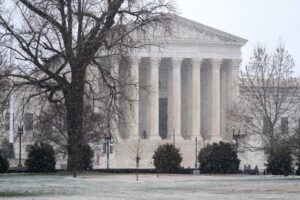
The Trump administration is advancing efforts to establish a comprehensive surveillance state, significantly impacting privacy rights in the United States. Recent Supreme Court decisions, the support of Republican lawmakers, and modifications to due process rights have facilitated these changes, allowing for increased data sharing and surveillance.
Efforts to integrate data across all levels of government, from Democratic states to local law enforcement, are underway. Privacy concerns have been raised as the administration faces lawsuits for privacy violations. Medicare and Medicaid have provided personal data of millions of enrollees in sanctuary areas to the Department of Homeland Security (DHS), which has also partnered with the IRS to access taxpayer addresses, including those of undocumented immigrants.
The GOP megabill, termed “One Big Beautiful Bill,” signed into law on July 4, preempts future privacy lawsuits, compelling states to share sensitive resident information. It also allocates $10 billion for border security initiatives.
Elizabeth Laird of the Center for Democracy & Technology notes, “We are talking about fundamentally reshaping our digital infrastructure as a country in ways that will be really challenging to undo from not just the technical perspective, but [in terms of policies and procedures].”
Impact on Immigrants and Citizens
The surveillance state transformation is affecting both undocumented immigrants and those with legal status. The administration is reducing regulatory oversight capabilities and relying on allies, including the Supreme Court and Republican lawmakers, to limit citizens’ and noncitizens’ privacy rights.
Emerald Tse from Georgetown Law’s Center on Privacy & Technology comments, “It’s very clear that the current goal is to continue to grow digital surveillance and use it for whatever this current administration decides.”
Eliminating Information Silos
The Department of Government Efficiency (DOGE), previously overseen by Elon Musk, is at the forefront of these changes. DOGE faces numerous lawsuits over potential privacy violations. The department now has access to personal data in the SSA database, including names, birth dates, and medical records. Immigration and Customs Enforcement (ICE) plays a key role in supporting Trump’s surveillance efforts, with contracts to track and analyze encrypted communications.
Efforts to centralize data sharing are evident in Trump’s executive order for “full and prompt access to all unclassified agency records.” This includes data from state programs receiving federal funding. The goal is to address “fraud, waste, and abuse” by eliminating information silos, though other motives have been suggested.
Protecting Privacy Amid Expanding Surveillance
Despite temporary injunctions, the Supreme Court’s recent decision limits nationwide injunctions, complicating efforts to block DOGE’s data access. The reconciliation bill’s data-sharing regulations for Medicaid and CHIP further challenge legal arguments against forced data sharing. Civil rights groups and state attorneys general continue to seek legal remedies to protect privacy rights.
Advocates warn of potential privacy risks, emphasizing the need for oversight. Saira Hussain of the Electronic Frontier Foundation states, “There’s really no indication about why this master database would exist unless it was for surveillance purposes.”
Technological Expansion and Legal Ramifications
AI and facial recognition technologies are increasingly integrated into surveillance efforts, with contracts awarded to tech companies like Palantir. The administration’s focus on surveillance extends to DNA collection and biometric data gathering, raising concerns about civil liberties and racial discrimination.
As the administration continues to build its surveillance capabilities, the reconciliation bill provides substantial funding for DHS, earmarking billions for technological advancements and data collection. Hussain warns of the potential consequences, stating, “By decimating any sort of oversight, however minimal that may be, you’re opening up not only to abuses but also to allowing abuses to happen.”