Trial Begins for Four Accused in Assassination of Haitian President
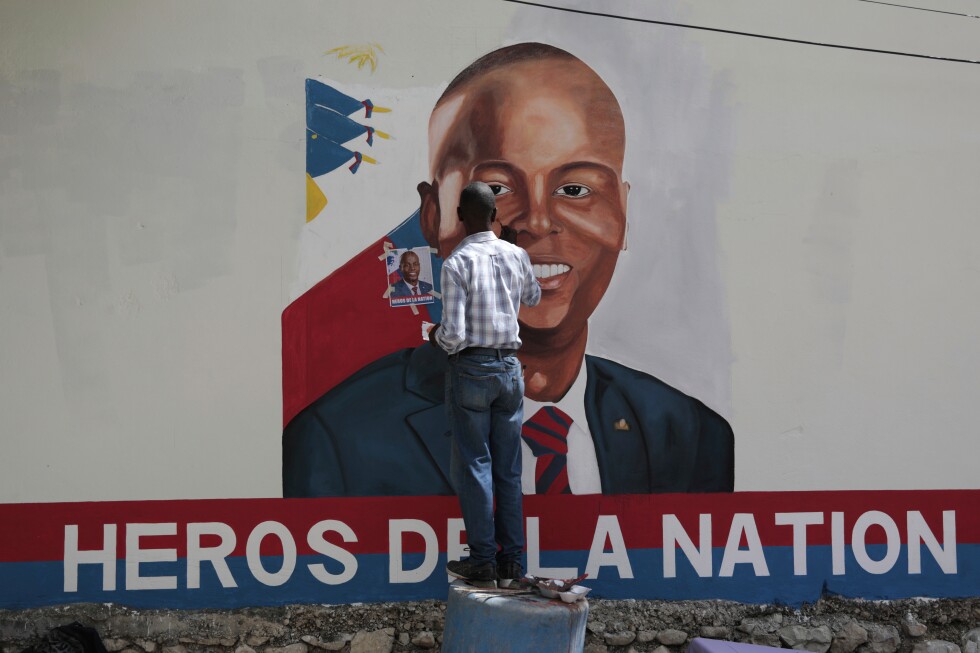
In a Miami courtroom, four men are standing trial for their alleged involvement in the assassination of Jovenel Moïse, the last elected president of Haiti, in 2021. Prosecutors have outlined their case, arguing that the defendants were motivated by “greed, arrogance, and power” in their conspiracy to kidnap or murder Moïse, leading to significant instability in Haiti.
Assistant U.S. Attorney Sean McLaughlin addressed the jury, describing the case as straightforward. He claimed the accused believed they could take control of Haiti and enrich themselves. “So arrogant and confident in themselves, the evidence will show, and thinking so little of the Republic of Haiti and its people, they actually thought they could pull it off,” McLaughlin stated.
Defense lawyers countered these claims, arguing that the investigation in Haiti was poorly managed and asserting that their clients were scapegoats for an internal coup. “Once you get off on the wrong foot, everything that comes after is hard to trust,” commented Orlando do Campo, representing Arcangel Pretel Ortiz.
The four defendants—Ortiz, Antonio Intriago, Walter Veintemilla, and James Solages—face potential life sentences and maintain their innocence. They are accused of planning the assassination from South Florida, where businesses linked to them allegedly facilitated the plot financially and logistically.
Ortiz and Intriago were involved with CTU Security, a South Florida security firm, while Veintemilla led Worldwide Capital Lending Group. Prosecutors allege that these companies were integral to the conspiracy, with Worldwide Capital extending a $175,000 credit line to CTU and arranging funds for ammunition purchases in Haiti.
Solages, a representative of CTU in Haiti, was reportedly in charge of coordination efforts with Christian Sanon, a dual Haitian-U.S. citizen initially slated to replace Moïse. The conspirators allegedly intended for Sanon to grant CTU lucrative contracts once he assumed power.
However, by June 2021, the group realized Sanon lacked the credentials and support to lead Haiti, shifting their support to Wendelle Coq Thélot, a former Haitian Superior Court judge, who remained a fugitive until her death in 2025.
Defense teams argue their clients believed they were part of a sanctioned effort to remove a president who had overstayed his term, with Emmanuel Perez, representing Intriago, claiming cooperation with U.S. and Haitian officials, including the FBI and the U.S. Embassy.
The defense also pointed to Joseph Félix Badio, a former Haitian government employee, as the mastermind behind an alleged plan to use the arrest of Moïse as a pretext for his assassination. They contend that Moïse was already dead when Colombian security forces arrived to arrest him.
The trial, presided over by U.S. District Judge Jacqueline Becerra, is expected to last over two months. Five individuals have already pled guilty to conspiracy charges in the U.S., with a sixth receiving a nine-year sentence for providing body armor. Additional charges are pending in Haiti, where the investigation faces significant challenges due to gang activities and judicial issues.
Martine Moïse, the widow of the slain president and a survivor of the attack, appeared in court as the prosecution’s first witness. Her testimony is set to continue, as the court proceedings unfold in this high-profile case.