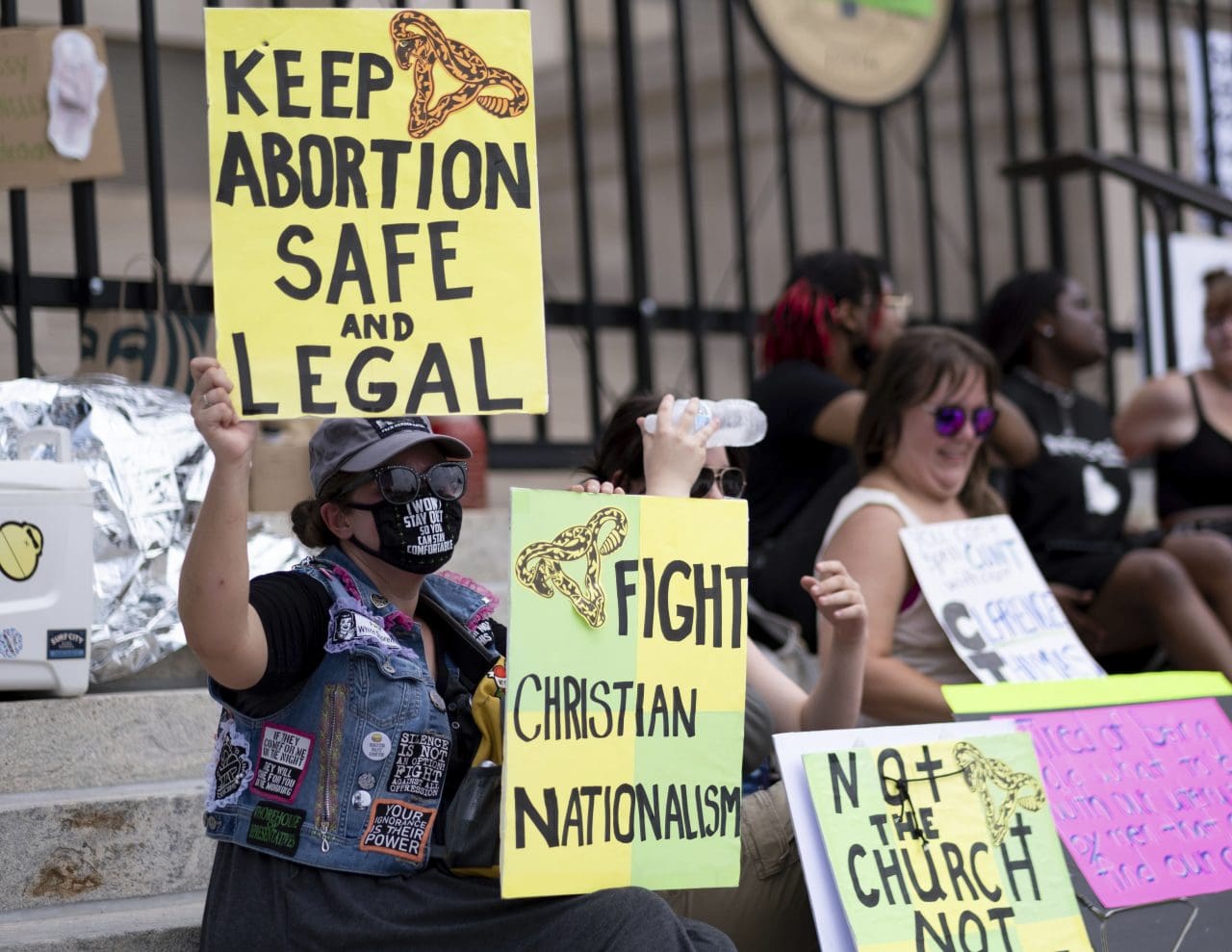
Amber Thurman, a 28-year-old single mother from Atlanta, was a medical assistant aspiring to be a nurse. She had a vibrant smile and a six-year-old son.
However, on August 20, 2022, she passed away from a sepsis infection that ravaged her uterus following an incomplete abortion. Despite her critical condition, doctors at an Atlanta hospital delayed a life-saving D&C procedure for 20 hours. By the time she was taken to the operating room, it was a desperate attempt to save her life.
Just two weeks prior, Georgia Governor Brian Kemp had signed the state’s new “Heartbeat” abortion ban into law, expressing his excitement that the ban would make Georgian women “safe” and “healthy.”
Under this law, abortions are prohibited once a fetal heartbeat is detected, typically around six weeks, except in cases of rape, incest, or risk of death to the mother. Medical providers who violate this law could face up to 10 years in prison and the revocation of their medical licenses.
Amber arrived at the hospital by ambulance after vomiting blood and losing consciousness at home. However, she did not promptly receive the routine D&C to clear her uterus, turning her case into a legal dilemma for the doctors.
The medical staff grappled with determining whether Amber was close enough to death to meet the new legal requirements. Her white blood count and blood pressure dropped dangerously low, antibiotics failed to control the “acute sepsis” infection, and her vital organs began to fail. By the time the hospital physicians believed they met the legal standard, Amber had died on the operating table.
Amber became the first known American woman to die due to the new abortion restrictions, just two months after the Supreme Court overturned Roe v. Wade on June 24, 2022.
Her death was deemed “preventable” by a Georgia state committee that investigates maternal deaths. The committee’s two-year investigation revealed that Amber’s death followed complications from a two-pill abortion medication regimen she received at a North Carolina clinic.
Amber’s case was rare; among the nearly 6,000,000 American women who have used medication abortion pills between 2000 and 2022, only 32 deaths were linked to the medication. These pills are considered safer than Viagra.
After the pills failed to expel all fetal contents from her uterus, Amber did not receive the urgent D&C procedure required, leading to her death. The committee concluded her death was “preventable.”
In Georgia, OBGYNs practice “under an element of fear,” according to Dr. Didi St Louis, an Atlanta OBGYN. “You don’t know what situation you might encounter that could land you in jail or cause you to lose your medical license,” she said.
“I shouldn’t have to be fearing that I will go to jail when I’m treating patients,” Dr. St Louis added, noting the confusion and uncertainty among doctors following the new law’s enactment. She explained that the law necessitates consultations with hospital leadership, risk managers, and lawyers before proceeding with care, adding delays to treatment.
For some patients with serious health risks, Dr. St Louis finds herself advising them to seek care out of state. This was the case for Candi Miller, an Atlanta mother of three who suffered from lupus, diabetes, and hypertension. When she accidentally became pregnant, she ordered abortion pills online but did not expel all fetal tissue. Afraid of the new abortion ban, she did not seek medical help and ultimately died from a combination of painkillers and infection.
Her family believes she was afraid of facing “jail time” for attempting to terminate her pregnancy.
JD Vance recently described the Supreme Court’s decision to overturn Roe v. Wade as a “victory” and declared the Republican party to be “pro-life” and “pro-family.” However, Amber and Candi’s children, who lost their mothers, present a stark contrast.
With ongoing investigations into maternal deaths, the full impact of these abortion bans might only become clear over time. For women of reproductive age, the risks associated with pregnancy in states with restrictive abortion laws are increasingly evident.
At a rally, Donald Trump asked, “What the hell do you have to lose?” For women of reproductive age, the answer might be their lives.
—
Read More Kitchen Table News