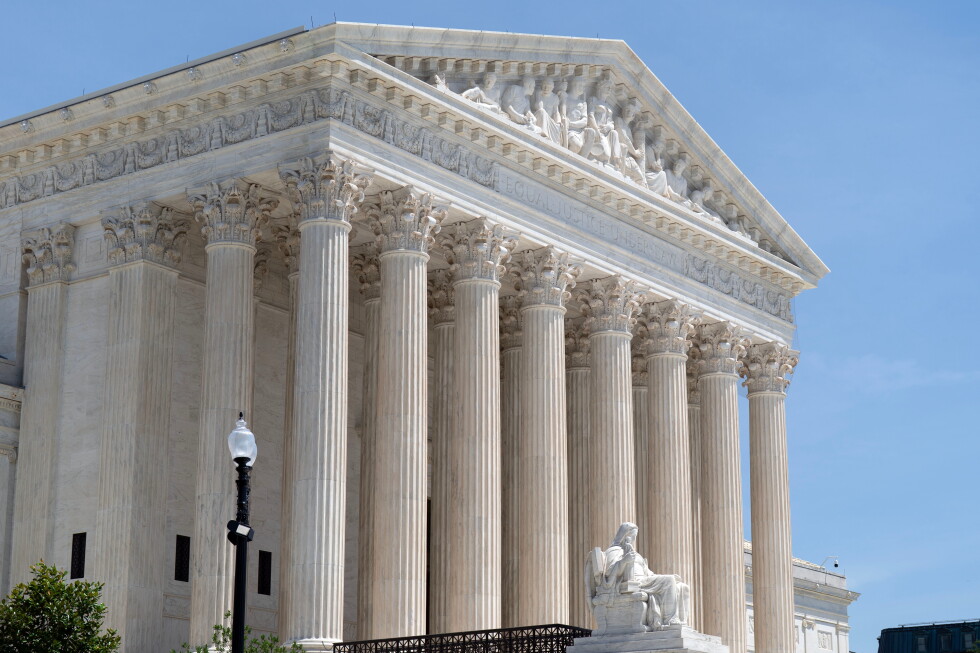
WASHINGTON (AP) — The Supreme Court has concluded a term with impactful rulings on significant cases concerning race and discrimination, decisions that are expected to have enduring implications for U.S. society and politics.
Rulings in this term revealed deep divisions among the justices, who were at times openly critical of one another. The decisions affected core aspects of a landmark voting rights law, allowed revocation of certain immigrant protections, and questioned the traditional interpretation of birthright citizenship for immigrants’ children.
These rulings occur amidst a backdrop of ongoing debates about race, identity, immigration, and policies addressing discrimination.
Kristen Clarke, general counsel for the NAACP, remarked, “This term, we saw a Supreme Court that is moving quickly to eradicate legal protections in ways that will leave vulnerable communities exposed to the harsh winds of discrimination and hatred that we continue to see across the country today.”
The Temporary Protected Status Case
The court allowed the government to terminate deportation protections for Haitians and Syrians who fled violence and disasters, reversing the temporary protected status revoked by President Trump’s administration last year. This decision was challenged by attorneys, who argued that the revocation was influenced by the president’s negative comments about immigrants.
Geoffrey Pipoly, representing Haitian nationals, cited Trump’s derogatory remarks during his presidential campaign as evidence of racial bias. Federal authorities countered that the protections were always meant to be temporary.
Justice Samuel Alito, writing for the 6-3 conservative majority, dismissed the claims, attributing Trump’s comments to political discourse rather than racial animus.
Justice Elena Kagan, dissenting, argued that the comments were steeped in racial stereotypes.
The Birthright Citizenship Case
In a case with widespread attention, the court upheld the 14th Amendment’s provision that confers citizenship to all born on U.S. soil. This ruling countered an executive order by Trump that sought to limit birthright citizenship.
Chief Justice John Roberts, in the majority opinion, traced the history of birthright citizenship and highlighted its significance in recognizing the citizenship rights of Black Americans post-slavery.
Justice Clarence Thomas dissented, arguing that the 14th Amendment does not extend to children of temporary visa holders or illegal immigrants.
Justices Ketanji Brown Jackson and Sonia Sotomayor, in their joint opinion, emphasized the broader purpose of the Reconstruction Amendments.
The Voting Rights Case
The Supreme Court’s decision in April weakened a critical part of the Voting Rights Act, which was designed to combat voter discrimination. The ruling argued that partisan redistricting intertwined with race cannot automatically be deemed racist.
Justice Alito, for the majority, highlighted the difficulty in distinguishing between race and partisan interests, suggesting that laws to protect minority voting rights could be misused for partisan advantage.
Liberal justices voiced concern, with Justice Kagan warning that the decision risks undermining minority political representation, as evidenced by immediate redistricting actions in several Southern states.