The Scope of Presidential Immunity: A Decision for Lower Courts
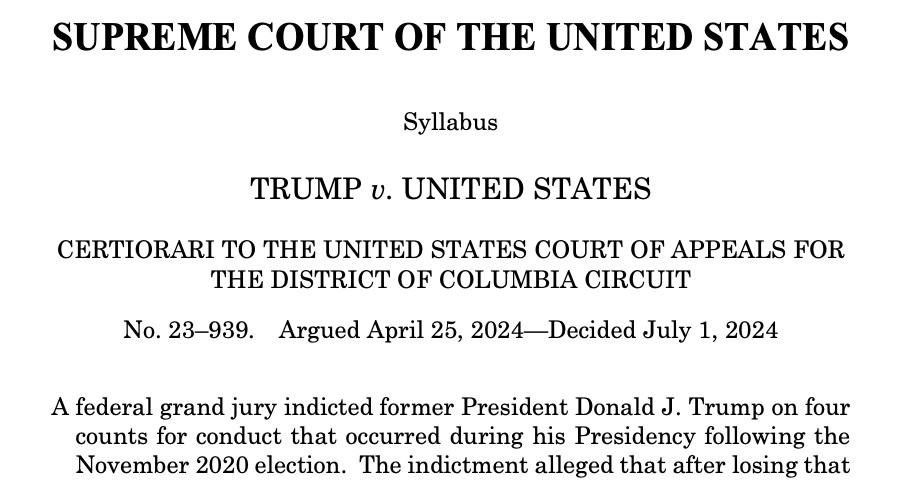
The Supreme Court recently made a pivotal ruling regarding presidential immunity, impacting former U.S. Presidents including Donald J. Trump. In a 6-3 decision, the Court determined that former presidents are afforded limited immunity, distinguishing between “official” and “unofficial” acts. The Court clarified that presidents possess “‘absolute’ immunity for clearly official acts, but no immunity for unofficial acts,” but left the precise definitions of these terms to be determined by lower courts.
This ambiguity has led to a delay in the federal investigation concerning Trump’s alleged interference in the 2020 election. Although the decision extends the timeline for the case to return to lower courts for further clarification, it does not halt the impending trial. The pivotal question remains: What constitutes an official act versus an unofficial one?
Understanding the Timing of This Decision on Immunity
The urgency of defining presidential immunity stems from Trump’s current legal challenges. Facing charges of conspiracy and obstruction tied to his efforts to retain power post-2020 election loss, Trump was indicted by special counsel Jack Smith in August 2023.
Trump’s defense team has sought to bypass trial proceedings by invoking absolute immunity. They argue based on a broad interpretation of presidential powers, citing a 1982 Supreme Court case that provided immunity for presidential actions within the “outer perimeter” of official duties. However, the Supreme Court’s latest decision did not extend to granting Trump the absolute immunity required to dismiss the federal charges entirely.
The outcome leaves the continuation of the federal trial contingent on lower courts’ interpretations of the Supreme Court’s ruling. These courts will now determine the specifics of what charges Trump may legally face in light of the established boundaries of presidential immunity.