Supreme Court to Review Cases on Transgender Athlete Participation
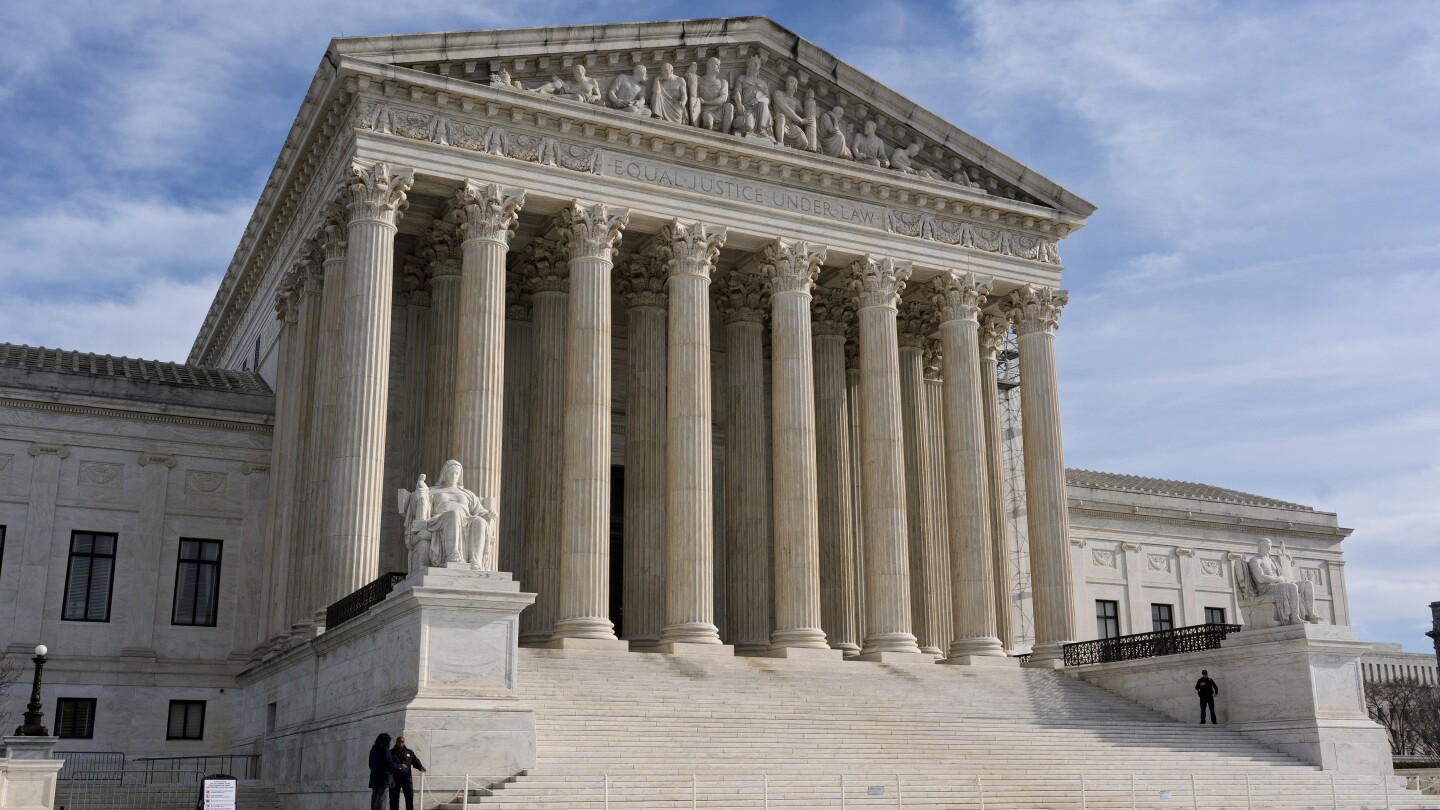
WASHINGTON (AP) — The Supreme Court has decided to hear cases concerning state-imposed restrictions on the participation of transgender students in school sports teams. The decision comes shortly after the court upheld a ban on gender-affirming care for transgender minors. The upcoming sessions will focus on lower court decisions favoring transgender athletes in Idaho and West Virginia.
Across the country, the debate over transgender girls participating in female sports teams has been a contentious issue, particularly within the political landscape. Republican leaders have framed the matter as a question of fairness in female athletics. Consequently, over twenty states have passed laws barring transgender women and girls from competing in specific sports. However, some of these laws have faced legal challenges and have been halted in court.
At the federal level, the Trump administration has been proactive, initiating lawsuits and investigations challenging state and school policies that are inclusive of transgender athletes. Recently, the University of Pennsylvania altered records set by transgender swimmer Lia Thomas and issued an apology to affected female athletes, as part of resolving a federal civil rights case.
Notably, Senate Democrats have previously blocked a Republican proposal for a national ban on such participation.
Transgender-related policies have been a focal point of former President Donald Trump’s tenure, including actions like the removal of transgender troops from military service. In a notable decision, the Supreme Court allowed the removal of transgender service members, overturning previous lower court rulings.
A poll conducted by The Associated Press-NORC Center for Public Affairs Research showed that approximately 70% of Americans believe transgender female athletes should not compete in girls’ and women’s sports. This view is held by about 90% of Republicans and nearly half of Democrats.
The state of West Virginia is appealing a ruling that deemed its ban as infringing on Becky Pepper-Jackson‘s rights. Pepper-Jackson, who has been on puberty-blockers and identified as a girl since third grade, pursued legal action against the state to join her school’s track and field teams. She recently achieved third in discus and eighth in shot put in a state track meet. The 4th U.S. Circuit Court of Appeals ruled in her favor, citing the Constitution’s equal protection clause and Title IX, a federal law prohibiting sex discrimination in education.
State Attorney General John McCuskey remarked, “It’s a great day, as female athletes in West Virginia will have their voices heard. The people of West Virginia know that it’s unfair to let male athletes compete against women; that’s why we passed this commonsense law preserving women’s sports for women.”
Attorneys representing Pepper-Jackson, including the American Civil Liberties Union and Lambda Legal, are prepared to defend the lower court’s rulings. Joshua Block from the ACLU stated, “Like any other educational program, school athletic programs should be accessible for everyone regardless of their sex or transgender status. Trans kids play sports for the same reasons their peers do–to learn perseverance, dedication, teamwork, and to simply have fun with their friends.”
In 2020, Idaho became the first state to restrict transgender women and girls from participating in women’s sports in public educational institutions. In response, the ACLU and Legal Voice filed a lawsuit on behalf of Lindsay Hecox, a Boise State University student aspiring to join the track team. Another local athlete, not transgender, joined the suit over concerns about potentially invasive tests to confirm her gender if questioned. The state has requested a Supreme Court review following a lower court’s decision to block the law during ongoing litigation.
The Supreme Court has yet to address a similar case from Arizona.