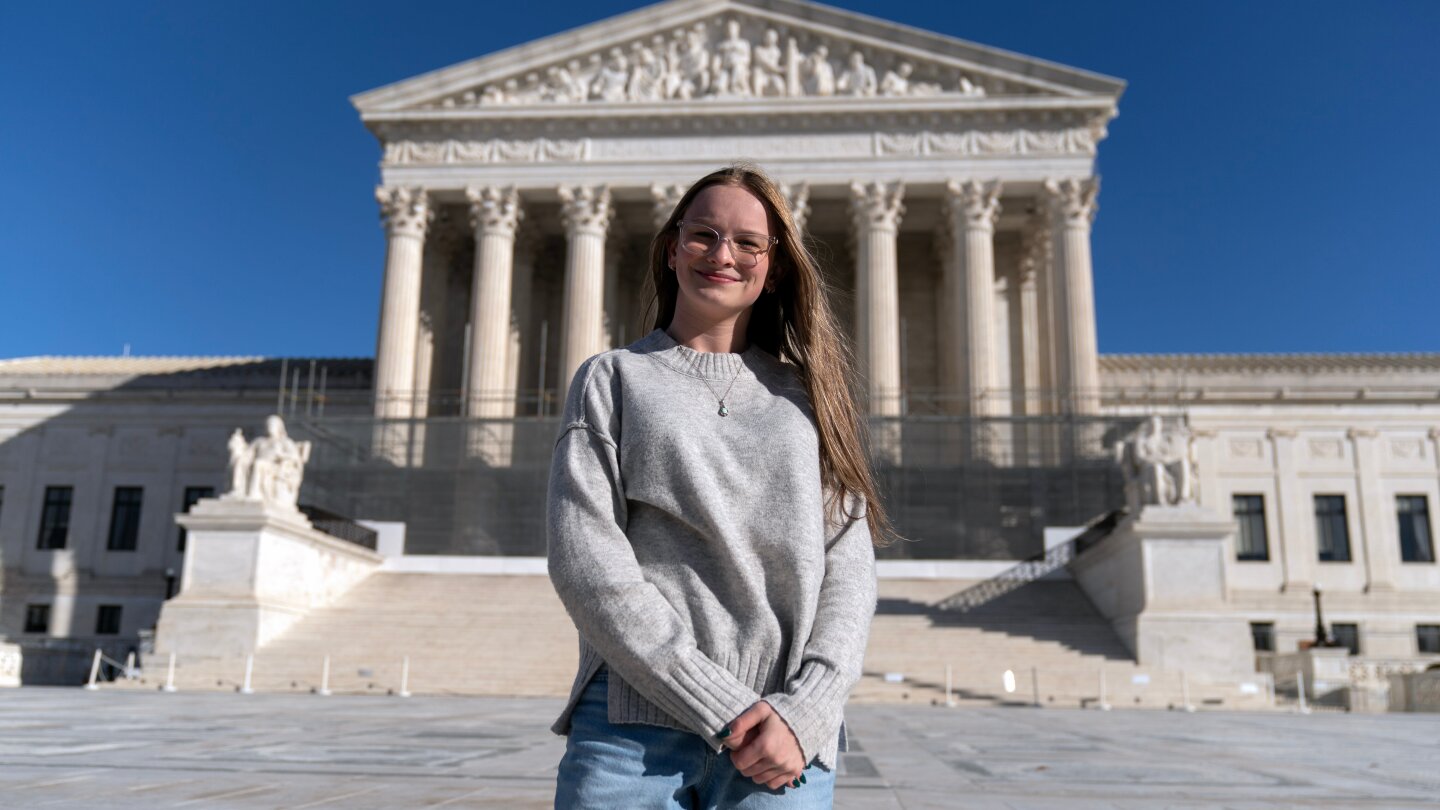
Supreme Court Examines State Bans on Transgender Athletes in School Sports
The U.S. Supreme Court is currently reviewing cases related to state-imposed restrictions that prevent transgender girls and women from participating in school sports teams. These cases, originating from Idaho and West Virginia, challenge the legality of such bans, with lower courts previously ruling in favor of the transgender athletes.
The conservative-leaning Supreme Court’s decision remains uncertain, especially given its recent rulings supporting state restrictions on transgender issues, such as gender-affirming care for minors. These legal challenges occur amidst broader initiatives by former President Donald Trump, aiming to restrict transgender rights, including their presence in the military.
These pivotal cases are among the first from over two dozen Republican-led states that have enacted similar bans. The core of the debate lies in balancing claims of sex discrimination against arguments for fair competition in women’s sports.
Cases Under Scrutiny
One of the cases involves Lindsay Hecox, who contested Idaho’s pioneering ban, desiring to join Boise State University’s women’s track and cross-country teams. Although she didn’t make the teams, she engaged in club sports. The other case features Becky Pepper-Jackson, a 15-year-old from West Virginia, who has been living as a girl since age 8 and has legally changed her gender marker. She has shown significant improvement in her athletic performance, notably in discus events.
Views from the Sports Community
The sports community is divided on the issue, with notable female athletes like Martina Navratilova and Kerri Walsh-Jennings supporting the bans, while others such as Megan Rapinoe and Sue Bird advocate for transgender participation.
Legal Arguments and Implications
The Supreme Court’s deliberations will assess whether the bans contravene the Constitution or Title IX, which prohibits sex-based discrimination in education. A past ruling by the Court recognized LGBTQ protections under federal civil rights laws, yet similar reasoning was not applied in recent decisions about gender-affirming care for minors.
States defending the bans argue against extending workplace discrimination protections to Title IX, emphasizing the law’s impact on enhancing opportunities for women in sports. Conversely, attorneys for Pepper-Jackson seek a ruling recognizing protections against discrimination for transgender individuals, while Hecox’s legal team suggests dismissing the case due to her current stance.
Public Opinion and Broader Impact
The topic has gained significant attention despite the limited number of transgender athletes. Influential bodies like the NCAA and the U.S. Olympic and Paralympic Committees have also enacted bans following Trump’s executive order. Public sentiment appears to lean towards supporting the limitations, as highlighted by an Associated Press-NORC poll, revealing that a majority prefer transgender athletes compete according to birth-assigned sex.
Statistics from the Williams Institute indicate that around 0.8% of adults and 3.3% of teenagers in the U.S. identify as transgender. The Supreme Court’s decision is anticipated by early summer, potentially setting a precedent in the ongoing debate over transgender rights in athletics.