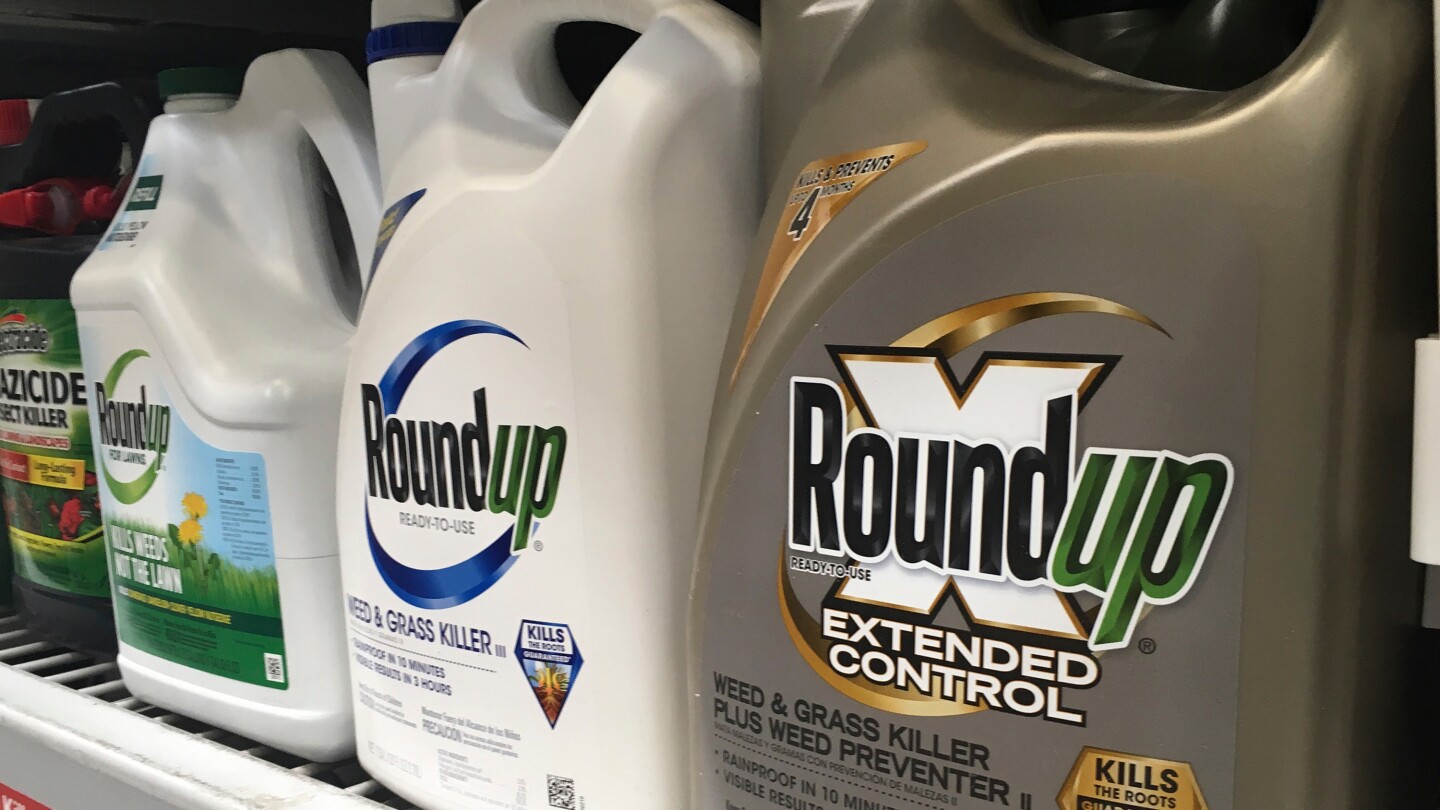
Supreme Court to Review Bayer’s Appeal on Roundup Lawsuits
WASHINGTON (AP) — The U.S. Supreme Court will evaluate an appeal from Bayer, a global agrochemical company, regarding thousands of state lawsuits accusing the firm of failing to inform users that its widely-used weedkiller, Roundup, may lead to cancer. The focus will be on whether the Environmental Protection Agency’s (EPA) approval of Roundup without a cancer warning should preclude these state court claims.
The Trump administration has shown support for Bayer, contrasting with the Biden administration’s stance, creating tension with proponents of the Make America Healthy Again agenda who oppose granting the company the legal immunity it seeks.
While some research links glyphosate, Roundup’s active ingredient, to cancer, the EPA maintains it is not likely carcinogenic to humans if used as directed. Despite disputing cancer allegations, Bayer has reserved $16 billion to settle claims and has lobbied states for litigation bans, successfully doing so in Georgia and North Dakota.
One pertinent case is from Missouri, where a jury awarded $1.25 million to a man who developed non-Hodgkin’s lymphoma after using Roundup in a community garden in St. Louis. Previously, the Supreme Court declined to hear a related case in California, where more than $86 million was awarded to a couple, but Bayer now seeks intervention due to inconsistent lower court rulings. The 3rd U.S. Circuit Court of Appeals ruled in Bayer’s favor in 2024.
Bayer is contending with approximately 181,000 Roundup claims, mainly from residential users. The company has ceased using glyphosate in Roundup for the U.S. residential lawn and garden market but continues its use in agricultural products designed for genetically modified seeds like corn, soybeans, and cotton. This helps farmers enhance productivity while minimizing soil tillage.
Bayer has indicated it may reconsider glyphosate’s availability in U.S. agricultural markets if lawsuits persist. “It is time for the U.S. legal system to establish that companies should not be punished under state laws for complying with federal warning label requirements,” stated Bayer CEO Bill Anderson.
Environmental organizations argue that Bayer aims to prevent jury involvement in lawsuits due to repeated losses in state courts. “It’s a sad day in America when our highest court agrees to consider depriving thousands of Roundup users suffering from cancer of their day in court,” commented Lori Ann Burd, environmental health director at the Center for Biological Diversity.
The timing for the court’s arguments remains uncertain, with possibilities for spring or the start of the next term in October.
___
For continued coverage of the U.S. Supreme Court, visit https://apnews.com/hub/us-supreme-court.