Supreme Court Decision Opens Door for GOP Gains in Alabama
The U.S. Supreme Court has paved the way for Alabama to potentially reduce its predominantly Black congressional districts from two to one ahead of the upcoming midterm elections. This change could offer Republicans an opportunity to secure another U.S. House seat, significantly impacting the balance of power in the narrowly divided chamber.
This decision aligns with an earlier Supreme Court ruling from April that deemed a majority-Black district in Louisiana unconstitutional due to racial gerrymandering. This ruling has weakened aspects of the federal Voting Rights Act.
Alabama’s officials had cited the Louisiana case to justify their request for the Supreme Court to lift a judicial mandate requiring the use of a court-imposed House map until the next census in 2030. The Supreme Court has now annulled that order, directing a lower court to reassess the case, allowing the state to potentially utilize a Republican-approved map from 2023 which contains only one Black majority district.
In anticipation of this judicial outcome, Alabama recently enacted legislation that allows the state to annul the results of the May 19 primary in certain districts and conduct a new primary using revised boundaries. The state had requested a swift decision before the primary elections.
Alabama Republicans have welcomed the Supreme Court’s decision. Attorney General Steve Marshall stated in a video, “Today, the Supreme Court vindicated the state’s long-held position. Now, the power to draw Alabama’s maps goes back to the people’s elected representatives. That’s our Legislature.” Marshall added that his role is “to put the legislature in the best possible legal position to draw a congressional map that favors Republicans seven-to-zero,” concluding with, “Stay tuned.”
House Speaker Nathaniel Ledbetter described the ruling as “a massive victory not just for Alabama, but for conservatives across the country.”
Justice Sonia Sotomayor, dissenting, noted that the Louisiana case reversed only one of the reasons for the original Alabama decision. She suggested that the lower court might still determine that Alabama engaged in intentional discrimination against Black voters, contravening the 14th Amendment.
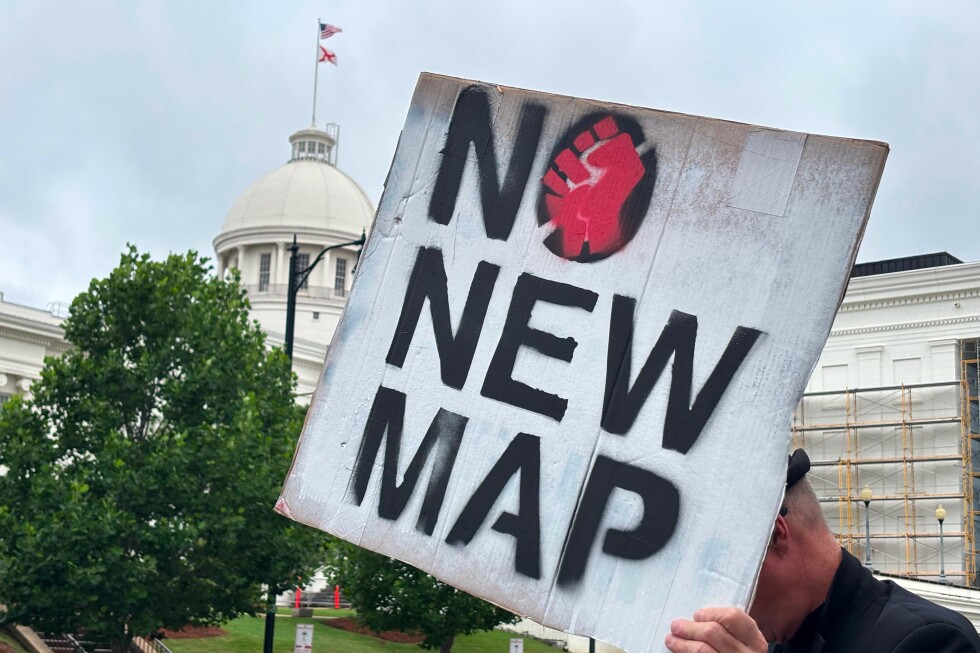
The decision is a setback for Black residents and advocacy groups who have been striving to establish a second district in Alabama where Black voters could elect a representative of their choice. NAACP National President Derrick Johnson stated, “We are witnessing a return to Jim Crow. And anybody who is alarmed by these developments — as everybody should be — better be making a plan to vote in November to put an end to this madness while we still can.”
Deuel Ross from the NAACP Legal Defense Fund, representing the Alabama case, affirmed, “We will consider all of our options to fight to protect the rights of these voters and keep the court ordered map in place.”
Shalela Dowdy, one of the plaintiffs, expressed disappointment, stating, “For me, I feel like this is a step backwards towards the Jim Crow era for congressional representation. The state is not going to stop here,” forecasting further actions against the remaining district.
Upcoming Primaries and Potential Confusion
With the May 19 primaries imminent, voters face potential confusion. Alabama lawmakers have approved legislation for special primaries in four affected districts if the maps are altered. The governor is responsible for setting these elections.
Alabama Secretary of State Wes Allen hailed the decision as a “historic win for Alabama voters,” confirming that the primaries will proceed as planned while maintaining communication with the governor’s office amid the evolving situation.
The map change could enable Republicans to reclaim a district currently held by Democrat Rep. Shomari Figures, elected in 2024 under the court-ordered map. His election marked the first time Alabama, where Black residents constitute over one-fourth of the population, had two Black congressional representatives.
Figures criticized the Supreme Court’s decision, labeling it “incredibly unfortunate” and warning it could regress Alabama to past eras of limited Black political representation.
Alabama’s efforts are part of a larger nationwide redistricting battle, primarily benefiting Republicans. Redistricting typically follows each decennial census to reflect population shifts. However, former President Donald Trump last year urged Texas Republicans to redraw districts to maintain their narrow majority.
Democrats in California have responded with their redistricting strategies, and various Republican-led states have followed suit, with the Louisiana ruling further energizing GOP redistricting efforts.
Currently, Republicans anticipate gaining up to 14 additional seats in November from new districts in states like Texas, Missouri, and North Carolina. Meanwhile, Democrats foresee potential gains of up to six seats in California and Utah, although they suffered a significant blow when the Virginia Supreme Court overturned a voter-approved redistricting amendment that could have secured more seats for the party.