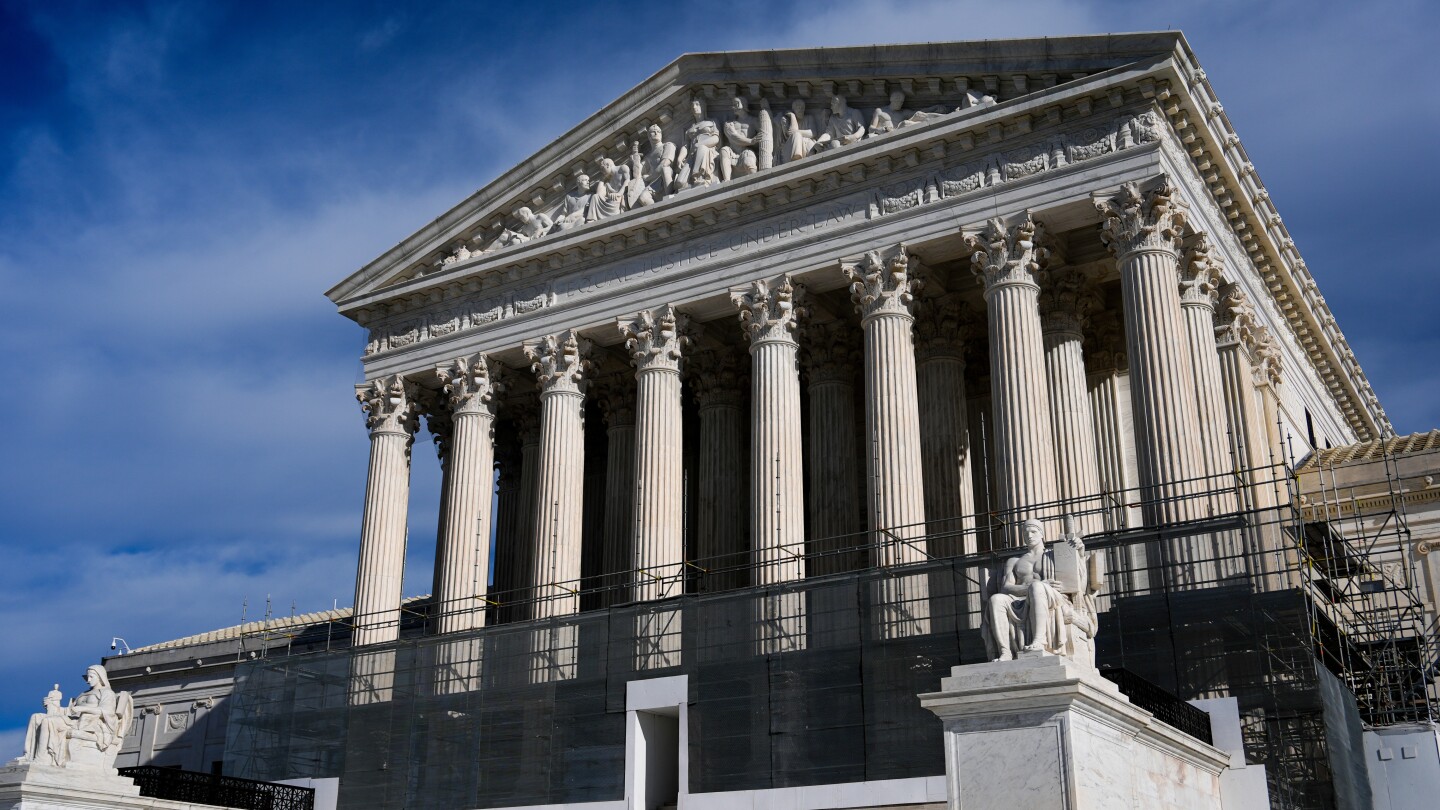
Supreme Court Revives GOP Challenge on Voting Law
The U.S. Supreme Court has reignited a Republican challenge concerning a law that permits the counting of mail ballots arriving after Election Day, a point of contention for former President Donald Trump. The court’s majority decided that candidates could challenge voting-counting rules without demonstrating a direct impact on election outcomes.
Chief Justice John Roberts emphasized, “Win or lose, candidates suffer when the process departs from the law.” The court did not make a decision on the late-arriving ballots themselves, but it plans to address the broader implications in an upcoming case this spring.
Roberts highlighted that waiting for candidates to prove a potential impact on election results before contesting rules could lead to judicial interference during the crucial late stages of elections. The court ruled 7-2 in favor of Rep. Mike Bost, R-Ill., along with two other candidates, granting them another opportunity in court without resolving their core claim.
Justices Amy Coney Barrett and Elena Kagan, part of the majority, expressed reservations about extending the right to sue to all candidates. Barrett remarked, “I cannot join the Court’s creation of a bespoke standing rule for candidates. Elections are important, but so are many things in life.”
Conversely, Justices Ketanji Brown Jackson and Sonia Sotomayor dissented, expressing concern that this decision could lead to excessive election-related lawsuits. They warned that allowing any candidate to sue could “open the floodgates to exactly the type of troubling election-related litigation the Court purportedly wants to avoid.”
Bost’s appeal followed a lower court’s dismissal of his suit due to a lack of legal standing, as the late ballots had minimal impact on his decisive victory. The state had contended that permitting such lawsuits could result in election-related turmoil. Bost argued that vote totals should not restrict his access to the courts.
Illinois law permits ballots postmarked by Election Day to be counted if received within two weeks afterward. This approach aligns with practices in fourteen states and the District of Columbia, as reported by the National Conference of State Legislatures.
The Trump administration supported Bost, with the former president asserting that the inclusion of late-arriving ballots and protracted counting processes could erode confidence in electoral outcomes.
For further details on the U.S. Supreme Court’s activity, visit AP’s Supreme Court coverage.