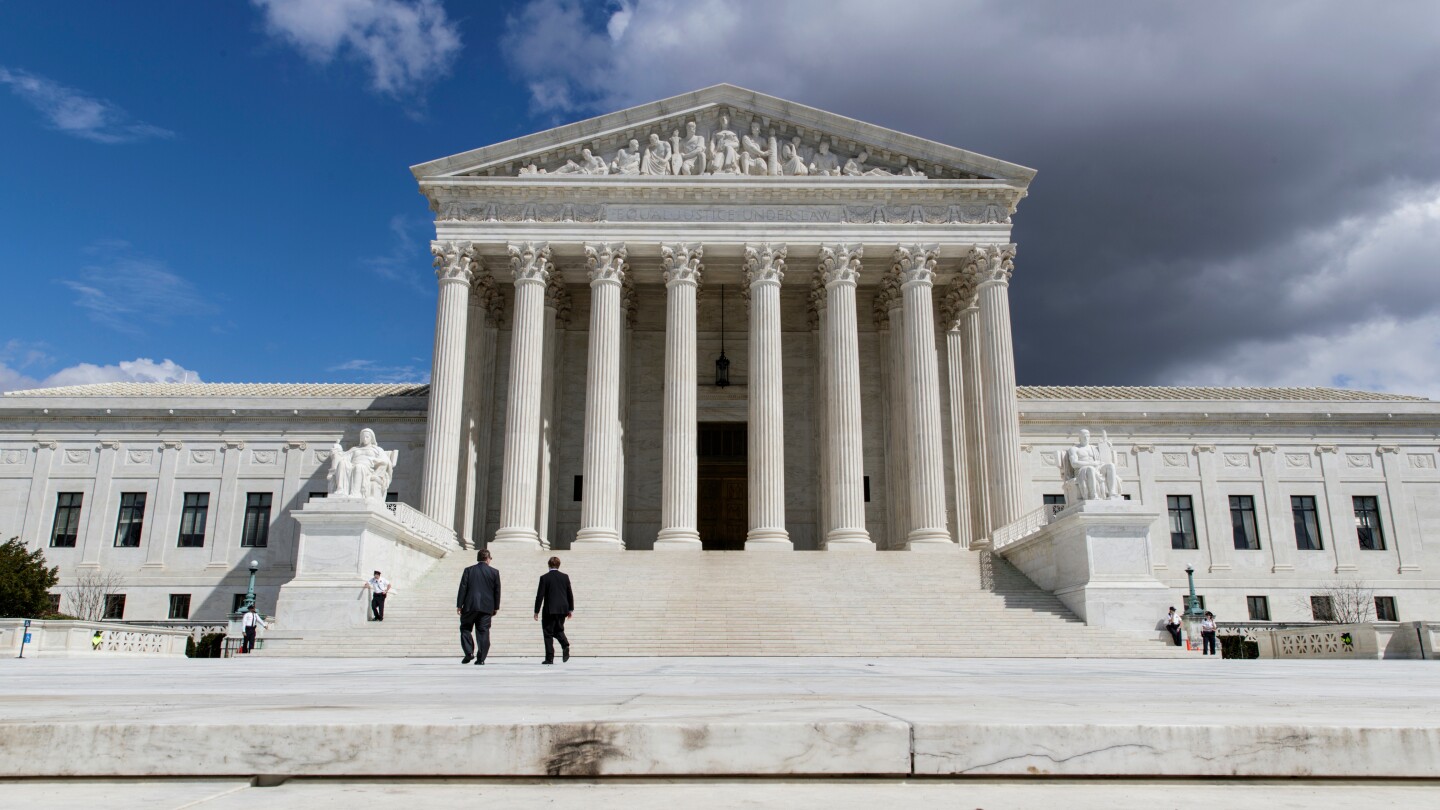
Supreme Court Declines Review of Texas Library Book Removal Case
The U.S. Supreme Court has opted not to review a Texas case concerning the removal of certain books from public libraries, sparking concerns among free speech advocates. This decision stems from a 2022 lawsuit filed by residents in Llano County, Texas, challenging the removal of over a dozen books addressing themes such as sex, race, and gender, as well as others with humorous takes on topics like flatulence.
A federal appeals court previously determined that the removal of these books did not infringe on free speech rights protected by the Constitution. This ruling, now upheld by the Supreme Court’s refusal to hear the case, has drawn criticism from free speech organizations and library associations nationwide.
Elly Brinkley, a staff attorney for PEN America’s U.S. Free Expression Programs, expressed concern over the implications of this decision. “Leaving the Fifth Circuit’s ruling in place erodes the most elemental principles of free speech and allows state and local governments to exert ideological control over the people with impunity. The government has no place telling people what they can and cannot read,” she stated.
The American Library Association’s president, Sam Helmick, also criticized the Supreme Court’s decision, warning that it could lead to government libraries becoming centers of indoctrination rather than spaces for open inquiry, thus threatening First Amendment rights.
The controversy began when a faction of Llano County residents petitioned the local library commission to remove specific books from the library. Following this, another group of residents initiated legal action to keep the books available to the public. The books in question include titles such as “Caste: The Origins of Our Discontent” by Isabel Wilkerson and “Being Jazz: My Life as a (Transgender) Teen” by Jazz Jennings.
In 2023, a federal judge originally ordered the restoration of some removed titles, but this decision was overturned by the 5th U.S. Circuit Court of Appeals, which serves Texas, Louisiana, and Mississippi. The county even contemplated closing its libraries temporarily instead of complying with the initial order to return the books.
The appeals court’s ruling emphasized that the act of removing a book from a library does not equate to banning it. “No one is banning (or burning books). If a disappointed patron can’t find a book in the library, he can order it online, buy it from a bookstore or borrow it from a friend,” the court’s opinion stated.
Llano County, situated approximately 75 miles northwest of Austin, Texas, is characterized by its predominantly white and conservative population, with strong agricultural and hunting traditions. Despite requests for comment, Llano County Judge Ron Cunningham did not immediately respond.
The case has served as a precedent for similar book removals in other parts of the United States, further fueling the national debate over free speech and censorship in public libraries.