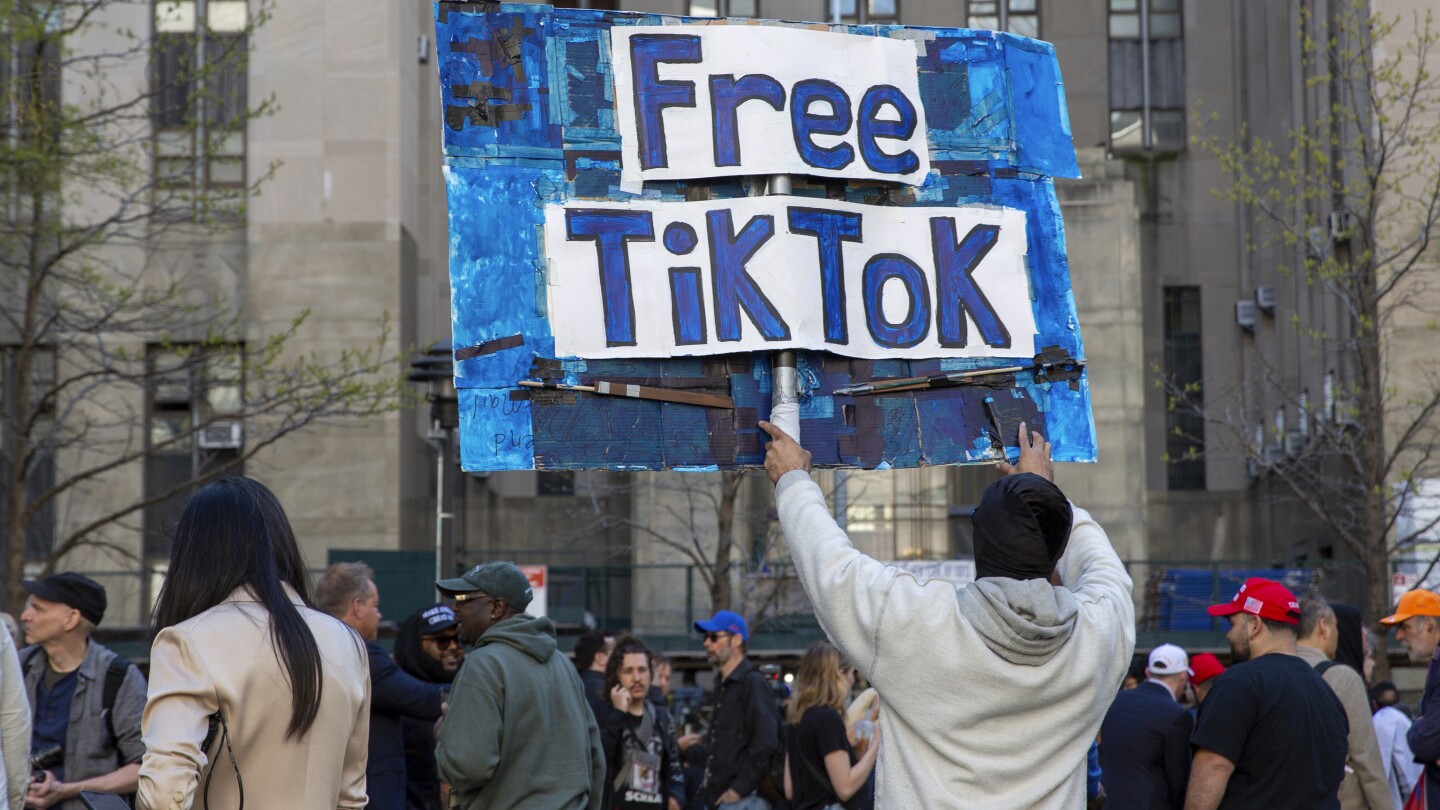
Supreme Court to Decide TikTok’s Future Amid First Amendment Concerns
The imminent fate of TikTok in the United States hangs in the balance as the Supreme Court prepares to deliberate on a pivotal case. The app, which has become a significant platform for creators and small businesses, faces potential shutdown unless it severs ties with its Chinese parent, ByteDance. This decision will hinge on the Court’s interpretation of a law that could see TikTok banned in the U.S. if not complied with.
The central issue revolves around whether the imposed law infringes on the First Amendment. TikTok, alongside its creator allies, argues that it does, while the U.S. government contends that the platform poses a national security threat, thus justifying the law.
This situation is not unfamiliar to TikTok users, who have faced similar threats since former President Donald Trump’s initial executive order aimed at banning the app. Despite Trump’s recent comments suggesting a preference for TikTok’s continuation, the Supreme Court’s decision now looms as the definitive ruling.
If the government triumphs, TikTok has indicated it will shutter its U.S. operations by January 19, leaving creators like Gillian Johnson, a 22-year-old filmmaker, to consider their next steps. Johnson, who has financially benefited from TikTok’s features, finds the potential loss difficult to comprehend, stating, “A lot of my other creative friends, we’re all like freaking out. But I’m staying calm.”
Many creators have expressed their frustrations on TikTok, worried about the economic impact of a potential shutdown. Some have even considered abandoning content creation altogether. However, Nicla Bartoli of The Influencer Marketing Factory notes that many creators remain skeptical about the ban actually happening, given past threats that did not materialize.
The timing of the Supreme Court’s decision remains uncertain, though a swift ruling could occur if a majority of the justices find the law unconstitutional. Trump has requested the Court to delay the ban to allow for further consideration once he takes office. He describes the First Amendment implications as “sweeping and troubling.”
As the legal battle unfolds, creators are exploring other platforms like Instagram and YouTube, seeking to diversify their online presence. Johnson, for instance, is already strategizing her next move by investing time in these alternatives.
According to Goldman Sachs, the creator economy, significantly bolstered by TikTok, is projected to reach $480 billion by 2027. Many creators have credited TikTok’s algorithm for offering exposure and opportunities that other platforms didn’t provide, particularly for marginalized groups.
Despite the looming threat, analysts suggest that creators are maintaining their current strategies until a definitive outcome is reached. Brandon Hurst, a plant seller who has seen tremendous growth through TikTok, remains hopeful yet cautious about the future.
Industry experts, like Edward East from Billion Dollar Boy, advise creators to archive their content for future use and continue engaging with their TikTok audience until the January 19 deadline. Should the Court not intervene, service providers will cease support for TikTok, leading to its eventual obsolescence.
TikTok has warned that a shutdown, even temporarily, would cause substantial user loss, estimating a reduction by one-third in daily U.S. users. The platform argues that such a closure would inflict irreparable harm. As the January deadline approaches, the Supreme Court’s decision will soon clarify TikTok’s fate in America.