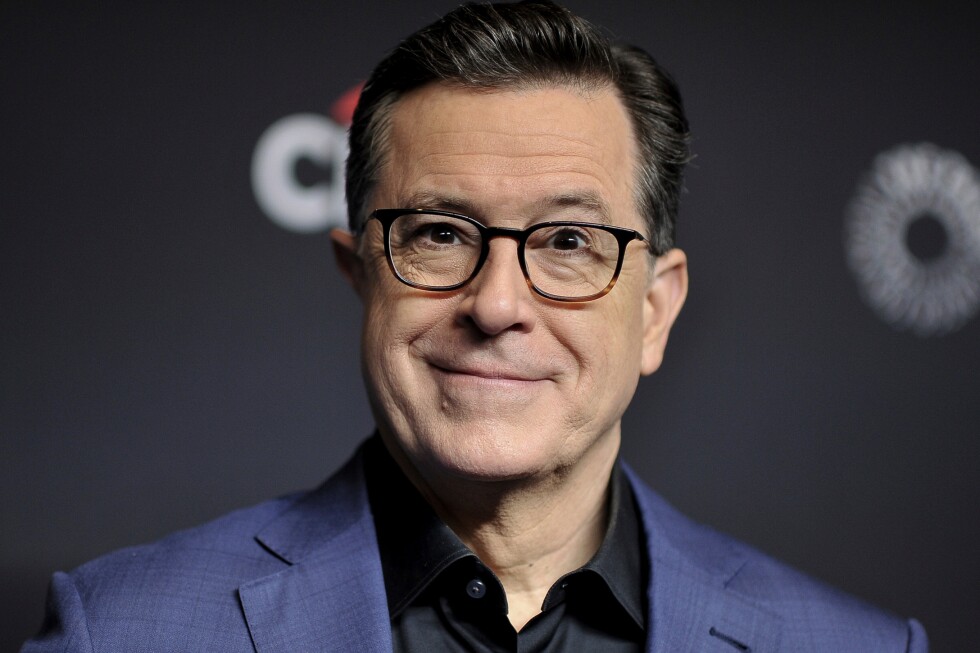
Stephen Colbert recently highlighted concerns surrounding his interview with James Talarico, a Democratic Texas Senate candidate, which was reportedly pulled by network executives due to potential regulatory issues. The incident has sparked discussions about the media’s treatment of political coverage under existing rules.
The interview, mentioned by Colbert during his Monday night show and later shared online, raised questions related to the Federal Communications Commission’s (FCC) equal-time requirement. This rule mandates that broadcast stations offer comparable airtime to all political candidates for a particular office if one appears on-air.
Although the equal-time provision has several exemptions, the Trump administration has aimed to enforce this rule more strictly, particularly concerning programs like Colbert’s. The FCC, which oversees national airwaves, has suggested that these shows may be driven by partisan motives.
Colbert remarked, “He was supposed to be here, but we were told in no uncertain terms by our network’s lawyers, who called us directly, that we could not have him on the broadcast,” during “The Late Show with Stephen Colbert.”
CBS, in a Tuesday statement, clarified that Colbert’s show received legal advice indicating the broadcast might activate the FCC’s equal-time rule for two other candidates in the Democratic primary. The network decided to release the interview on its YouTube channel with broadcast promotion instead of potentially offering equal-time options to others.
Talarico, a vocal critic of former President Donald Trump, shared a brief clip of the interview on X, labeling it “the interview Donald Trump didn’t want you to see.”
Understanding Equal Time
The Communications Act of 1934 governs airwave usage in the U.S. and includes a provision requiring stations to offer equal airtime to political candidates if one receives broadcast time. This rule also covers campaign advertising airtime sales, ensuring equal opportunities for all candidates to purchase airtime.
There are exceptions, such as newscasts, legitimate interview programs, live event coverage, or documentaries. However, candidate appearances on entertainment programs trigger the provision. This rule applies solely to broadcast television and radio, not affecting cable, streaming, or social media.
Trump Administration’s Stance on Equal Time
The Trump administration has sought to apply the equal-time rule to talk shows, which traditionally were exempt. In January, the FCC released new guidance advising late-night and daytime hosts of the need to offer equal time to political candidates. FCC Chairman Brendan Carr questioned talk show exemptions, suggesting they might be politically motivated.
The FCC stated, “The FCC has not been presented with any evidence that the interview portion of any late night or daytime television talk show program on air presently would qualify for the bona fide news exemption,” in its public notice.
Focus on Talk Shows Like ‘The View’
The recent notice also pointed out that television networks must seek exemptions for specific programs. Colbert, in his remarks, emphasized that the equal-time rule strictly applies to broadcasts, not streaming platforms. Consequently, the full 15-minute interview with Talarico was uploaded to the show’s YouTube page.
Carr, appointed by Trump, has often criticized talk shows, suggesting that investigating ABC’s “The View”—known for its frequent criticism of Trump—could be “worthwhile.” The FCC has not yet responded to requests for comment.
The Fairness Doctrine
Established by the FCC in 1949, the Fairness Doctrine required broadcasters to present opposing views on significant public issues. Unlike the equal-time rule, it applied to topics rather than candidates. The U.S. Supreme Court upheld the doctrine in 1969, citing limited broadcast spectrum as justification for regulation.
The FCC repealed the Fairness Doctrine in 1987, arguing that spectrum scarcity was no longer a concern, and then-President Ronald Reagan vetoed a congressional attempt to codify it into law.