South Korean Police Chief Removed Over Support for Martial Law
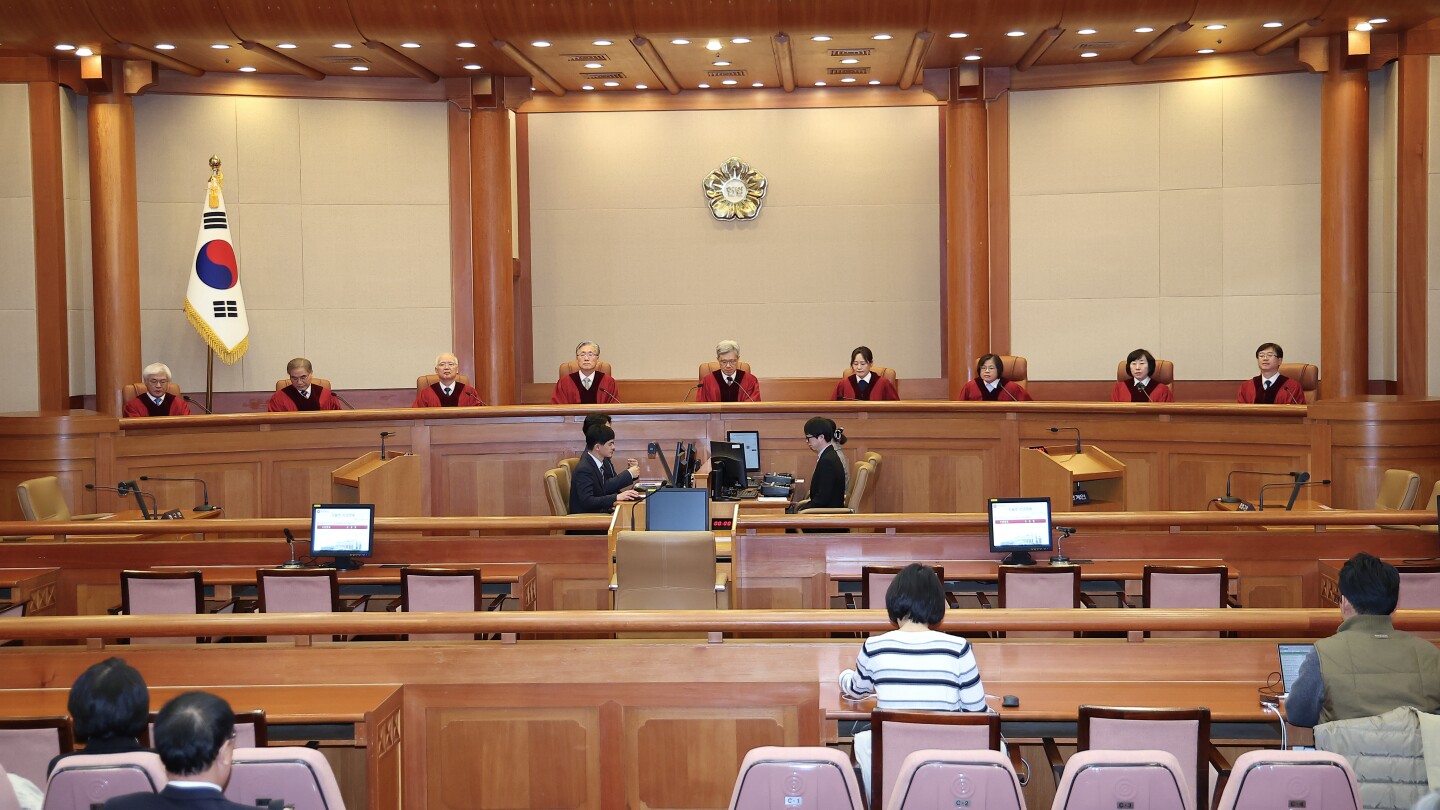
SEOUL, South Korea — The Constitutional Court of South Korea has officially dismissed the nation’s impeached police chief, Cho Ji-ho, following his controversial support for former President Yoon Suk Yeol’s brief imposition of martial law in December 2024. The court’s decision comes after Cho was accused of deploying police forces to back Yoon’s actions, which disrupted legislative activity and the independence of the National Election Commission (NEC).
Cho was charged with “actively disrupting” the legislative process by sending officers to the National Assembly to prevent lawmakers from voting against Yoon’s decree. The court also found that Cho had compromised the NEC’s autonomy by deploying police to assist the military in taking over two NEC offices, actions Yoon claimed were aimed at probing unproven allegations of election fraud.
Having been impeached by lawmakers and subsequently arrested following Yoon’s declaration of martial law, Cho is noted as the first commissioner general of the National Police Agency to be removed by the Constitutional Court. He was granted bail in January for cancer treatment but faces a separate criminal trial on charges of supporting a rebellion.
The martial law, enacted by Yoon on December 3, 2024, was described as a measure to suppress what he called an “anti-state” liberal opposition in control of the legislature. Despite the military and police blockade, lawmakers managed to convene and vote unanimously to revoke the martial law order.
In the following weeks, lawmakers voted to impeach Yoon, effectively suspending his presidential powers, with the Constitutional Court formally removing him from office in April. Yoon was rearrested in July and now faces serious charges, including rebellion, which carries severe penalties such as life imprisonment or the death penalty.
The Constitutional Court, in its ruling on Cho’s impeachment, emphasized that he could not continue as the police chief after executing Yoon’s orders, which were “unconstitutional, unlawful.” The decision highlighted a meeting between Yoon, Cho, and the Seoul police chief at a safe house, where martial law implementation plans were discussed with Yoon’s then-defense minister.
Following the martial law declaration, Yoon and the Seoul police chief stationed approximately 300 officers at the National Assembly entrances, which were also surrounded by heavily armed troops, including special operations units with Blackhawk helicopters. The court interpreted these actions as attempts to obstruct the legislative vote.
Despite the police and military presence, lawmakers and civilians protested, leading to a temporary opening of the Assembly grounds. Ultimately, a quorum was achieved with some lawmakers, including current President Lee Jae Myung, resorting to climbing fences to enter the main chamber.
Cho defended his actions by stating that his intention was to maintain order and prevent clashes at the Assembly. However, the court dismissed this justification, stating, “Considering that lawmakers and others had no choice but to enter the National Assembly by abnormal means, such as climbing over fences, due to the respondent’s order to block the entrances, the respondent’s claim is not acceptable.”