Former South Korean President Sentenced to Five Years in First of Multiple Trials
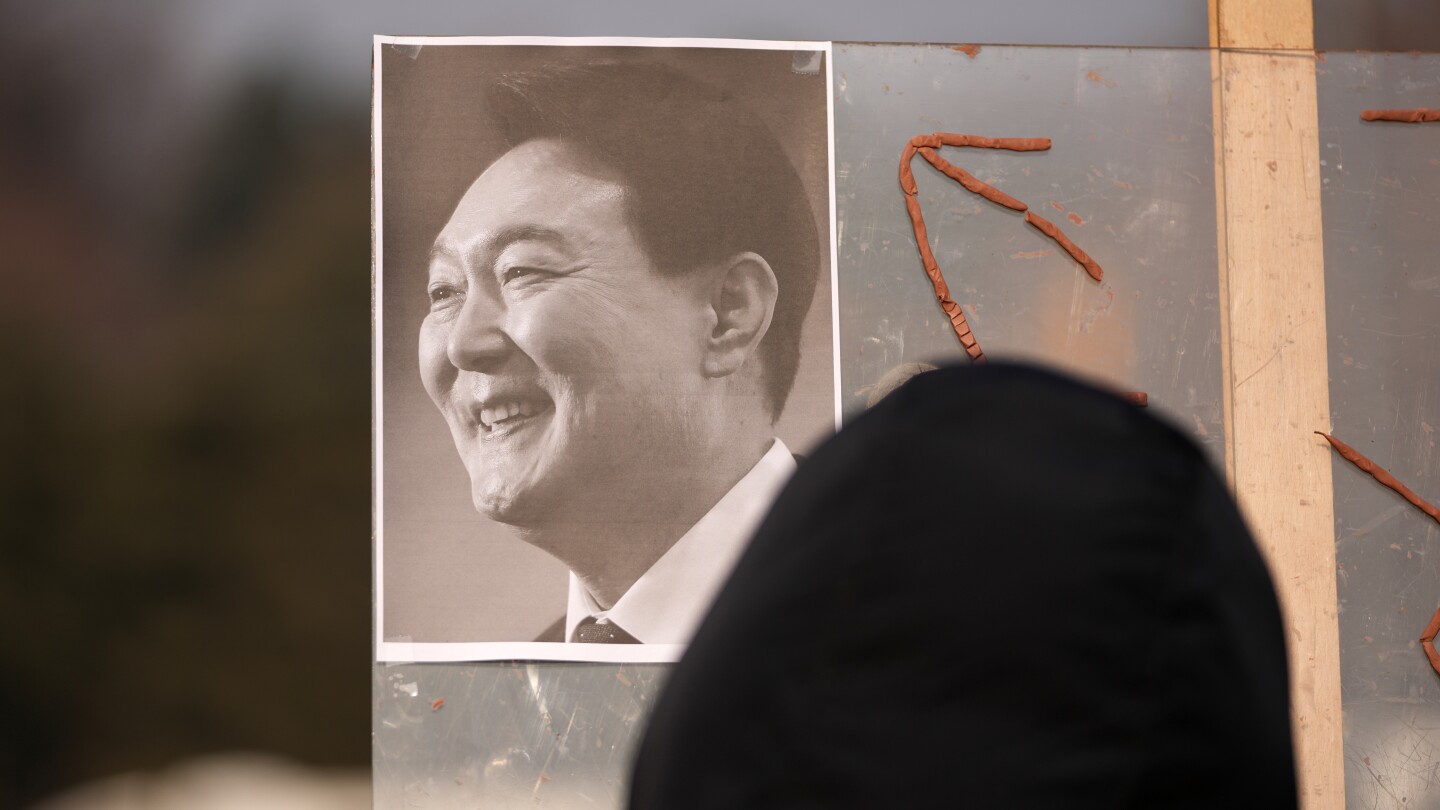
SEOUL, South Korea — Former South Korean President Yoon Suk Yeol has been sentenced to a five-year prison term by a South Korean court. This marks the first verdict from a series of eight criminal trials related to the martial law incident that led to his removal from office and other allegations.
Yoon was removed from his position following his declaration of martial law in December 2024, a move that resulted in mass public protests demanding his resignation.
The main charge against Yoon accuses him of rebellion, with an independent counsel seeking the death penalty. The Seoul Central District Court is scheduled to deliver its ruling on this charge on February 19.
Yoon has consistently argued that his martial law declaration was not intended for long-term military rule. He stated that the decree was a response to the liberal-controlled parliament’s interference with his agenda. However, investigators have interpreted Yoon’s actions as an effort to extend his power, resulting in charges of rebellion, abuse of power, and other offenses.
Yoon Receives Sentence Amidst Ongoing Trials
In the latest ruling, Yoon was convicted for resisting attempts to detain him and for fabricating the martial law decree. Additionally, he was penalized for bypassing a required Cabinet meeting, limiting some members’ rights to discuss his decree.
Judge Baek Dae-hyun emphasized the need for “a heavy punishment” due to Yoon’s lack of remorse, stating that restoring the legal order disrupted by Yoon’s actions was essential.
Yoon’s legal team plans to appeal, arguing that the verdict was “politicized” and based on “unilateral arguments by the independent counsel.” The defense believes the ruling oversimplifies the distinction between presidential powers and criminal responsibility.
Rebellion Trial Unlikely to Result in Death Sentence
Legal expert Park SungBae anticipates that Yoon is unlikely to face the death penalty in the rebellion trial. He suggests a life sentence or a lengthy prison term of 30 years or more is more probable.
Although South Korea has not carried out executions since 1997, Park noted that courts seldom impose the death penalty. The court will consider the absence of casualties and the short duration of Yoon’s decree as mitigating factors, despite his lack of genuine remorse.
Past presidents in South Korea have received pardons as a means of fostering national unity, including Chun Doo-hwan, who was sentenced to death for a coup and violent suppression of protests. Even if Yoon avoids a death sentence, he still faces potential imprisonment from other ongoing trials.
Some analysts believe Yoon is maintaining a defiant stance in hopes of receiving a future pardon, despite expecting a lengthy sentence.
Political Crisis Triggered by Martial Law Declaration
On December 3, 2024, Yoon announced martial law in a televised address, citing the need to eliminate “anti-state forces” and protect “the constitutional democratic order.” He deployed troops and police to surround the National Assembly, although many did not enforce the perimeter strictly, allowing lawmakers to convene and reject Yoon’s decree.
Despite the lack of violence, Yoon’s declaration led to South Korea’s most significant political crisis in decades, unsettling both its diplomatic relations and financial markets. For many, the decree evoked memories of past authoritarian regimes that used martial law to suppress dissent in the 1970s and 1980s.
Following Yoon’s ouster, his political rival Lee Jae Myung won a snap election and became president. Lee appointed three independent counsels to investigate allegations against Yoon, his wife, and associates.
Yoon is also facing charges related to ordering drone operations over North Korea to incite conflict, manipulating an investigation into a marine’s death in 2023, and accepting complimentary opinion surveys in exchange for political favors.