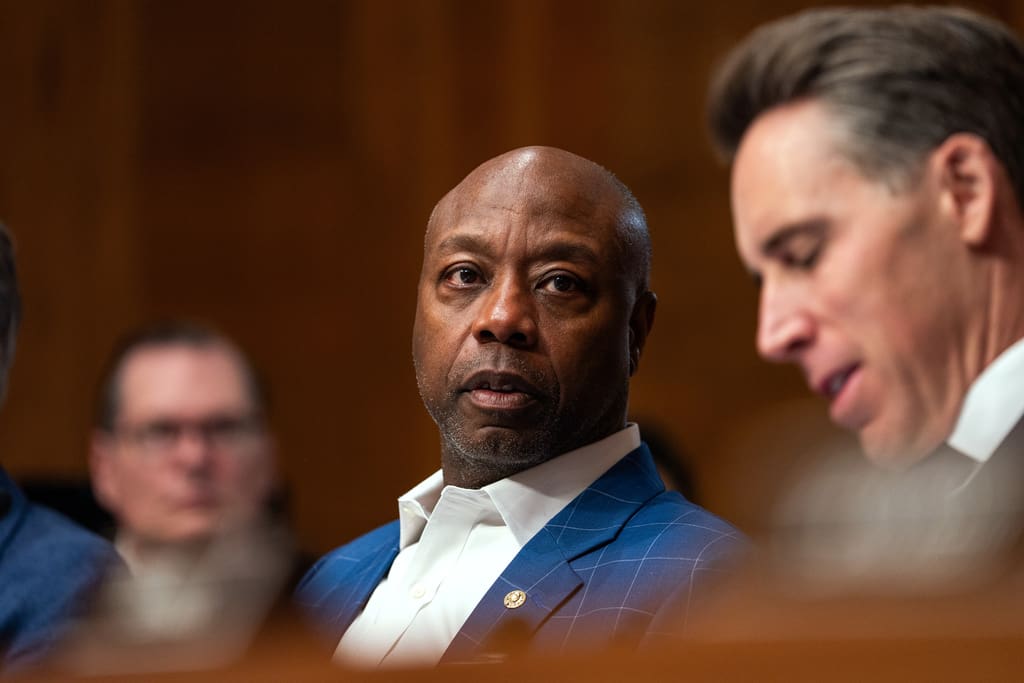
Senate Republicans Focus on Affordability Amid Donor Controversies
As Senate Republicans strive to maintain their narrow majority in the upcoming midterm elections, they are emphasizing affordability in their campaign narratives. However, this focus is complicated by the fact that some of their significant donors are associated with corporations responsible for price hikes affecting American working families.
South Carolina Senator Tim Scott, who chairs the National Republican Senatorial Committee (NRSC), stressed the importance of affordability during an interview with Fox News last December, describing 2026 as “a year of affordability.” He credited President Donald Trump with efforts to reduce prices. However, a recent Pew poll revealed that many Americans are struggling with rising costs for essentials such as food, housing, utilities, and health care.
The inflationary pressures are attributed to multiple factors, including tariffs imposed during Trump’s presidency and Congress’s inaction on Affordable Care Act subsidies. Yet, a significant driver is perceived corporate greed, with companies raising prices and achieving record profits while many Americans face financial hardship.
Koch Industries and the Fertilizer Market
Koch Industries, a major manufacturer of fuels and construction materials, exemplifies this issue. As one of the largest privately held companies in the U.S., Koch has expanded its reach in the fertilizer sector by acquiring plants, including a facility in Iowa purchased for $3.6 billion in September 2024. This acquisition has raised concerns among farmers, particularly due to Koch’s dominance in the market, which allows it to set higher fertilizer prices, impacting both farmers and consumers by increasing food costs.
The Iowa Farmers Union criticized the deal, stating, “The deal is bad for Iowa farmers, bad for Iowa’s economy, and ultimately bad for consumers paying high food prices.”
Political Contributions and Rising Costs
Koch Industries has significantly supported Republican Senate candidates, spending $12.75 million in late 2025 through PACs like Americans for Prosperity and the Senate Leadership Fund. This fund also received $5 million from Stephen A. Schwarzman, CEO of Blackstone, a major private equity firm.
Blackstone, known as “the largest commercial landlord in history,” has been linked to the housing crisis through its practice of raising rents significantly, as highlighted in a 2023 analysis by the Private Equity Stakeholder Project. Schwarzman also supported MAGA Inc. with a $5 million contribution.
Contributions also came from energy sector executives such as Michael Smith of Freeport LNG and Jeffrey Hildebrand of Hilcorp. Freeport LNG has been criticized for increasing gas prices by exporting natural gas, impacting domestic supply. Hilcorp’s operations in Alaska have faced scrutiny for alleged unnecessary gas price hikes.
Additionally, federal regulators are investigating whether Occidental Petroleum and Ovintiv colluded with OPEC to inflate gas prices. Smith also supported a PAC favoring Maine Senator Susan Collins.
Broader Implications of Donor Influence
Beyond basic necessities, corporate influence extends to other sectors. Paul Singer, of Elliott Investment Management, donated $3.75 million to the Senate Leadership Fund. His firm acquired a stake in Southwest Airlines, which subsequently began charging for checked bags, a contentious move among consumers.
Singer’s donations also support PACs backing Senator Susan Collins and Michigan Senate candidate Mike Rogers.
—
Read More Kitchen Table News