Reverse Keyword Warrants: A New Approach in Criminal Investigations
In recent years, law enforcement agencies have started employing a novel tactic in their investigations, known as “reverse keyword” warrants. This method involves requesting search engine giants like Google to provide data on users who have searched specific terms online. While this approach has aided in solving complex cases, it has also sparked debates over privacy rights.
Traditional search warrants typically target specific suspects or locations. In contrast, reverse keyword warrants operate by identifying IP addresses linked to searches for particular phrases or addresses. This method was instrumental in investigations such as the Texas bombings, the assassination of a Brazilian politician, and a deadly arson attack in Colorado.
Increasing Reliance on Digital Footprints
As digital activities leave traces online, the data collected by search engines like Google becomes invaluable for investigations, particularly when suspects are unknown. For instance, the search for Nancy Guthrie’s kidnapper has underscored the potential of leveraging online search data in criminal inquiries.
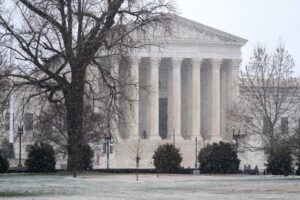
The Pennsylvania Supreme Court recently upheld the use of a reverse keyword warrant in a rape case, highlighting the tension between swift crime resolution and Fourth Amendment rights. Privacy advocates, including the American Civil Liberties Union, have expressed concerns over the broad access to personal information that such warrants can provide to law enforcement.
Responding to questions about these warrants, Google stated, “Our processes for handling law enforcement requests are designed to protect users’ privacy while meeting our legal obligations. We review all legal demands for legal validity, and we push back against those that are overbroad or improper, including objecting to some entirely.”
Case Study: Pennsylvania Rape Investigation
In a pivotal case from 2016, Pennsylvania State Police faced challenges in solving a violent rape incident due to a lack of leads. By obtaining a warrant to identify Google accounts that searched for the victim’s name or address during the week of the attack, the investigation took a critical turn. Google revealed two searches for the victim’s address shortly before the attack, leading authorities to John Edward Kurtz, whose DNA matched that found at the crime scene. Kurtz was eventually convicted and sentenced to a lengthy prison term.
Kurtz’s defense argued that the search violated his privacy rights, but the state Supreme Court disagreed, with justices stating that there was no expectation of privacy in Google searches, and the police had probable cause. However, dissenting opinions questioned the sufficiency of probable cause based solely on the assumption that a suspect would use Google.
Broader Implications and Legal Challenges
Reverse keyword warrants have also been used in other states. In Colorado, a similar warrant led to the identification of suspects in an arson case, despite the state Supreme Court later ruling the warrant unconstitutional due to a lack of individualized probable cause. The evidence, however, was admitted because police acted in good faith at the time.
The controversy surrounding reverse keyword warrants underscores a critical debate: while they can be effective in solving crimes, they also raise concerns about privacy and the potential for misuse. Civil liberties groups argue that extending traditional investigative powers to online searches could implicate innocents simply for their online activities.
Google does not disclose the number of keyword warrants it receives annually, adding to the opacity surrounding their use. Meanwhile, courts continue to evaluate the balance between technological advancements and privacy protections, with some cases, like the one involving Marielle Franco in Brazil, awaiting high court decisions.
As digital footprints become more integral to modern life, the implications of reverse keyword warrants on privacy and civil liberties remain a pressing issue for lawmakers, courts, and the public alike.