The Significance of Presidential Addresses to Congress
Presidential addresses to Congress stand as a unique and enduring spectacle of democracy, often drawing significant public viewership. These occasions provide citizens the opportunity to hear directly from their leaders and witness the interaction of the three branches of government in a tangible form, rather than abstract concepts of checks and balances.
Traditionally, these speeches have been platforms for presidents to appeal to the nation’s highest ideals and assert the United States’ role on the global stage as a symbol of freedom and democracy. This practice was popularized over a century ago when Woodrow Wilson began delivering his addresses in person, rather than in writing, setting a precedent for future presidents. Notable moments in history include Ronald Reagan’s declaration that “democracy is everywhere on the move” and Bill Clinton’s assertion of the United States as the “indispensable nation.”
Perhaps most famously, Franklin Roosevelt used his address to advocate for the Four Freedoms: freedom of speech, freedom of worship, freedom from want, and freedom from fear, which he stated should be universal. Roosevelt’s rhetoric was a direct counter to the isolationist sentiments of the first “America First” movement, which was marked by some admiration for fascism.
The Role of Congress and the Judiciary
The Constitution mandates that the president report to Congress on the “State of the Union,” underscoring Congress’s primacy as the government’s leading branch. This requirement reflects the framers’ intent to avoid monarchy-like power, evident in Thomas Jefferson’s refusal to deliver the address in person, likening it to a British “speech from the throne.”
However, over the years, the elaborate stagecraft of these events has often relegated lawmakers to partisan spectators. When figures like Donald Trump make sweeping claims about government inefficiency, partisan reactions are predictable. Yet these moments also raise questions about the balance of power: Congress holds the “power of the purse,” and executive actions that bypass this authority are illegal. Agencies like USAID, established by Congress, cannot be unilaterally defunded or dismantled by the president.
The Supreme Court’s Influence
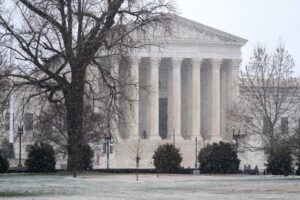
Meanwhile, the Supreme Court, another key player in the balance of powers, typically remains silent during such addresses. However, past incidents highlight the court’s politicization. For instance, Justice Samuel Alito’s retort during Barack Obama’s critique of the Citizens United decision underscored this dynamic. Obama’s concerns about the ruling predicted an influx of corporate money into politics, which Alito dismissed.
Currently, the credibility of the Roberts Court is under scrutiny. The controversial decision in Trump v. U.S. granted presidents significant immunity, prompting Justice Sonia Sotomayor to criticize the ruling for undermining the constitutional principle that no one is above the law. As the Court faces new challenges, including issues like birthright citizenship and the “unitary executive theory,” its decisions will be pivotal in maintaining the balance of power between the branches.
The coming year will reveal whether the constitutional requirement to report on the state of the union continues to reflect a thriving democratic experiment or signals shifts in the foundational structure of government power.