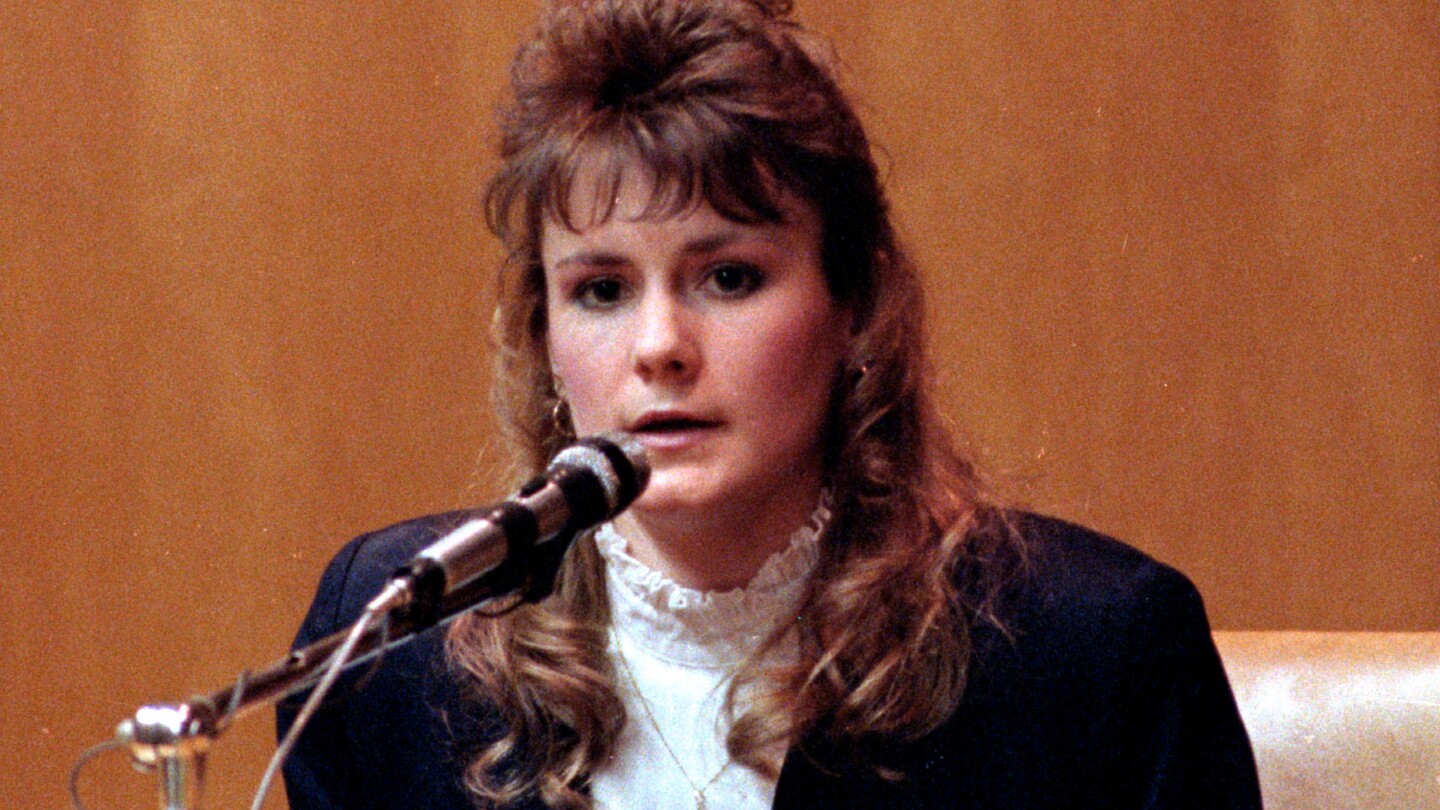
Pamela Smart Files Appeal to Overturn Conviction
Pamela Smart, who is currently serving a life sentence for her role in the 1990 murder of her husband, is attempting to have her conviction overturned. The murder, carried out by her teenage student, has been a subject of legal battles and media attention for decades. A petition challenging the conviction was filed in New York, where Smart is incarcerated, and in New Hampshire, where the crime took place.
Smart’s legal team argues that her trial was compromised by excessive media coverage, which blurred the lines between allegations and evidence. “Ms. Smart’s trial unfolded in an environment that no court had previously confronted — wall-to-wall media coverage that blurred the line between allegation and evidence,” said Jason Ott, a member of Smart’s legal team.
The appeal follows New Hampshire Governor Kelly Ayotte’s decision seven months ago to deny a sentence reduction hearing for Smart. The governor reviewed the case and concluded that it did not warrant a hearing.
The New York State Department of Corrections and Community Supervision and New Hampshire’s attorney general’s office have refrained from commenting on the ongoing litigation. The state of New Hampshire maintains that Smart received a fair trial and that her convictions were lawfully obtained and upheld on appeal.
Smart’s attorneys claim that during the trial, prosecutors presented the jury with inaccurate transcripts of recorded conversations. The inaccuracies allegedly included words that were not audible on the recordings but were added to the transcripts, such as “killed,” “busted,” and “murder.” “Modern science confirms what common sense has always told us: when people are handed a script, they inevitably hear the words they are shown,” explained Matthew Zernhelt, Smart’s attorney.
The legal team also highlighted other issues, including the influence of media coverage on the trial and jury instructions that were not aligned with the evidence presented. Additionally, they argue that Smart received a mandatory life sentence without parole for being an accomplice to first-degree murder, a sentence not required for that charge under New Hampshire law.
At the time of the murder, Smart was a 22-year-old high school media coordinator involved in an affair with a 15-year-old student, William Flynn, who eventually shot Gregory Smart, Pamela’s husband. Flynn and three other teenagers cooperated with authorities, leading to their release after serving their sentences. Although Smart has consistently denied any involvement in the murder plot, she was convicted as an accomplice and sentenced to life without parole.
In June 2024, Smart publicly acknowledged her responsibility for the first time, expressing that her previous denials were a coping mechanism. The case, notable for its media frenzy, was one of the first high-profile instances of a school employee having an affair with a student. Flynn testified that Smart had convinced him to kill her husband by threatening to end their relationship if he did not comply.
The case inspired Joyce Maynard’s book “To Die For” and a subsequent film adaptation starring Nicole Kidman and Joaquin Phoenix.