This was originally published in the Hill.
Ohio House Seats Face Predictable Elections Due to Gerrymandering
This fall, all 99 seats in Ohio’s House of Representatives are set for election. However, the competition expected during such a campaign season is notably absent. This is largely due to district lines drawn by influential lawmakers and political insiders, which have effectively predetermined the election outcomes well before Election Day.
This situation is not a new phenomenon for Ohio voters, who have expressed their frustration through a significant ballot initiative. Over the summer, 535,005 voters supported a measure to eliminate gerrymandering in Ohio politics. This initiative will appear as Issue 1 on the November ballot, but it faces challenges, including a misleading description of the measure that will be presented to voters.
On Monday, the coalition behind the initiative, Citizens Not Politicians, filed a lawsuit demanding accurate ballot language. The Brennan Center for Justice, which is part of this coalition, supports this legal action.
Gerrymandering: A National Issue
Ohio is not alone in grappling with extreme gerrymandering. In several other states, voters will encounter races in the 2024 election that are heavily influenced by politicians who have manipulated district boundaries to secure their positions.
The Citizens Not Politicians ballot initiative aims to address this issue in Ohio by transferring the power of drawing district maps from politicians to an independent commission composed of Ohio citizens. This constitutional amendment seeks to end secretive negotiations and deals among political elites and ensure that district maps reflect community interests rather than political agendas.
Under the proposed system, elections would better mirror shifts in partisan preferences, allowing for more responsive and representative outcomes. This is a stark contrast to the current situation, where redistricting has been conducted behind closed doors in places like the “Bunker,” a secret hotel room used for this purpose.
Attempts at Reform
Despite previous attempts to reform redistricting processes in Ohio through constitutional amendments in 2015 and 2018, these efforts have had minimal impact. The same politicians retained control over the redistricting process, continuing to draw maps in secrecy and unveiling them at the last possible moment, often during ongoing public hearings.
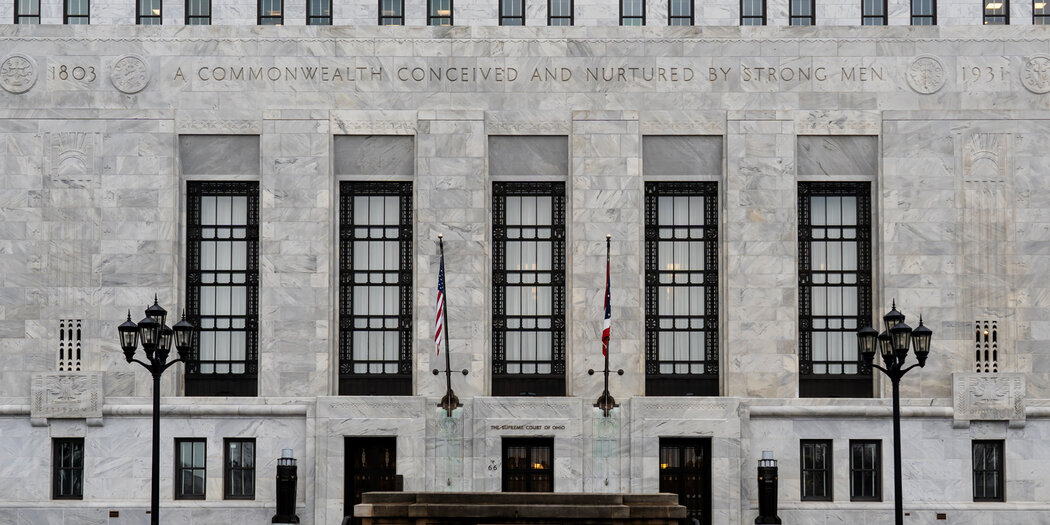
Ohio lawmakers have consistently demonstrated their willingness to gerrymander districts to protect their political interests. In 2022, the Ohio Supreme Court ordered a redrawing of district maps after a lawsuit brought by the Brennan Center on behalf of the Ohio Organizing Collaborative and other groups. The court found that the maps violated the Ohio constitution by not reflecting the partisan preferences of Ohio voters. However, lawmakers ignored the court’s order, presenting maps with minor changes that still failed to comply with the law.
The Ohio Supreme Court rejected these maps multiple times, yet lawmakers disregarded the rulings. Ultimately, Ohio voters used unconstitutional maps for the 2022 election, and the current district maps for 2024 remain problematic.
A Collective Effort for Change
The Ohioans who signed the petition for the anti-gerrymandering measure come from across the political spectrum and various regions of the state. Their goal is to end the cycle of unfair maps and ensure that their votes have a genuine impact on who represents them in the legislature and Congress.