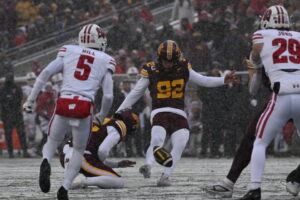
Traditionally, the journey through college in the United States was marked by a four-year timeline, especially for student-athletes whose college careers typically ended once they joined professional teams. However, new NCAA regulations have stirred significant changes, leading to a scenario where athletes are exiting professional sports to return to college, sparking confusion and legal battles.
Recent headlines feature athletes like Dae’Quan Wright, an undrafted tight end from Mississippi. After tryouts with the Eagles and Browns, Wright has secured a position at LSU, a Southeastern Conference rival to his previous team, Ole Miss. Wright, alongside others, has pursued legal action to reclaim college eligibility as both collegiate and NFL seasons commence.
NCAA Extends Athlete Eligibility
In June, the NCAA made a swift decision by its standards to allow athletes to participate in five seasons over five years. This rule kicks in when athletes either enroll full-time or start the school year after turning 19. Although the rule aligns with existing practices like redshirting and pandemic-year extensions, it inadvertently excluded the Class of 2022, leading to disputes.
Members of this class argue that their exclusion denies them educational opportunities and potential NIL (Name, Image, Likeness) earnings. This has led to unexpected competition for roster spots and potential talent influxes, complicating team dynamics as the seasons unfold.
Federal Lawsuit and Court Rulings
Athlete Brock Wisne filed a federal lawsuit against the NCAA, alleging antitrust violations due to the exclusion of the 2022 class from the new rule. A judge in Denver ruled in Wisne’s favor, allowing class members to return to their original colleges, though the NCAA’s transfer portal restrictions remain. The ruling was temporarily paused by an appeals court, adding further complexity to the situation.
State-Level Legal Actions
Many athletes have turned to state courts, where judges have often ruled in their favor, allowing them to return to college. In certain cases, like Wright’s in Louisiana, judges have ordered the transfer portal to temporarily reopen, enabling athletes to explore new opportunities.
However, this approach has led to complications within conferences, such as the SEC, which restricts intra-conference transfers unless the portal is open. Conference leaders have expressed concerns over the potential blurring of lines between collegiate and professional sports and the implications for current and high school athletes.
Sam Ehrlich, a college sports litigation expert from Boise State, notes that state lawsuits were filed preemptively, anticipating federal rulings might change. Despite the federal case’s status, state lawsuits have moved forward independently, with numerous cases resulting in favorable rulings for athletes. Only one appeal, involving basketball player Filip Borovicanin, has been overturned.
Future Implications
The resolution of these legal challenges is uncertain, with court proceedings likely extending beyond the current sports seasons. Football and basketball teams face the challenge of adapting to the evolving landscape. For instance, Gonzaga recruited two Class of ’22 players with restored eligibility, though one is impacted by an overturned ruling in Ohio, while the other remains eligible under a favorable Georgia ruling.
___
Sign up for Top 25 poll alerts here. Visit the Top 25 here and see AP’s full college football coverage here.