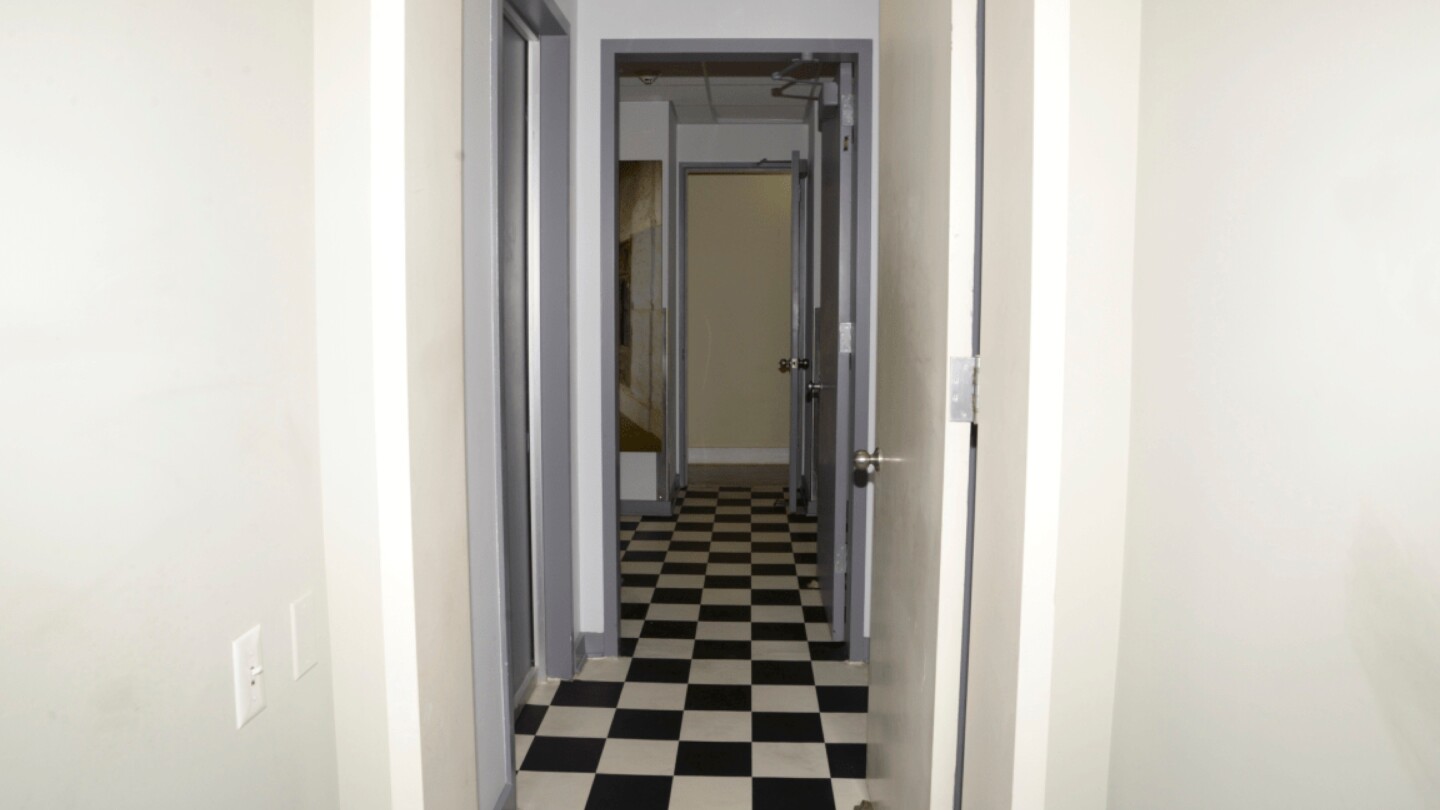
NEW YORK (AP) — A sudden disappearance of at least 16 files from the Justice Department’s webpage dedicated to documents on Jeffrey Epstein occurred shortly after they were uploaded, leaving the public with no explanation or notification from the authorities. Among these files was an image featuring President Donald Trump. The files were accessible on Friday but had vanished by Saturday.
The missing documents included images of artworks featuring nude women and a photograph that captured a series of photos along a credenza and inside drawers. Notably, one of these images included Trump, alongside Epstein, Melania Trump, and Epstein’s associate Ghislaine Maxwell. The Justice Department has yet to clarify the reasons behind the files’ removal but mentioned on X that, “photos and other materials will continue being reviewed and redacted consistent with the law in an abundance of caution as we receive additional information.”
The mystery surrounding the missing files has only heightened speculation about what might have been removed and why the public was not informed, further fueling the longstanding intrigue surrounding Epstein and his connections with influential individuals. The House Oversight Committee’s Democrats highlighted the absence of the Trump-related image on X, asking, “What else is being covered up? We need transparency for the American public.”
Limited Insights from Initial Releases
The Justice Department’s initial document release, which spans tens of thousands of pages, was anticipated to shed new light on Epstein’s case but fell short, offering scant new information. Critical records, such as FBI interviews with victims and internal memos on charging decisions, were notably absent. These documents could have provided clarity on the investigative perspectives and decisions that enabled Epstein’s 2008 plea deal to a minor state-level charge.
The omissions extend further, as these records, mandated by a recent congressional law, barely mention several influential figures long linked with Epstein, including Britain’s former Prince Andrew, prompting questions regarding scrutiny of certain individuals and the overall advancement of public accountability.
New revelations included insights into the Justice Department’s choice to abandon an investigation into Epstein during the 2000s, which allowed him to plead guilty to a state-level charge, and a previously unseen 1996 complaint accusing Epstein of stealing photographs of children. The releases were heavy on depictions of Epstein’s properties in New York City and the U.S. Virgin Islands, alongside photographs of celebrities and politicians.
Among the newly disclosed images were several never-before-seen photos of former President Bill Clinton. While both Clinton and Trump have distanced themselves from Epstein, neither has been accused of any misconduct related to him, and the images do not appear to be pertinent to the criminal proceedings against Epstein.
Despite a congressional deadline that necessitated public disclosure by Friday, the Justice Department indicated plans for a rolling release of records, attributing delays to the intricate process of protecting survivors’ identities. No timeline for the release of additional records has been provided, a situation that has frustrated Epstein’s accusers and congressional members who advocated for the disclosure law. Instead of concluding the protracted quest for transparency, the release marks the onset of an indefinite wait for a complete understanding of Epstein’s offenses and the investigative measures undertaken.
“I feel like again the DOJ, the justice system is failing us,” said Marina Lacerda, who alleges Epstein began sexually abusing her at his New York City mansion when she was 14.
Redacted and Contextually Sparse Records
Following Epstein’s 2019 arrest on sex trafficking charges, his death in custody halted further proceedings. The documents now made public represent only a fraction of the potential millions of pages in the department’s possession. Deputy Attorney General Todd Blanche noted that Manhattan federal prosecutors held over 3.6 million records from Epstein and Maxwell investigations, many duplicates of materials already provided by the FBI.
While many of the released records had previously been available through court filings, congressional releases, or freedom of information requests, they are now consolidated in one searchable location for public access. However, new documents often lacked necessary context or were heavily redacted; a 119-page document labeled “Grand Jury-NY,” potentially linked to the 2019 or 2021 sex trafficking investigations, was entirely blacked out.
Trump’s Republican supporters focused on Clinton’s images, which included photos with singers Michael Jackson and Diana Ross, as well as Epstein’s interactions with actors Chris Tucker and Kevin Spacey, and TV newscaster Walter Cronkite. Yet, these images lacked captions or explanations for the gatherings.
The most substantial records revealed so far indicated that federal prosecutors had a seemingly strong case against Epstein in 2007 but never formally charged him. Newly public grand jury transcripts featured FBI testimonies from interviews with multiple young girls and women who claimed they were compensated to perform sexual acts for Epstein, with the youngest being 14 years old and in ninth grade.
One witness recounted resisting Epstein’s advances during a massage, leading to sexual assault. Another, then 21, described being hired at 16 to perform sexual massages and subsequently recruiting other girls for the same purpose, receiving $200 for each referral. She advised them to lie about their age if underage, claiming they were 18.
The documents also include a Justice Department interview transcript with Alexander Acosta, the U.S. attorney overseeing the case, about his decision against federal charges. Acosta, who served as labor secretary during Trump’s tenure, cited concerns about the credibility of Epstein’s accusers in front of a jury and the department’s reluctance to elevate the case to a federal level, given its overlap with soliciting prostitution, typically handled by state prosecutors.
“I’m not saying it was the right view,” Acosta added, acknowledging that public perceptions of survivors have evolved. “There’s been a lot of changes in victim shaming,” he remarked.
Attorney Jennifer Freeman, representing Epstein accuser Maria Farmer and others, said the document release left her client feeling validated. Farmer had long sought official documentation supporting her allegations that Epstein and Maxwell possessed child sexual abuse images. “It’s a triumph and a tragedy,” Freeman stated, pointing to the lack of significant action by authorities. “It looks like the government did absolutely nothing. Horrible things have happened, and if they investigated in even the smallest way, they could have stopped him.”