Maryland Proposes Amendment for New Congressional Map Favoring Democrats
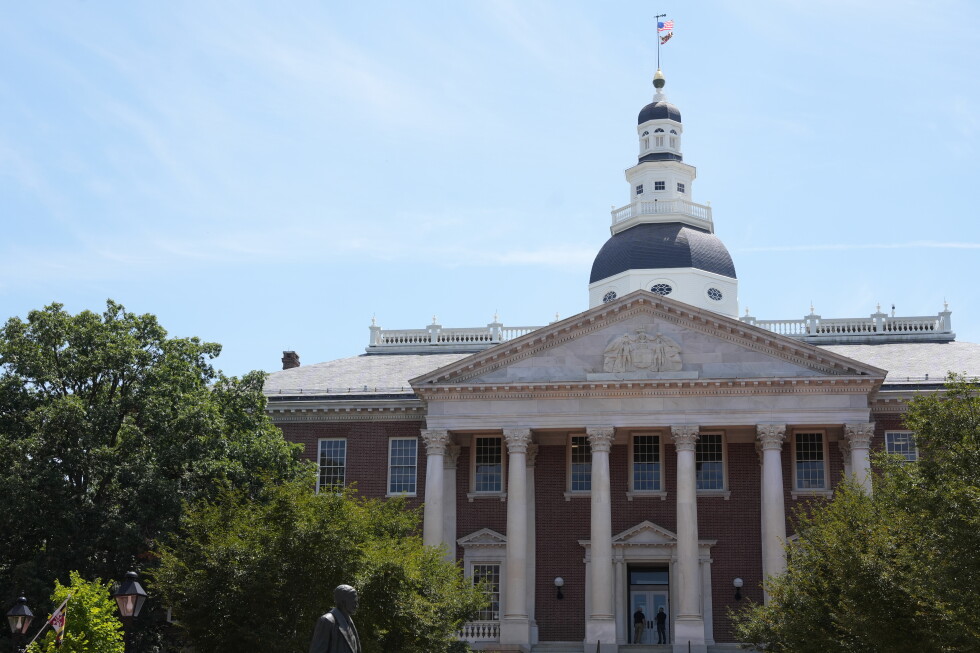
In an upcoming November ballot, Maryland voters will decide on a proposed amendment that could reshape the state’s congressional map to favor Democrats in all eight U.S. House districts by the 2028 elections. This decision follows the approval of both chambers of the state legislature, dominated by Democrats, during a special session convened to consider the amendment. The measure passed with a 96-38 vote in the House and a 32-13 vote in the Senate, meeting the required three-fifths majority in both chambers.
Governor Wes Moore, a Democrat, expressed support for the initiative, highlighting its necessity in countering former President Donald Trump’s advocacy for mid-decade redistricting to benefit Republicans. Moore stated, “I continue to believe that our country needs national redistricting reform. But until that happens, inaction is not an option. Maryland will not be caught flat-footed while Republicans engage in political redlining that guts decades of progress that the generations before us fought for.”
Currently, Democrats hold seven out of Maryland’s eight congressional seats. However, Republicans have criticized the proposed amendment, labeling it as a power grab and arguing it violates a state law designed to provide voters with more time to evaluate proposed amendments. Republican Delegate Kevin Hornberger emphasized restraint, stating, “Just because we can go ultra-partisan doesn’t mean we should go ultra-partisan.” Concerns were also raised about potential impacts on rural areas, which could lose federal resources if merged with suburban districts.
Although the amendment does not approve any specific new maps, if it passes, it could initiate a rapid reconfiguration of district lines. This movement aligns with efforts by eight states — Alabama, Florida, Louisiana, Missouri, North Carolina, Ohio, Tennessee, and Texas — to redraw maps favoring Republicans, potentially adding up to 16 seats for the party. Conversely, redistricting in California and Utah may benefit Democrats in six races.
The slower pace in Maryland is attributed to the actions of Democratic state Senate President Bill Ferguson, who previously blocked attempts to implement new maps for the current election cycle. Ferguson feared a potential backlash from the state Supreme Court, predominantly appointed by a former Republican governor, especially after a 2022 court ruling rejected a proposed map advantageous to Democrats. His stance shifted following an April decision by the U.S. Supreme Court that weakened the Voting Rights Act, enabling Republicans to alter districts with significant minority populations in Southern states.
The proposed ballot measure aims to limit judicial rejection of redistricting by clarifying that requirements for district compactness and natural boundaries apply solely to state legislative districts, not congressional ones. This adjustment would permit districts to span the Chesapeake Bay, facilitating a Democratic advantage across all congressional districts. Currently, the sole district on the Eastern Shore east of the Bay is represented by Republican Rep. Andy Harris, who chairs the conservative House Freedom Caucus.