Malaysian Court Denies House Arrest for Ex-Prime Minister Najib Razak
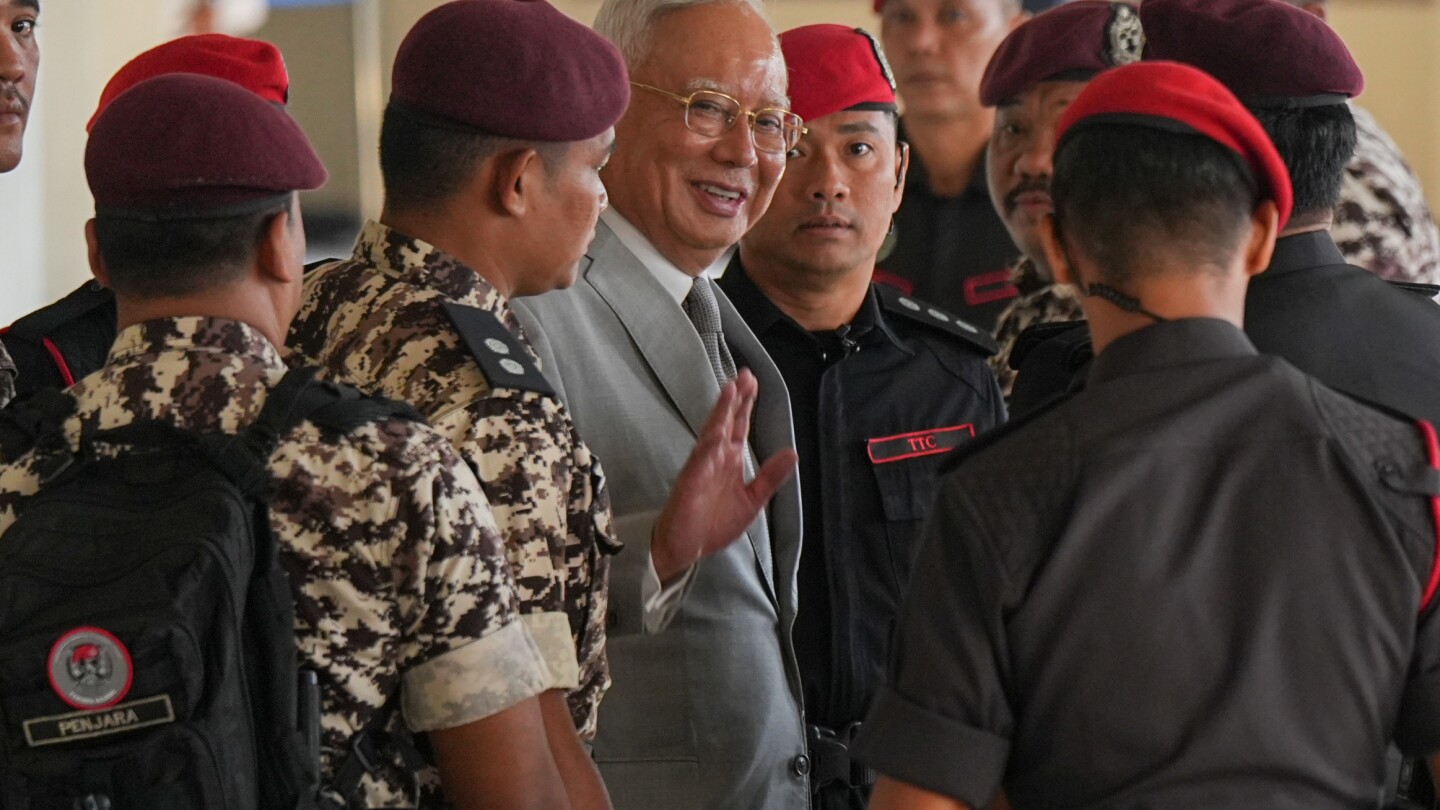
In a significant legal development, the High Court in Kuala Lumpur has denied former Prime Minister Najib Razak’s appeal to serve the remainder of his corruption sentence under house arrest. The decision was based on the invalidity of a royal decree issued by the previous king, as it did not comply with constitutional protocols.
Najib’s legal team has announced their intention to challenge this verdict. The 72-year-old politician, who had his original 12-year prison term halved by the Pardons Board, is now expected to remain incarcerated until August 2028.
Convicted in 2020 for his involvement in the 1MDB state fund scandal that led to his government’s downfall, Najib was sentenced to 12 years for charges including abuse of power, criminal breach of trust, and money laundering. The charges stem from 42 million ringgit ($10.3 million) being funneled into his accounts from SRC International, an offshoot of 1MDB. For more details on the sentencing, you can refer to the original report.
Since August 2022, Najib has been serving his term following the rejection of his final appeal, marking him as Malaysia’s first ex-leader to be imprisoned. Earlier in April 2024, Najib filed a request citing an addendum from a pardons board meeting chaired by Sultan Abdullah on January 29, 2024, which purportedly allowed for house arrest.
Though the existence of the addendum was not contested, Judge Alice Loke determined that house arrest was neither discussed nor included in the meeting. According to Loke, the constitutional process requires the king’s mercy to be exercised on the pardons board’s advice to prevent “arbitrary decision.” Consequently, the order for house arrest was ruled invalid.
Najib’s reaction to the ruling was subdued, although his lawyer termed the decision “shocking.” He maintains his innocence, attributing the controversy to Malaysian financier Low Taek Jho, believed to be the scheme’s architect, who is still at large.
In a separate case, Najib is awaiting a verdict in a second corruption trial tied to the 1MDB affair. This trial involves accusations of abuse of power to secure over $700 million and money laundering related to the same sum. If convicted, Najib could face up to 20 years for each abuse of power count and up to five years for each money laundering charge.
Established in 2009 by Najib, the 1MDB fund has been at the center of a massive embezzlement investigation, purportedly siphoning at least $4.5 billion through complex financial schemes across the U.S. and other countries. The misappropriated funds allegedly financed lavish expenditures, including Hollywood productions, luxury yachts, and art.
The scandal led to national discontent, culminating in the unprecedented 2018 electoral defeat of Malaysia’s ruling party, which had held power since 1957. Despite his legal battles, Najib retains influence in the United Malays National Organization, a component of Prime Minister Anwar Ibrahim’s ruling coalition formed post-2022 elections. Further insights into the political implications can be found here.