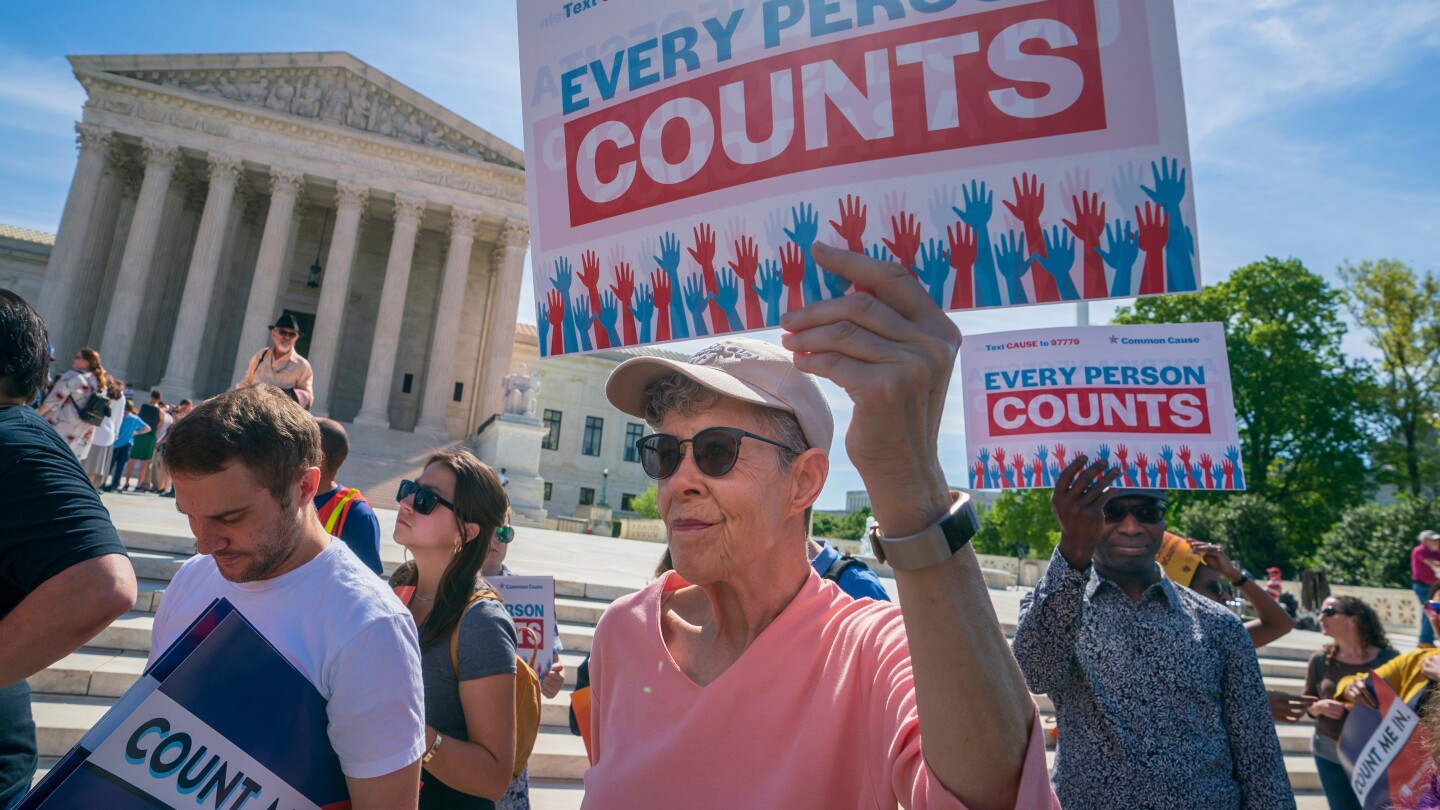
ORLANDO, Fla. — With the upcoming U.S. census scheduled for 2030, two pivotal lawsuits are currently in progress, potentially affecting the methodology and scope of the national headcount.
These legal challenges, initiated by supporters of former President Donald Trump, target aspects of the U.S. Census Bureau’s decennial operation, which influences congressional apportionment and the distribution of federal funds to states.
Although these lawsuits echo parts of Trump’s policy goals, the current Republican administration is tasked with defending the Census Bureau in court. Concerns about the U.S. Justice Department’s commitment to a vigorous defense have led a Democratic law firm to seek intervention in both cases, though there is no current evidence of the government attorneys compromising the bureau’s legal position.
Amidst these legal proceedings, the Census Bureau continues its preparations for the 2030 count and plans to conduct pilot tests in six different locations this year.
The Legal Challenges
America First Legal, co-founded by Trump’s former deputy chief of staff Stephen Miller, has spearheaded one lawsuit in Florida. This case disputes the bureau’s methods for participant privacy protection and counting individuals in institutional settings like dormitories and nursing homes.
The lawsuit aims to prohibit these methods in the 2030 census and seeks amendments to the 2020 data.
Gene Hamilton, president of America First Legal, stated, “This case is about stopping illegal methods that undermine equal representation and ensuring the next census complies with the Constitution.”
The second lawsuit, filed in a Louisiana federal court by Republican state attorneys general and the Federation for American Immigration Reform, aims to exclude individuals in the U.S. illegally from the population counts used for redistricting.
Democratic-aligned groups, represented by the Elias Law Group, have moved to intervene in both cases, fearing potential settlements favorable to the challengers. In Florida, a judge has permitted the involvement of a retirees’ association and university students, while the Justice Department has requested case dismissal.
In the Louisiana case, the court has yet to decide on intervention requests from three League of Women Voters chapters and California’s Santa Clara County, despite assurances from government lawyers of a strong defense.
Trump’s Agenda Influence
The lawsuits, especially the one in Louisiana, reflect elements of Trump’s agenda, even though the 2030 census will occur under a different administration. Trump previously attempted to exclude non-citizens from apportionment counts and sought citizenship data collection for the 2020 census.
The Republican expert had noted that using citizen voting-age population data could advantage Republicans and non-Hispanic whites over total population figures for redistricting.
Both of Trump’s orders were nullified by President Joe Biden in 2021, before the release of the 2020 census results. The Supreme Court also blocked an effort to add a citizenship question to the census form.
In August, Trump directed the Commerce Department to exclude illegal immigrants from census data collection. However, actions following this directive remain unspecified by officials.
Legislation proposed by Congressional Republicans aims to exclude non-citizens from apportionment, potentially impacting both red and blue states with significant undocumented populations, such as California, Texas, Florida, and New York, according to the Pew Research Center.
The 14th Amendment of the U.S. Constitution mandates that the “whole number of persons in each state” is counted for apportionment figures, which also influence the allocation of $2.8 trillion in federal funding for infrastructure, healthcare, and other services.
Defending the Census Bureau
The Louisiana case, filed at the conclusion of Biden’s administration, was paused in March at the Commerce Department’s request. Justice Department lawyers cited the need to align with the new administration’s stance as the reason for the delay, while state attorneys general have requested the pause be lifted.
To date, there is no indication in court documents that government attorneys have compromised the Census Bureau’s defense. In their argument against lifting the hold in the Louisiana case, Justice Department lawyers emphasized the ongoing preparations for the 2030 census, stating, “At this stage of such preparations, lifting the stay is not appropriate.”
___
Follow Mike Schneider on the social platform Bluesky: @mikeysid.bsky.social